Introduction to 24V Proximity Sensors
In industrial automation and control systems, 24V DC proximity sensors are fundamental components. They operate on a 24-volt direct current power supply, which is a standard in many factory environments due to its safety and compatibility with programmable logic controllers (PLCs). These non-contact sensors detect the presence or absence of an object within their sensing range without any physical contact. The core principle involves generating an electromagnetic field or a beam of light; when a target object disrupts this field, the sensor triggers an output signal. This makes them ideal for harsh environments where reliability, long service life, and resistance to contaminants like dust, oil, and coolant are paramount. Their widespread adoption stems from the need for precise, fast, and wear-free detection in countless automated processes.
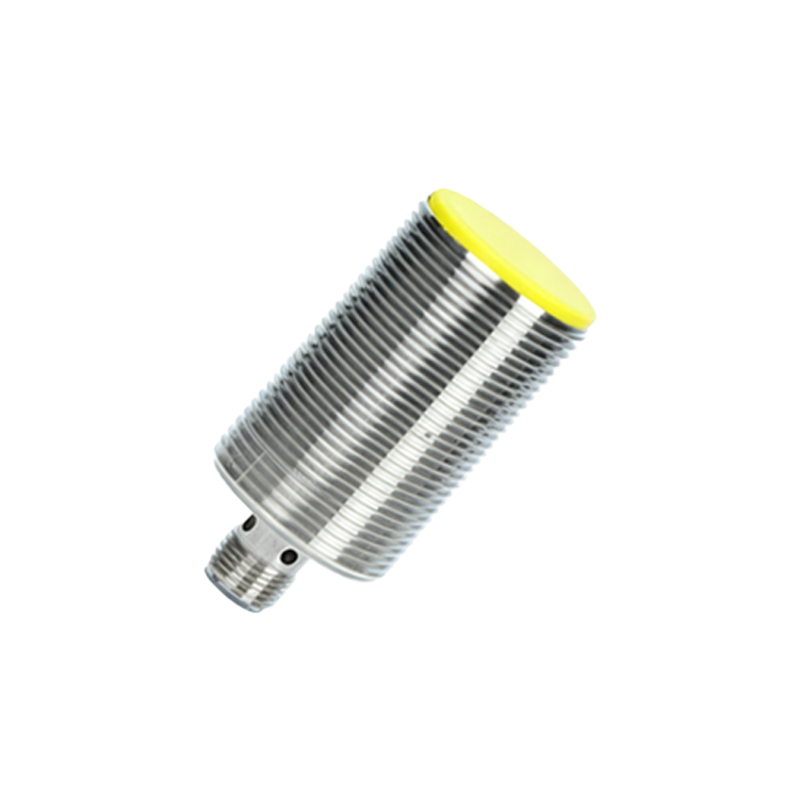
Inductive Proximity Sensors
Inductive proximity sensors are among the most common types used with 24V DC power. They specifically detect metallic objects, primarily ferrous metals like steel and iron, though some models can also sense non-ferrous metals like aluminum, copper, or brass at a reduced sensing range. The sensor contains a coil wound around a ferrite core connected to an oscillator. When a metal object enters the alternating magnetic field generated by the oscillator, eddy currents are induced in the object. This causes a load on the oscillator, which is detected by the sensor's circuitry, leading to a change in the output state. These sensors are highly robust, resistant to environmental factors, and perfect for applications such as counting metal parts, detecting piston position in cylinders, or as end-of-travel limit switches in machinery. They are typically characterized by their sensing distance, which can range from a few millimeters to several centimeters.
Capacitive Proximity Sensors
Capacitive proximity sensors represent a more versatile category. They can detect both metallic and non-metallic materials, including liquids, plastics, glass, wood, and granular substances. Operating on a 24V DC supply, they function by generating an electrostatic field. Any object that enters this field alters the capacitance of the sensor's circuit. This change is measured, and when it exceeds a preset threshold, the sensor switches its output. A key feature is their adjustable sensitivity, often via a potentiometer, allowing them to ignore certain background materials or containers and focus on the target material. This makes them indispensable in level detection for tanks (liquid or solid), material handling, and detecting non-metallic objects on conveyor lines. However, they can be more susceptible to environmental factors like humidity compared to inductive types.
Ultrasonic Proximity Sensors
Ultrasonic sensors operate on a different principle, using sound waves beyond the human hearing range. Powered by 24V DC, they emit high-frequency ultrasonic pulses and measure the time it takes for the echo to return after bouncing off a target object. This time-of-flight measurement allows them to calculate the distance to the object with high accuracy. Their major advantage is the ability to detect objects regardless of color, transparency, or material composition—they can sense virtually any solid or liquid. They are excellent for applications requiring precise distance measurement, presence detection over longer ranges (up to several meters), and level sensing in challenging conditions where other sensors might fail, such as with transparent glass bottles or foamy liquids. Common uses include pallet detection, loop control, and fill-level monitoring in bins.
Photoelectric Proximity Sensors
Photoelectric sensors, also available in 24V DC versions, use light beams to detect objects. They consist of an emitter (light source, often LED) and a receiver. When the light beam is interrupted or reflected by an object, the receiver detects the change and triggers the output. They come in several main operating modes: through-beam (separate emitter and receiver), retro-reflective (uses a reflector), and diffuse (reflective), where the sensor uses light reflected directly from the target. These sensors offer very long sensing ranges and can detect tiny objects. They are perfect for detecting non-metallic items, transparent films, and bottles on high-speed production lines, as well as for registration control and part positioning. Their performance can be affected by ambient light and highly reflective or absorbent target surfaces.
Magnetic Proximity Sensors (Reed Sensors)
Magnetic proximity sensors, commonly known as reed switches or sensors, detect the presence of a magnetic field, typically from a permanent magnet. When used in a 24V DC circuit, they provide a simple and highly reliable switching solution. The sensor contains two ferromagnetic reeds sealed in a glass tube. When a magnet approaches, the reeds are magnetized and attract each other