Understanding Photoelectric Switches
Photoelectric switches are non-contact sensing devices that detect the presence, absence, or distance of an object using a light transmitter and receiver. The fundamental principle involves emitting a beam of light—often infrared, visible red, or laser—and analyzing the received signal. When an object interrupts or reflects this beam, the sensor's output state changes, triggering a control action. Common operating modes include through-beam, retro-reflective, and diffuse reflective. Through-beam models offer the longest sensing ranges and highest reliability, as they use separate units for emission and reception. Retro-reflective types utilize a single housing and a reflector, making installation easier while maintaining good range. Diffuse reflective sensors, where the emitted light reflects directly off the target object, are compact and ideal for detecting objects at close range without a separate reflector.
Exploring Proximity Sensor Technologies
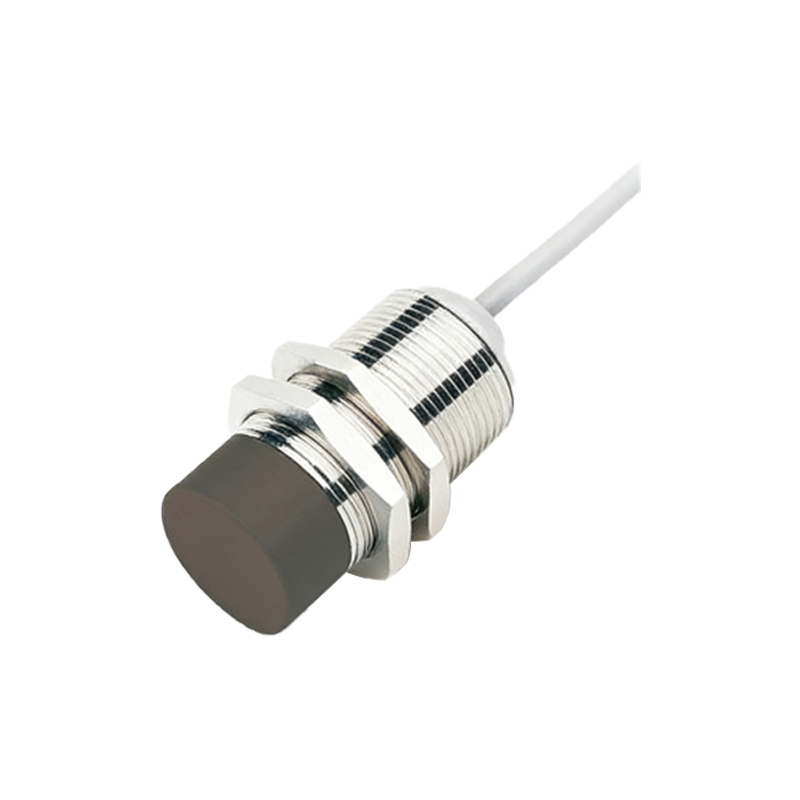
Proximity sensors detect the presence of nearby objects without any physical contact. The most prevalent types are inductive, capacitive, and magnetic. Inductive proximity sensors are the workhorses of metal detection in industrial automation. They generate an electromagnetic field and react to eddy current losses induced in metallic targets. Their sensing range is limited and varies with the metal type. Capacitive proximity sensors can detect both metallic and non-metallic materials, including liquids, powders, and plastics, by sensing changes in capacitance caused by the dielectric properties of the target. Magnetic proximity sensors, or reed switches, are specifically designed to detect permanent magnets, commonly used for position sensing in cylinders and safety door monitoring.
Key Performance Parameters and Selection Criteria
Selecting the correct sensor requires careful analysis of application parameters. Sensing range, or the maximum distance at which the sensor can reliably detect a standard target, is a primary consideration. Repeatability, the sensor's ability to consistently detect an object at the same point, is critical for precision applications. Response time determines how quickly the sensor can react to a target's presence or absence, impacting high-speed automation cycles. Environmental factors are paramount; photoelectric switches can be affected by ambient light, dust, fog, or dirt on the lens, while proximity sensors may be influenced by surrounding metals, temperature extremes, or chemical exposure. Enclosure ratings (IP, NEMA) and output types (PNP/NPN, analog, IO-Link) must align with the electrical and physical demands of the installation.
Industrial Applications and Use Cases
In manufacturing and packaging lines, photoelectric switches are extensively used for object counting, bottle cap detection, label verification, and height discrimination. Their ability to sense small or transparent objects makes them indispensable. Through-beam sensors often safeguard hazardous areas as safety light curtains. Proximity sensors excel in position feedback for machine tools, end-of-travel detection for actuators, and liquid level control in tanks. Inductive sensors reliably detect metal parts on conveyors or monitor robot arm positions. Capacitive sensors control fill levels in non-metallic containers or detect wood or glass panels. The robustness and non-contact nature of both technologies minimize wear and maintenance, ensuring long-term reliability in harsh environments.
Installation Best Practices and Troubleshooting
Proper installation is crucial for optimal performance. For photoelectric sensors, ensure the lens is clean and free from obstructions. Align through-beam and retro-reflective models precisely to avoid false triggers. Avoid mounting surfaces that cause vibration. For diffuse sensors, consider the target's color, material, and surface finish, as these affect reflectivity. With proximity sensors, maintain the recommended mounting distance from surrounding metal to prevent shielding effects. Always follow the manufacturer's guidelines for flush or non-flush mounting of inductive sensors. Common issues include failure to detect, erratic operation, or shortened sensing range. Troubleshooting steps typically involve checking power supply, wiring, output load, environmental interference, and sensor alignment. Regular preventive maintenance, including cleaning and functional checks, is recommended.
The Future: Integration and Smart Sensing
The evolution of photoelectric and proximity sensing is tightly linked to Industry 4.0. Modern sensors increasingly feature integrated intelligence via IO-Link communication. This allows for parameter setting, condition monitoring, and diagnostics directly from the controller, enabling predictive maintenance. Advanced photoelectric sensors now offer background suppression technology for precise detection independent of color and surface, and distance-measuring variants provide analog output proportional to range. Proximity sensors are becoming more specialized, with factors like weld-field immunity for robotic welding cells and high-temperature variants for foundries. The convergence of sensing data with network connectivity is creating smarter, more adaptive, and self-diagnosing automation systems, driving efficiency and reducing downtime.
SEO描述