Introduction to Proximity Sensing in Robotics
In the realm of industrial automation and advanced robotics, the ability to perceive and interact with the surrounding environment is paramount. Proximity sensors serve as the critical "touchless touch" for robots, providing essential data about the presence, absence, or distance of objects without any physical contact. These sensors are the foundational elements that enable robots to navigate complex spaces, handle delicate objects, and operate safely alongside human workers. By emitting a field or beam and detecting changes in its return signal, proximity sensors act as the robot's primary sense for immediate environmental awareness, bridging the gap between blind programmed movement and intelligent, adaptive operation. Their integration is a non-negotiable aspect of modern robotic design, directly influencing efficiency, precision, and operational safety.
Core Operating Principles and Technologies
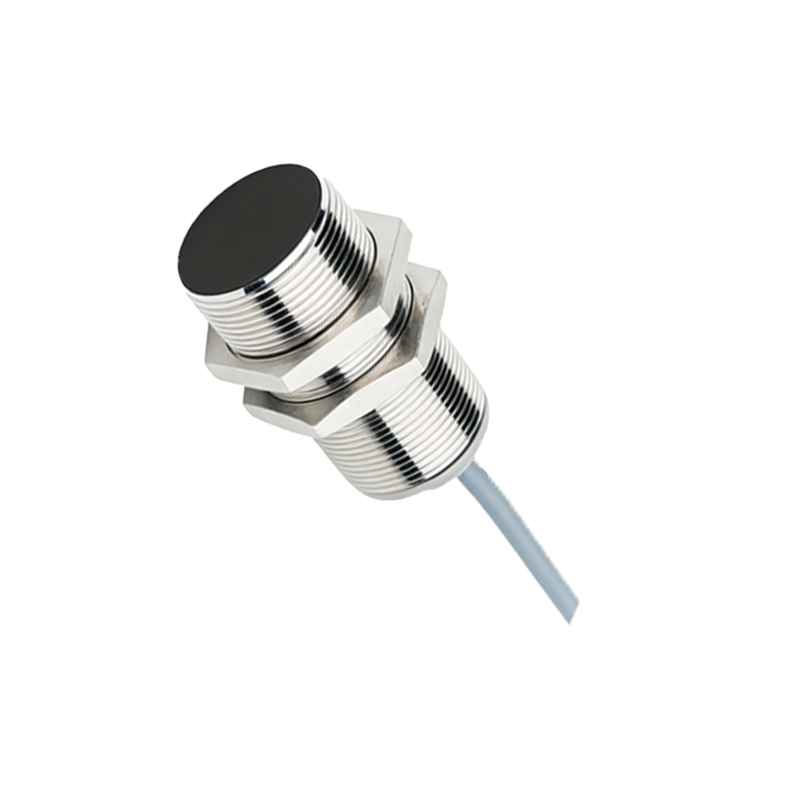
Robotic proximity sensors operate on several distinct physical principles, each suited for specific applications. Inductive sensors generate an electromagnetic field to detect metallic objects, making them ideal for precise positioning of machine parts or counting metallic components on a conveyor. Capacitive sensors, on the other hand, can detect both metallic and non-metallic materials (like plastic, wood, or liquids) by measuring changes in capacitance. For longer-range detection and precise distance measurement, ultrasonic sensors emit high-frequency sound waves and calculate distance based on the time-of-flight of the reflected echo. Optical sensors, including infrared and laser-based variants, use light beams to detect object presence or measure distance with extremely high accuracy. The choice of technology depends entirely on factors such as required sensing range, material composition of the target, environmental conditions (dust, moisture), and the necessary response speed.
Key Applications in Industrial Automation
The applications of proximity sensors in robotics are vast and integral to automated systems. On assembly lines, they are used for precise object positioning, ensuring a robotic arm picks up a component from the exact correct location. They enable collision avoidance, where sensors on a mobile robot or robotic arm create a protective field, triggering an emergency stop or path recalculation upon detecting an obstacle. In material handling, sensors verify part presence in grippers or on pallets, preventing errors in logistics. They are also crucial for edge detection and web control in packaging machinery, ensuring materials are fed correctly. Furthermore, in collaborative robot (cobot) applications, arrays of proximity sensors form a safety skin, allowing the robot to slow down or stop when a human worker enters a shared workspace, thus enabling safe human-robot collaboration.
Integration with Robotic Control Systems
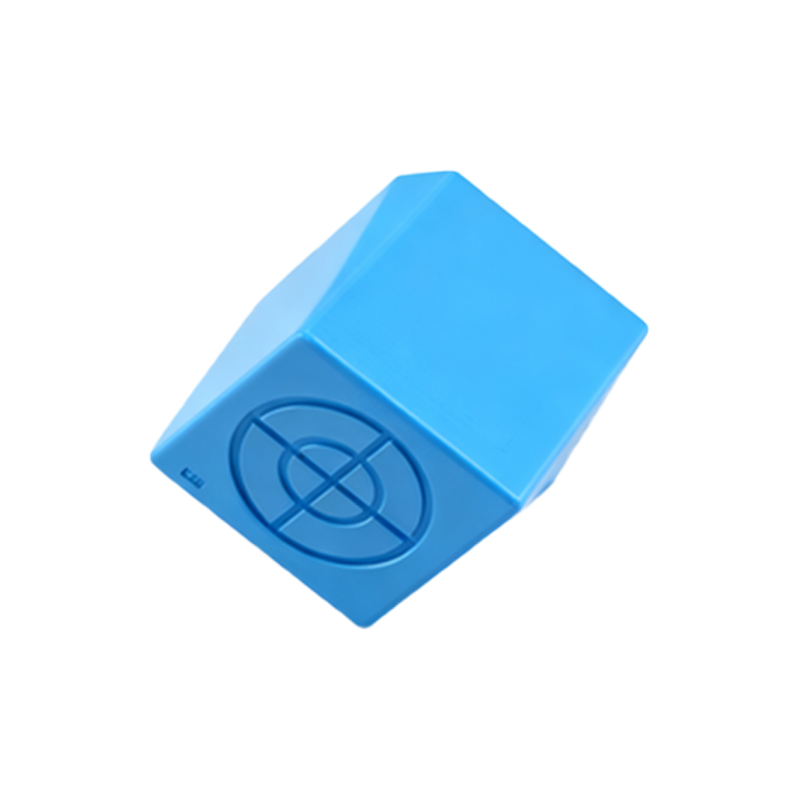
The true power of a proximity sensor is realized through its seamless integration into the robot's control architecture. Sensor outputs, typically analog voltage/current signals or digital on/off signals, are fed into the robot's programmable logic controller (PLC) or main control unit. Advanced sensors with IO-Link or other industrial communication protocols provide not just detection data but also diagnostic information, enabling predictive maintenance. The control system processes this real-time sensor data, making instantaneous decisions. For instance, a distance measurement from a laser sensor can be used in a closed-loop control system to precisely guide a welding torch along a seam. This integration transforms raw sensor data into actionable intelligence, dictating the robot's movement, speed, and operational sequence, and is fundamental to creating flexible, sensor-driven automation cells.
Critical Selection Criteria and Challenges
Selecting the appropriate proximity sensor for a robotic application requires careful consideration of multiple parameters. The sensing range, or the maximum distance at which an object can be reliably detected, is a primary factor. The sensor's repeatability, or its ability to consistently detect an object at the same distance, is crucial for precision tasks. Environmental robustness is another key criterion; sensors must often withstand vibration, temperature fluctuations, electromagnetic interference, and exposure to coolants or metal chips. A significant challenge lies in dealing with different surface properties—dark, shiny, or transparent materials can adversely affect optical and ultrasonic sensors. Engineers must also consider the mounting constraints on the robot arm and ensure the sensor's form factor and weight do not impede the robot's dynamics or payload capacity.
Future Trends and Advancements
The future of proximity sensing in robotics is geared towards greater intelligence, miniaturization, and multi-functionality. The development of miniaturized, low-power sensors is enabling their dense integration into robotic "skins" for full-body awareness. Sensor fusion, combining data from proximity, vision, and force/torque sensors, is creating more robust and context-aware perception systems. There is a growing trend towards 3D proximity sensing using technologies like time-of-flight (ToF) cameras, which provide rich spatial data for complex bin-picking or navigation tasks. Furthermore, the integration of artificial intelligence at the sensor edge allows for preliminary data processing