Introduction to Proximity Sensors
Proximity sensors are indispensable components in modern industrial automation and control systems. These non-contact devices detect the presence or absence of an object within a specified sensing range without any physical contact. Their primary function is to convert information about the presence of a target into an electrical signal. This capability is crucial for a myriad of applications, including object detection, position verification, counting, and safety monitoring. The fundamental advantage of proximity sensors lies in their reliability, long operational life, and ability to function in harsh environments where mechanical switches would fail. They are immune to surface conditions like dust, oil, and moisture, making them superior for demanding industrial settings. From automotive assembly lines to food packaging machinery, proximity sensors ensure precision, efficiency, and safety.
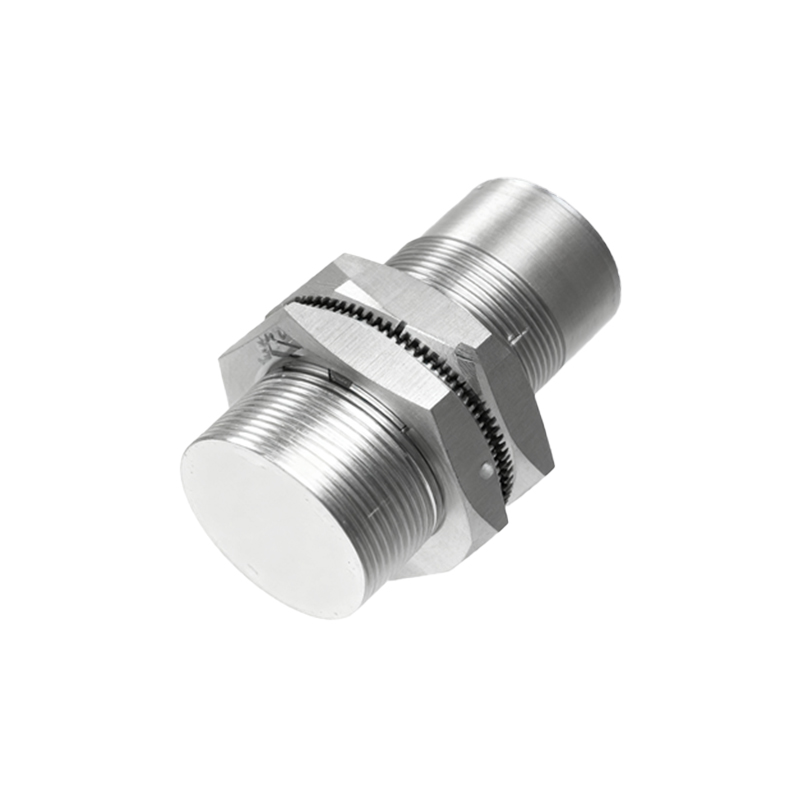
Inductive Proximity Sensors
Inductive proximity sensors are specifically designed to detect metallic objects. Their operation is based on the principle of electromagnetic induction. The sensor generates an oscillating electromagnetic field from its sensing face. When a conductive metal target enters this field, eddy currents are induced on the surface of the metal. This causes a change in the amplitude of the oscillation, which is detected by the sensor's circuitry, triggering an output signal. These sensors are highly robust and can detect ferrous metals (like iron and steel) at greater distances than non-ferrous metals (like aluminum or copper). Common types include shielded (flush-mountable) and unshielded versions. They are extensively used in machine tools, metal fabrication, and automotive industries for tasks such as detecting piston position, counting metal parts, and monitoring gear rotation.
Capacitive Proximity Sensors
Unlike inductive sensors, capacitive proximity sensors can detect both metallic and non-metallic materials. This includes liquids, powders, granules, plastics, and glass. They operate by generating an electrostatic field. The sensor and the target act as two plates of a capacitor. When a target approaches the sensing face, it changes the capacitance of the system. This change is measured, and when it exceeds a preset threshold, the sensor switches its output state. Capacitive sensors are sensitive to material density and dielectric constant. They often feature sensitivity adjustment potentiometers to fine-tune the sensing range for different materials. Key applications involve level detection of liquids or bulk solids in tanks, presence detection of plastic or glass bottles on conveyor lines, and moisture content analysis.
Ultrasonic Proximity Sensors
Ultrasonic sensors utilize sound waves at frequencies above the human hearing range (typically above 20 kHz) to detect objects and measure distance. They consist of a transmitter that emits ultrasonic pulses and a receiver that listens for the echo reflected from a target. By calculating the time interval between the emission and reception of the sound wave (time-of-flight principle), the sensor can determine the distance to the object. These sensors are excellent for detecting objects of virtually any material, shape, or color, as long as the surface is capable of reflecting sound. They are less affected by dust, smoke, or ambient light compared to optical sensors. Common uses include pallet detection, loop control, fill level measurement in silos, and collision avoidance in automated guided vehicles (AGVs).
Photoelectric Proximity Sensors
Photoelectric sensors, or photoeyes, use a beam of light to detect the presence of an object. They comprise a light emitter (usually an LED) and a receiver. When the light beam is interrupted or reflected by a target, the change in light intensity at the receiver triggers an output. There are three main operating modes: through-beam, retro-reflective, and diffuse reflective. Through-beam sensors have separate emitter and receiver units; detection occurs when the beam is broken. Retro-reflective models use a single unit and a reflector, detecting an object that blocks the beam to the reflector. Diffuse sensors rely on light reflecting directly off the target itself. Photoelectric sensors offer long sensing ranges and can detect small objects. They are ideal for packaging, material handling, and assembly automation for tasks like bottle counting, label detection, and web break monitoring.
Magnetic Proximity Sensors
Magnetic proximity sensors, often called reed switches or Hall-effect sensors, detect the presence of a magnetic field, typically from a permanent magnet. Reed switches consist of two ferromagnetic reeds sealed in a glass tube. When a magnet approaches, the reeds are magnetized and attract each other, closing the electrical contact. Hall-effect sensors are solid-state devices that produce a voltage output proportional to the magnetic field strength. These sensors are characterized by their simplicity, reliability, and ability to operate in extreme environments. They are commonly used for detecting the position of cylinders (with embedded magnets), in door and window security systems, and as