Defining the Core Concepts
In the realm of industrial automation and electrical control systems, the terms "proximity switch" and "sensor" are frequently used, often leading to confusion. To establish a clear technical foundation, we must first define each component. A sensor is a broad, generic device that detects a physical property or event and converts it into a measurable signal, typically electrical. This signal can be analog (e.g., 4-20mA, 0-10V) or digital. Sensors encompass a vast category including temperature sensors, pressure transducers, photoelectric cells, and indeed, proximity devices. A proximity switch, therefore, is a specific type of sensor. Its primary function is to detect the presence or absence of a target object within a defined range without any physical contact. It acts as a binary switch, providing a discrete ON/OFF signal when an object enters its sensing field.
Operational Principle and Output
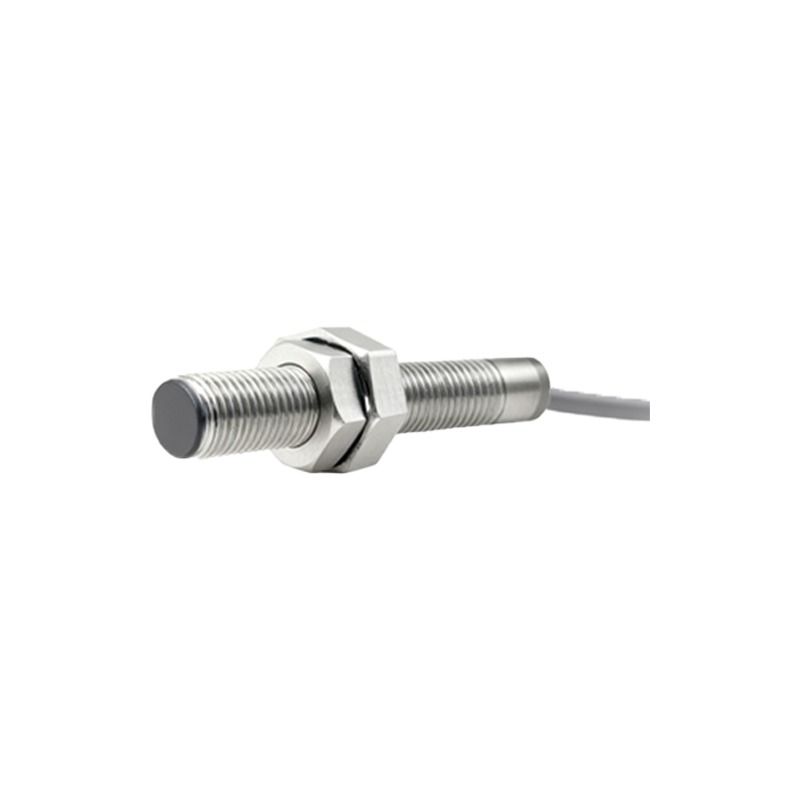
The operational principle further distinguishes proximity switches within the sensor family. Common types include inductive (for detecting metals), capacitive (for detecting metals, liquids, plastics, etc.), and ultrasonic. Each generates an electromagnetic or ultrasonic field. The intrusion of a target object causes a change in this field (e.g., eddy current loss in inductive types), which is processed by an internal oscillator and trigger circuit. The key characteristic here is the output: a standard proximity switch provides a digital, two-state signal. It is fundamentally a switch. In contrast, the term "sensor" can also refer to devices that provide continuous, proportional output representing the measured variable, such as a distance-measuring analog sensor that outputs a voltage corresponding to 5mm to 15mm.
Application Context in Control Systems
Within electrical control panels and PLC (Programmable Logic Controller) systems, proximity switches are ubiquitously employed as digital input devices. They are the workhorses for position detection (e.g., cylinder end-of-stroke), counting objects on a conveyor, or verifying the presence of a part. Their robust, contactless design makes them ideal for harsh environments with dust, moisture, or repetitive motion. While they "sense" presence, their role is often to provide a definitive go/no-go signal to the control logic. Other sensors, like a temperature transmitter feeding an analog input card, provide data for process control or monitoring, representing a different layer of system intelligence.
The Hierarchy: Subset, Not Synonym
Thus, from a technical classification perspective, all proximity switches are sensors, but not all sensors are proximity switches. It is a subset relationship. Referring to a proximity switch as a sensor is not incorrect, but it is imprecise in an engineering context. It is akin to calling a circuit breaker a "protection device"—accurate but non-specific. Precision in terminology prevents misunderstandings in schematics, procurement, and troubleshooting. For instance, specifying a "capacitive sensor" could lead to confusion; specifying a "capacitive proximity switch" immediately clarifies the expected binary output and application.
Key Selection Criteria Beyond Terminology
When selecting a device, engineers must look beyond the label. For a proximity switch, critical parameters include sensing distance (rated and effective), target material, output configuration (PNP/NPN, NO/NC), housing material, and environmental ratings (IP, temperature). One must decide if the simple detection of presence suffices, or if analog information about distance or composition is required, leading to the choice of a different sensor type. Understanding that a proximity switch is a specialized digital sensor guides this selection process efficiently, ensuring the correct component is integrated into the electrical design for reliable and precise machine operation.