Introduction to Proximity Switch Sensors
Proximity switch sensors are fundamental components in modern industrial automation, providing non-contact detection of metallic or non-metallic objects. Among the various configurations, the three-wire proximity sensor stands out as the most prevalent and versatile type used in control systems worldwide. These devices operate on the principle of electromagnetic induction, capacitive sensing, or magnetic fields to detect the presence or absence of a target without physical contact. This non-contact nature eliminates mechanical wear, ensures high reliability, and enables fast response times, making them indispensable in manufacturing, packaging, material handling, and automotive assembly lines. The three-wire design specifically offers a robust interface that integrates seamlessly with programmable logic controllers (PLCs), relays, and other industrial control devices, forming the backbone of automated sensing networks.
Anatomy of a Three-Wire Configuration
The designation "three-wire" refers to the standard wiring scheme of the sensor. These three critical wires are universally color-coded for ease of installation and maintenance: brown, blue, and black. The brown wire is designated for the positive supply voltage, typically ranging from 10 to 30 VDC, which powers the sensor's internal oscillator and evaluation circuitry. The blue wire serves as the common ground or negative (0V) connection, completing the circuit. The black wire is the signal output line. This output can be either a switching signal, providing a path to the positive supply (PNP, sourcing), or a path to ground (NPN, sinking), depending on the sensor's design. This clear separation of power and signal lines enhances electrical noise immunity and simplifies troubleshooting, a crucial factor in electrically noisy industrial environments.
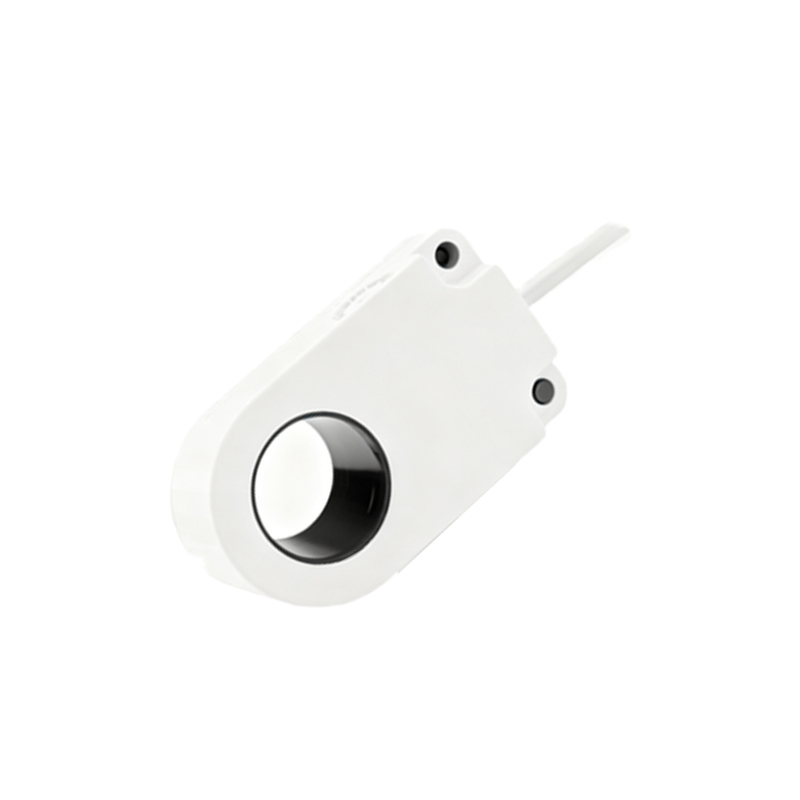
Operating Principles and Sensing Technologies
Three-wire proximity sensors primarily utilize three core technologies: inductive, capacitive, and magnetic. Inductive sensors are the most common, generating an oscillating electromagnetic field. When a metallic object (the target) enters this field, it induces eddy currents that dampen the oscillation, which the sensor's circuit detects, triggering a state change on the output wire. They are ideal for detecting metals like steel, aluminum, or copper. Capacitive sensors, on the other hand, can detect both metallic and non-metallic materials (liquids, plastics, wood) by measuring changes in capacitance caused by the target altering the sensor's electrostatic field. Magnetic (reed or Hall effect) sensors react to the presence of a permanent magnet. The choice of technology depends entirely on the application's specific requirements regarding target material, sensing distance, and environmental conditions.
Key Specifications and Selection Criteria
Selecting the correct three-wire proximity sensor requires careful analysis of several technical parameters. The nominal sensing distance (Sn) is the rated operating range under standardized conditions. Engineers must consider a safety factor, often derating the nominal distance by 10-20% to account for temperature fluctuations, voltage variations, and target material differences. The switching frequency defines how many on/off cycles the sensor can handle per second, critical for high-speed applications. Housing material, typically nickel-plated brass, stainless steel, or PBT plastic, must withstand the operational environment, including exposure to coolants, oils, or physical impacts. Other vital specs include the output type (PNP vs. NPN), current rating, voltage range, protection class (IP67/IP69K for washdown areas), and temperature rating. Mismatching these specifications can lead to premature failure or system malfunctions.
Wiring and Integration with Control Systems
Proper wiring is paramount for reliable operation. For a standard PNP (sourcing) sensor, the brown wire connects to DC+, blue to DC-, and the black output wire connects to the input channel of a PLC or the coil of a relay. An NPN (sinking) sensor shares the same power connections, but its black output provides a path to ground when active. It is crucial to never connect the sensor's output directly to the power supply, as this will cause a short circuit. A load (the PLC input or relay coil) must always be present in the circuit. For enhanced safety and diagnostics, many modern sensors feature built-in LED indicators that show power status and switching state. When integrating into a larger system, attention must be paid to cable routing, avoiding parallel runs with high-voltage power cables to minimize electromagnetic interference (EMI).
Common Applications and Installation Best Practices
Three-wire proximity sensors find applications across countless industrial scenarios. They are used for object detection on conveyor belts, position verification of machine parts (like cylinder end-of-stroke detection), counting products, monitoring bin levels, and ensuring safety interlock positions. For optimal performance, installers should follow key practices. Ensure