Introduction to Proximity Magnetic Sensors
Proximity magnetic sensors are fundamental components in modern industrial automation and electronic systems. These devices detect the presence or absence of a magnetic field, typically generated by a permanent magnet or an electromagnet, without requiring physical contact. The core principle relies on the interaction between a magnetic field and the sensor's internal sensing element, which translates this interaction into an electrical signal. This non-contact operation makes them exceptionally reliable, durable, and suitable for harsh environments where dust, oil, or vibration are present. They are pivotal in applications ranging from simple position detection in consumer electronics to critical safety interlocks in heavy machinery. Understanding the various types available is essential for optimal system design and performance.
Hall Effect Sensors
Hall Effect sensors are among the most prevalent types of proximity magnetic sensors. They operate based on the Hall Effect, where a voltage difference (the Hall voltage) is generated across an electrical conductor when a magnetic field is applied perpendicular to the current flow. Integrated circuit (IC) Hall sensors amplify this signal to provide a clean digital or analog output. Digital Hall sensors, like switches and latches, provide a simple ON/OFF signal when a specific magnetic threshold is crossed. Analog Hall sensors output a voltage proportional to the magnetic field strength, useful for precise position or current sensing. Their advantages include solid-state reliability, long operational life, and the ability to detect both static and dynamic magnetic fields. Common applications include brushless DC motor commutation, speed sensing in automotive crankshafts, and current measurement.
Reed Switches
Reed switches represent a classic and simple magnetic sensing technology. A reed switch consists of two ferromagnetic, flexible metal reeds sealed within a glass envelope filled with an inert gas. When an external magnetic field of sufficient strength is applied, the reeds become magnetically attracted to each other, making contact and closing an electrical circuit. When the magnetic field is removed, the reeds spring back to their original open position. They are passive devices, requiring no power supply to operate. Their key benefits are simplicity, low cost, and the ability to switch relatively high voltages and currents with minimal contact resistance. However, they are mechanical in nature, which can limit their switching speed and lifespan compared to solid-state sensors. Typical uses include door/window security sensors, liquid level indicators, and as position sensors in low-cycle applications.
Magneto-Resistive (MR) Sensors
Magneto-resistive sensors utilize materials that change their electrical resistance in the presence of a magnetic field. The two primary types are Anisotropic Magneto-Resistive (AMR) and Giant Magneto-Resistive (GMR) sensors. AMR sensors are made from a thin film of ferromagnetic material whose resistance varies with the angle between the magnetization and the direction of current flow. GMR sensors, based on multilayer structures, exhibit a much larger change in resistance for the same magnetic field. MR sensors are highly sensitive and can detect very small changes in magnetic field strength and direction. They provide excellent accuracy and resolution for angular or linear position sensing. Their output is typically analog and requires signal conditioning. These sensors are favored in demanding applications such as high-precision rotary encoders, electronic compassing, and automotive transmission speed sensing.
Inductive Proximity Sensors with Magnetic Actuation
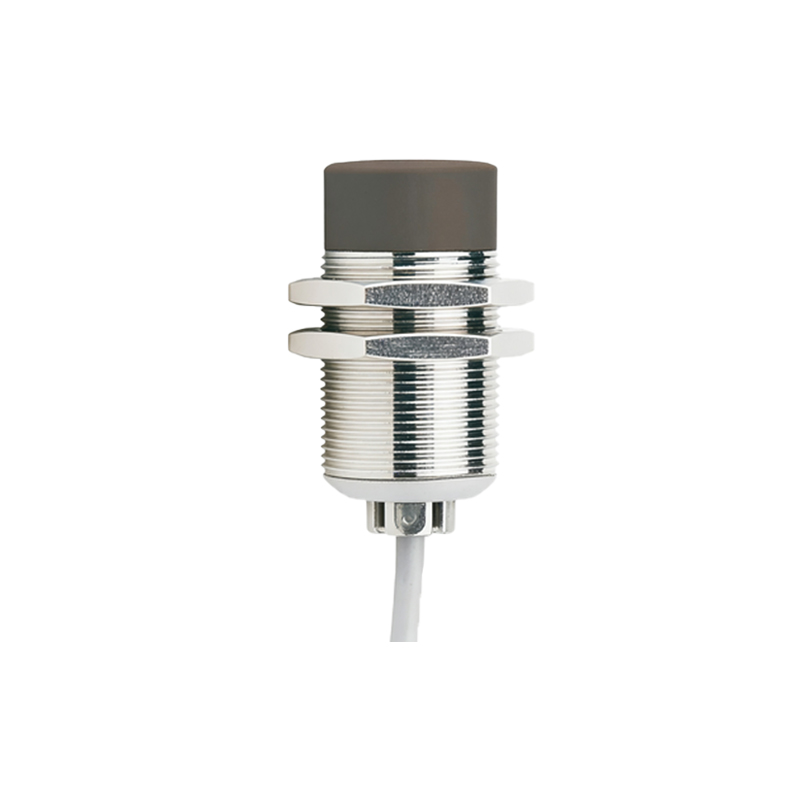
While standard inductive proximity sensors detect metallic objects, a specific variant is designed to be actuated specifically by a magnetic field. These sensors contain a coil and an oscillator circuit. When a ferromagnetic target (like iron or steel) enters the sensing field, it causes eddy currents, damping the oscillation and triggering a switch. The magnetic-actuated version is optimized to respond to a moving permanent magnet. The magnet influences the magnetic core of the sensor, effectively changing its inductance and triggering the output. These sensors are robust, can have longer sensing ranges than reed switches, and are well-suited for dirty or wet industrial environments. They are commonly used for cylinder position detection in pneumatic systems, limit switching on machinery, and detecting the position of magnetic cams or gears.
Key Selection Criteria
Choosing the right proximity magnetic sensor requires careful consideration of several parameters. First, define the sensing requirement: is it a simple presence detection (switch) or a measurement of field strength/position (analog)? The operating distance or range from the target magnet is critical. Environmental factors like temperature extremes, shock, vibration, and exposure to chemicals or contaminants will dictate the required housing and sealing (e.g., IP rating). Electrical requirements include the supply voltage, output type (NPN/PNP, push-pull, analog voltage/current), and load current capacity. For precision applications, sensitivity, hysteresis, repeatability