Introduction to Sensor Test Fixtures
In the realm of industrial automation, ensuring the reliability and accuracy of proximity and displacement sensors is paramount. These sensors, which detect the presence, absence, or position of an object without physical contact, are critical components in machinery safety, quality control, and process automation. A specialized test fixture is an indispensable tool for validating sensor performance before installation and for periodic maintenance checks. This article delves into the design principles, key components, and practical applications of test fixtures tailored for inductive, capacitive, and ultrasonic proximity sensors, as well as linear and rotary displacement transducers.
Core Design Principles and Objectives
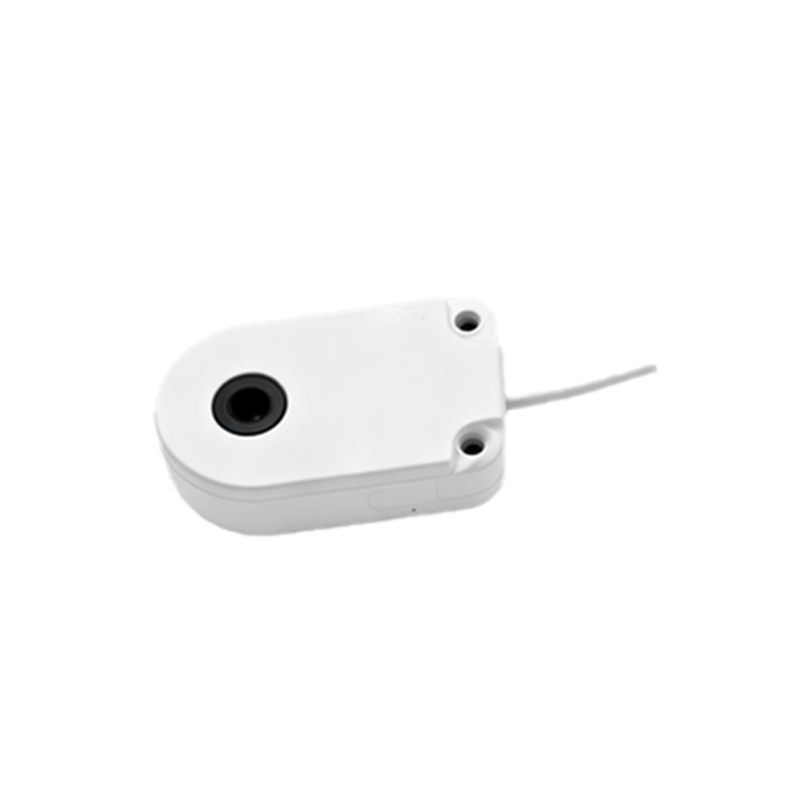
The primary objective of a sensor test fixture is to simulate real-world operating conditions in a controlled, repeatable manner. Key design principles include precision, repeatability, and versatility. The fixture must provide highly accurate and repeatable positioning of a test target relative to the sensor under test. This often involves the use of precision linear guides, rotary stages, or multi-axis positioning systems. The design must also account for different sensor types, sizes, and mounting styles, often incorporating adjustable brackets and universal mounting plates. Environmental factors such as temperature stability and protection against contaminants like oil or metal chips are also integrated into robust fixture designs for harsh industrial environments.
Key Mechanical and Electrical Components
A typical test fixture comprises several integrated subsystems. Mechanically, it features a rigid base plate, a precision actuator (such as a ball screw driven by a stepper or servo motor), and a target mounting arm. The target material is crucial and varies by sensor type; for inductive sensors, a ferrous metal target is used, while capacitive sensors may require a non-metallic target. Electrically, the fixture includes a programmable logic controller (PLC) or a dedicated motion controller to command the actuator. It also integrates signal conditioning units to interface with the sensor's output—whether it's a digital PNP/NPN signal, an analog 4-20mA current loop, or a 0-10V voltage signal. Measurement instruments like oscilloscopes or high-resolution digital multimeters are often connected to record response time, hysteresis, and linearity.
Software, Calibration, and Testing Procedures
The intelligence of a modern test fixture lies in its software. Custom software applications, often developed in environments like LabVIEW or Python, automate the entire testing sequence. They control the target movement, acquire sensor data, and perform real-time analysis. A standard test procedure involves programming the fixture to move the target towards the sensor at a constant speed. The software records the exact point where the sensor activates (the "switch-on point") and deactivates (the "switch-off point"), calculating the differential or hysteresis. For analog displacement sensors, the fixture maps the sensor's output signal across its entire measuring range to verify linearity and accuracy against a calibrated reference, such as a laser interferometer or a high-precision linear encoder.
Applications in Manufacturing and Maintenance
These test fixtures are deployed across the sensor lifecycle. In manufacturing, they are used for 100% final product testing or batch sampling to ensure every sensor meets datasheet specifications. In the field, maintenance technicians use portable or benchtop versions of these fixtures for predictive maintenance. By periodically testing sensors on critical equipment—such as robotic arm position feedback sensors or spindle gap monitoring sensors in CNC machines—potential failures can be predicted and prevented, minimizing unplanned downtime. Furthermore, the data collected from these tests is invaluable for root cause analysis of process faults and for continuous improvement of sensor design and application guidelines.
Future Trends and Conclusion
The future of sensor test fixtures is aligned with Industry 4.0 trends. Integration with Industrial Internet of Things (IIoT) platforms is becoming standard, allowing test data to be streamed to cloud databases for long-term trend analysis and predictive analytics. Fixtures are also incorporating more advanced vision systems for alignment and additional quality checks. In conclusion, a well-engineered proximity and displacement sensor test fixture is more than a simple validation tool; it is a critical investment in system reliability, product quality, and operational efficiency. By providing objective, quantifiable performance data, it empowers engineers to make informed decisions, ensuring that the invisible sensing layer of automation functions flawlessly.