Introduction to the AN6X Proximity Sensor
The AN6X series represents a cornerstone in modern industrial automation, offering reliable non-contact detection for a myriad of applications. As a self-contained solid-state electronic device, it operates on the principle of electromagnetic field disturbance. When a metallic target enters its sensing range, it triggers a change in the oscillator's amplitude, which is then processed by the internal circuitry to produce a clean, switch-like output signal. This fundamental operation makes it indispensable in environments demanding durability, speed, and precision, far surpassing the limitations of mechanical limit switches.
Key Technical Specifications and Operating Principles
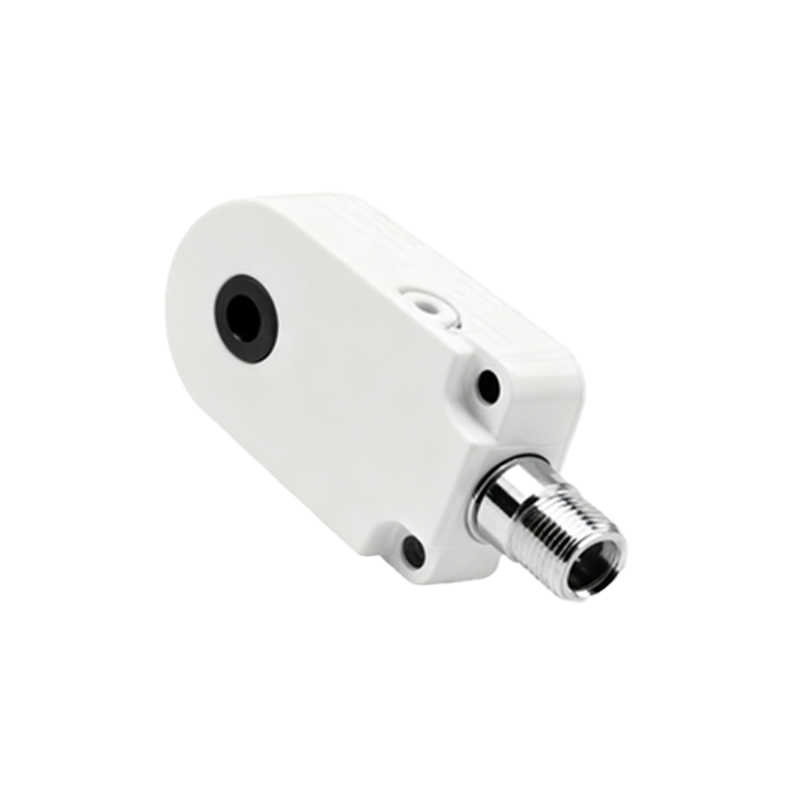
The AN6X is typically an inductive proximity sensor, designed primarily for detecting ferrous metals. Its standard sensing distance, often denoted as 'Sn', is 6mm, providing a precise and consistent detection zone. It operates across a wide voltage range, commonly 10-30V DC, ensuring compatibility with most industrial control systems. The sensor features a short-circuit and reverse polarity protection circuit, enhancing its robustness. The core of its operation lies in a high-frequency oscillator, a demodulator, and a solid-state output switch (typically NPN or PNP configuration). The housing is usually constructed from nickel-plated brass or stainless steel, offering high resistance to mechanical impact, oils, and coolants.
Wiring Configurations and Output Types
Correct wiring is paramount for optimal performance. The AN6X series is available in both 3-wire and 4-wire configurations. The 3-wire version is most common, comprising power (V+), ground (V-), and the output signal line. The output can be either NPN (sinking) or PNP (sourcing), a critical distinction when integrating with Programmable Logic Controllers (PLCs). NPN outputs switch the negative (0V) line to the load, while PNP outputs switch the positive voltage line. A 4-wire version often includes two complementary outputs (e.g., one N.O. and one N.C.) or a separate diagnostic output. The wiring must strictly adhere to the datasheet diagrams to prevent damage.
Installation Considerations and Sensing Range
Proper installation significantly affects sensor performance and longevity. Mounting should be secure, using appropriate brackets to minimize vibration. It is crucial to maintain the recommended lateral and axial clearance from surrounding metal objects (the "non-flush" mounting requirement for many cylindrical models) to prevent false triggering. The effective sensing distance can be influenced by the target material's size, shape, and composition. For standard mild steel, it is 100% of Sn. For stainless steel, it may reduce to approximately 70-90%, and for non-ferrous metals like aluminum or copper, the sensing distance drops dramatically, often to 30-50% of Sn.
Application Scenarios in Industrial Automation
The versatility of the AN6X sensor is demonstrated across numerous sectors. In automotive assembly lines, it detects the presence of engine blocks or verifies part positioning on pallets. In packaging machinery, it counts metallic items on conveyor belts or confirms lid placement. Within metalworking, it serves as an end-of-travel limit for CNC machine tools or detects broken tools. Its fast response time, often in microseconds, makes it ideal for high-speed counting and sorting applications. Its rugged design allows it to perform reliably in harsh conditions where dust, moisture, or coolant sprays are present.
Troubleshooting Common Operational Issues
Even robust sensors can encounter issues. Common problems include failure to detect, intermittent operation, or constant output activation. A systematic approach to troubleshooting is essential. First, verify the power supply voltage and polarity. Next, check the wiring connections for looseness or corrosion. Ensure the target is within the specified sensing range and is of an appropriate material and size. Inspect the sensor face for accumulation of metallic debris, which can cause permanent activation. Using a multimeter to monitor the output voltage relative to the supply can quickly isolate whether the issue is with the sensor, wiring, or the load (e.g., PLC input).
Advantages Over Alternative Sensing Technologies
Compared to other non-contact sensors like photoelectric or capacitive types, the inductive AN6X offers distinct benefits. It is completely immune to ambient light, dust, smoke, and opaque contaminants that plague optical sensors. It is not affected by color or surface reflectivity. Compared to capacitive sensors, it is highly selective to metals and largely insensitive to changes in humidity or non-conductive materials. Its all-metal housing provides superior mechanical strength and environmental sealing (typically IP67 rated), making it suitable for wash-down areas. Its primary limitation is its exclusive sensitivity to