What is a Proximity Sensor?
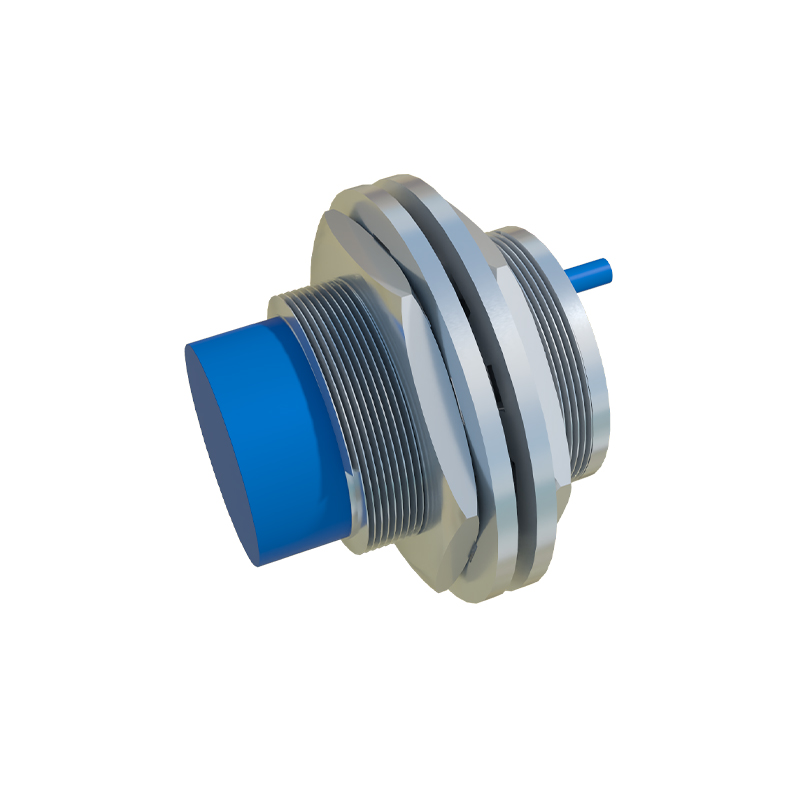
A proximity sensor is a non-contact electronic device designed to detect the presence or absence of an object within its sensing range without any physical contact. It operates by emitting an electromagnetic field, beam of electromagnetic radiation (like infrared light), or ultrasonic sound waves, and then looks for changes in the field or return signal. The key advantage is its ability to function reliably in harsh industrial environments where dirt, oil, or mechanical wear could compromise contact-based switches. These sensors are fundamental components in automation, robotics, and safety systems, providing critical data for control logic.
Core Principles of Operation
The operation hinges on the type of technology employed. Inductive proximity sensors detect metallic objects by generating an oscillating electromagnetic field. When a metal target enters this field, it induces eddy currents, causing a change in oscillation amplitude that triggers the sensor's output. Capacitive sensors can detect both metallic and non-metallic materials (like plastic, wood, or liquids) by measuring changes in capacitance between the sensor and the target. Photoelectric sensors use a light emitter and receiver; an object is detected when it interrupts (breaks) or reflects the light beam. Ultrasonic sensors calculate distance by measuring the time-of-flight of reflected sound waves.
Primary Functions and Applications
The core function is to provide a discrete on/off signal to a programmable logic controller (PLC) or other control system. This simple signal enables complex automation. Common applications include object detection on conveyor belts for counting or sorting, precise position sensing of machine parts (like cylinder rod end position), non-contact limit switching, and monitoring rotational speed via gear tooth detection. In assembly lines, they ensure components are present and correctly positioned before a process step proceeds. They are also vital in material handling for level detection in silos or bins.
Key Advantages Over Mechanical Switches
Proximity sensors offer significant benefits. Their non-contact nature eliminates mechanical wear and tear, leading to exceptionally long service life and reduced maintenance. They provide high-speed response and can operate at very fast switching frequencies, which is crucial in high-cycle manufacturing. Since there is no physical force required for actuation, they can detect fragile objects without damage. They are also highly resistant to environmental contaminants when properly housed, performing well where oil, coolant, or dust is present. Their solid-state design ensures consistent and reliable operation.
Critical Selection Criteria
Selecting the right sensor requires careful analysis. The first consideration is the target material, which dictates whether an inductive, capacitive, or photoelectric sensor is needed. Sensing range, the maximum distance at which the sensor can reliably detect a standard target, is paramount. Environmental factors like temperature extremes, presence of chemicals, or washdown requirements determine the housing material and ingress protection (IP) rating. The electrical output type (e.g., NPN sinking, PNP sourcing, or analog) must be compatible with the control system's input module. Physical size and mounting style are also constrained by the application's mechanical design.
Integration in Automated Systems
In a modern automated system, proximity sensors are the primary "eyes" for the control system. Their binary signals form the basis for sequential logic, safety interlocks, and process monitoring. For instance, a sensor confirming a part is clamped safely allows the next machining operation to start. In robotics, they provide precise positional feedback for end-effectors. Networked via industrial fieldbuses or IO-Link, these sensors can transmit not just state information but also diagnostic data like operating temperature or signal strength, enabling predictive maintenance and reducing unplanned downtime.
Maintenance and Troubleshooting Tips
While robust, sensors require proper installation and occasional checks. Ensure the sensor is correctly aligned with the target and mounted securely to prevent vibration-induced false signals. Maintain the specified sensing distance, accounting for any reduction due to target material or environmental conditions. Regularly clean the sensing face to prevent buildup of debris, metal shavings, or oil that could attenuate the signal. Common issues like no output signal or erratic operation can often be traced to wiring faults (loose connections, incorrect voltage), an out-of-range target, or electrical noise interference from nearby motors or cables. Consulting the sensor's diagnostic LED indicators is the first step in troubleshooting.