Non-Contact Detection Principle
A fundamental characteristic of proximity sensors is their ability to detect the presence or absence of an object without any physical contact. This is achieved through the emission of an electromagnetic field, beam of light, or ultrasonic waves. When a target object enters this field, it causes a change in the signal's state, which is then converted into an electrical output signal. This non-contact nature eliminates mechanical wear and tear on both the sensor and the target, leading to exceptionally long operational life and high reliability. It allows for the detection of fragile, delicate, or fast-moving objects that could be damaged by physical touch. This principle is the cornerstone of their application in harsh industrial environments where durability is paramount.
High Switching Frequency and Response Speed
Proximity sensors are renowned for their rapid response times and high switching frequencies. Unlike mechanical limit switches, they have no moving parts that need to physically actuate. This allows them to detect objects at very high speeds, often in the range of several kilohertz. For instance, an inductive proximity sensor can easily achieve switching frequencies of 1-5 kHz, enabling it to count small parts on a high-speed conveyor belt accurately. This characteristic is critical in modern automated production lines, packaging machinery, and robotics, where cycle times are continuously being reduced to maximize throughput and efficiency.
Environmental Robustness and Durability
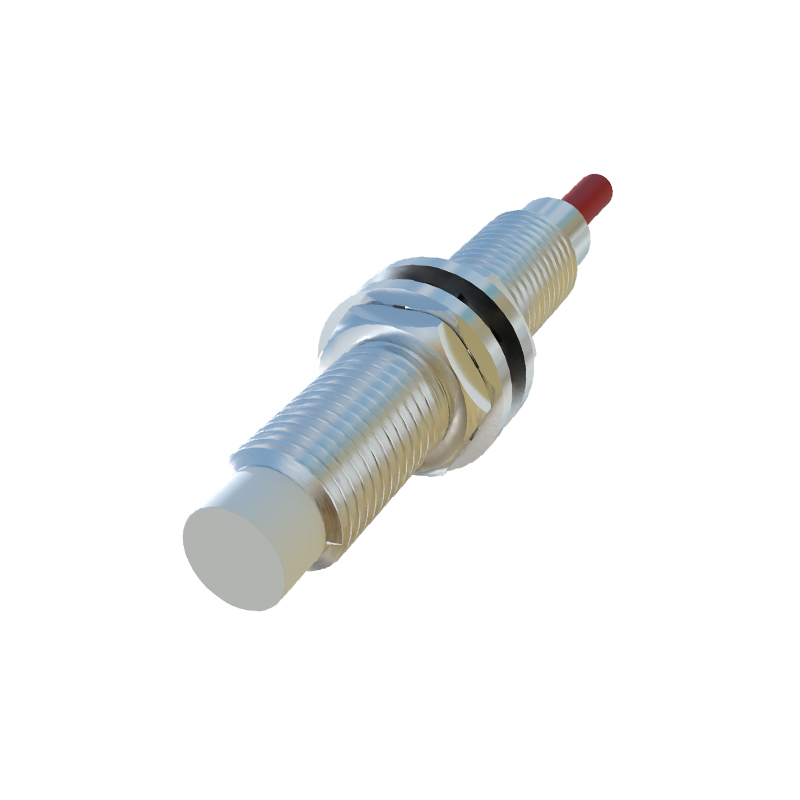
Engineered for industrial duty, proximity sensors exhibit exceptional robustness against environmental factors. Their housings are typically constructed from materials like nickel-plated brass, stainless steel, or rugged plastics (PBT), offering high resistance to corrosion, chemicals, and physical impacts. Many models feature ingress protection ratings such as IP67 or IP69K, making them dust-tight and capable of withstanding high-pressure water jets. They are designed to operate reliably across a wide temperature range, resist vibration and shock, and are often immune to interference from ambient light, electrical noise, or nearby sensors. This durability ensures consistent performance in demanding settings like welding shops, food processing plants, and outdoor applications.
Variety of Sensing Technologies and Outputs
The term "proximity sensor" encompasses several distinct sensing technologies, each with unique characteristics. Inductive sensors detect metallic objects (ferrous and non-ferrous) and are ideal for machine automation. Capacitive sensors can detect nearly any material, including liquids, powders, and plastics, making them versatile for level detection and non-metal applications. Ultrasonic sensors use sound waves to measure distance or detect objects, effective over longer ranges. Photoelectric sensors utilize light beams for detection. Furthermore, these sensors come with diverse output configurations—including NPN, PNP, analog (4-20mA, 0-10V), and IO-Link digital communication—providing seamless integration with PLCs, controllers, and various industrial networks.
Precision and Repeatability
A key performance characteristic is their high degree of precision and repeatability. The sensing distance, or "rated operating distance," is a specified value under defined conditions. High-quality sensors demonstrate minimal deviation from this nominal value, ensuring consistent detection point accuracy. Repeatability refers to the sensor's ability to consistently detect an object at the same position under unchanged conditions. This precision is vital for applications requiring exact positioning, such as in CNC machine tooling, robotic pick-and-place operations, and assembly line verification. Factors like temperature stability and target material composition are carefully engineered to minimize their impact on sensing performance.
Self-Diagnostic and Smart Features
Modern proximity sensors increasingly incorporate intelligent features that enhance system reliability and facilitate predictive maintenance. Many advanced models include built-in diagnostic capabilities, such as output status LEDs, short-circuit protection, overload protection, and reverse polarity protection. IO-Link enabled sensors can provide detailed operational data—like operating hours, temperature readings, signal strength, and switch cycle counts—directly to the control system. This allows for condition monitoring, early warning of potential failures, and easier troubleshooting, reducing machine downtime and contributing to the principles of Industry 4.0 and smart manufacturing.