Introduction to 12V Metal Sensing Proximity Switches
In the realm of industrial automation and control systems, the 12V metal sensing proximity switch sensor stands as a fundamental component. These non-contact sensors are engineered to detect the presence or absence of metallic objects without any physical contact, offering unparalleled reliability and longevity. Operating on a 12V DC power supply, a standard voltage in many automotive, mobile, and low-voltage control panel applications, these sensors provide a versatile and safe solution for a wide array of detection tasks. Their core principle of operation, typically based on electromagnetic induction or eddy current generation, allows for precise and rapid sensing of ferrous and, in many cases, non-ferrous metals, making them indispensable in manufacturing, packaging, and material handling industries.
Core Operating Principles and Technology
The functionality of a 12V inductive proximity sensor hinges on the generation of an oscillating electromagnetic field by an internal coil connected to the 12V DC circuit. When a metallic target enters this active field, eddy currents are induced on the surface of the metal. This process dampens the oscillation amplitude within the sensor's LC tank circuit. The sensor's integrated electronics monitor this change. Upon reaching a predefined threshold, the sensor's solid-state output switch—either NPN (sinking) or PNP (sourcing)—changes state. This switch typically controls a 12V load, such as a PLC input, relay coil, or indicator lamp. The sensing distance, or "switching distance," is standardized (e.g., Sn) and is influenced by the target's size, material, and the sensor's specific design.
Key Design Features and Specifications
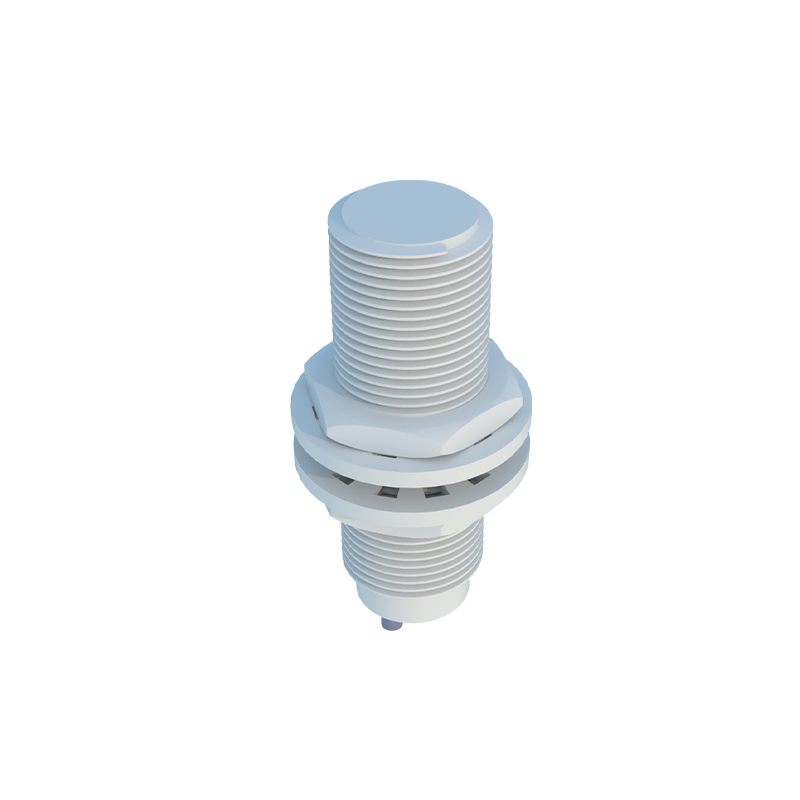
When selecting a 12V metal proximity sensor, several critical specifications must be evaluated. The sensing range, usually from 1mm to 30mm for standard cylindrical models, defines the operational envelope. The housing material, often nickel-plated brass, stainless steel, or PBT plastic, determines environmental resilience against coolants, oils, and physical impact. The output configuration is paramount: a 3-wire DC sensor with NPN normally-open (NO) or normally-closed (NC) output is most common for 12V systems. Key performance metrics include repeat accuracy, response frequency (up to several kHz), and temperature operating range. Many modern sensors feature built-in protection against short-circuit, reverse polarity, and overload, ensuring robust operation in demanding 12V electrical environments.
Advantages in Industrial Applications
The adoption of 12V DC metal sensing switches confers significant operational advantages. Their non-contact nature eliminates mechanical wear, leading to a virtually infinite operational life concerning switching cycles. They are immune to contaminants like dust, dirt, and moisture (with appropriate IP ratings like IP67), unlike mechanical limit switches. The high switching speed enables detection of small, fast-moving parts on assembly lines. Furthermore, their compatibility with standard 12V power sources simplifies integration into vehicle systems, battery-operated machinery, and control cabinets where higher voltages like 24V or 120V AC are undesirable or unavailable, offering a blend of performance and safety.
Installation, Wiring, and Configuration Guidelines
Proper installation is crucial for optimal performance. Sensors must be mounted securely to minimize vibration effects. A critical consideration is maintaining the correct mounting distance between adjacent sensors to prevent mutual interference. For flush-mountable models, the sensing range is reduced, but they can be installed without a lateral clearance. Wiring follows a standard scheme: the brown wire connects to the positive 12V DC supply, the blue wire to the negative/common, and the black wire is the switched output load wire. A protective fuse and a free-wheeling diode for inductive loads are recommended. Configuration often involves aligning the sensor so the target approaches the active face perpendicularly and fine-tuning the installation distance to account for the target material's "reduction factor."
Common Applications and Use Cases
The utility of 12V metal proximity sensors spans numerous sectors. In automotive manufacturing, they count gears, detect piston position, and confirm part presence in fixtures. Within conveyor systems, they monitor product flow, detect jams, and provide position feedback for sorting mechanisms. They are integral to CNC machinery for tool positioning and workpiece detection. Mobile equipment, such as agricultural or construction machinery, utilizes them for position sensing of hydraulic cylinders and boom arms due to their ruggedness and low-voltage compatibility. In security, they can detect door or gate closure. Their role in enabling simple yet critical automation sequences is universal.
Troubleshooting and Maintenance Best Practices
Despite their durability, sensors may encounter issues. Common problems include failure to detect, which may stem from an incorrect power supply (ens