Understanding Proximity Sensor Switches
Proximity sensor switches are indispensable components in modern industrial automation, providing non-contact detection of objects. Unlike mechanical limit switches, these sensors operate without physical contact, offering superior reliability, longer service life, and faster response times. They function by emitting an electromagnetic field, beam, or ultrasonic waves and detecting changes in the field or return signal when a target object enters their sensing range. This technology is fundamental to countless applications, from assembly line object counting and machine tool positioning to safety door monitoring and robotic guidance. The selection of the appropriate sensor type is critical and depends on factors such as the target material, required sensing distance, environmental conditions, and output signal needs.
Inductive Proximity Sensors
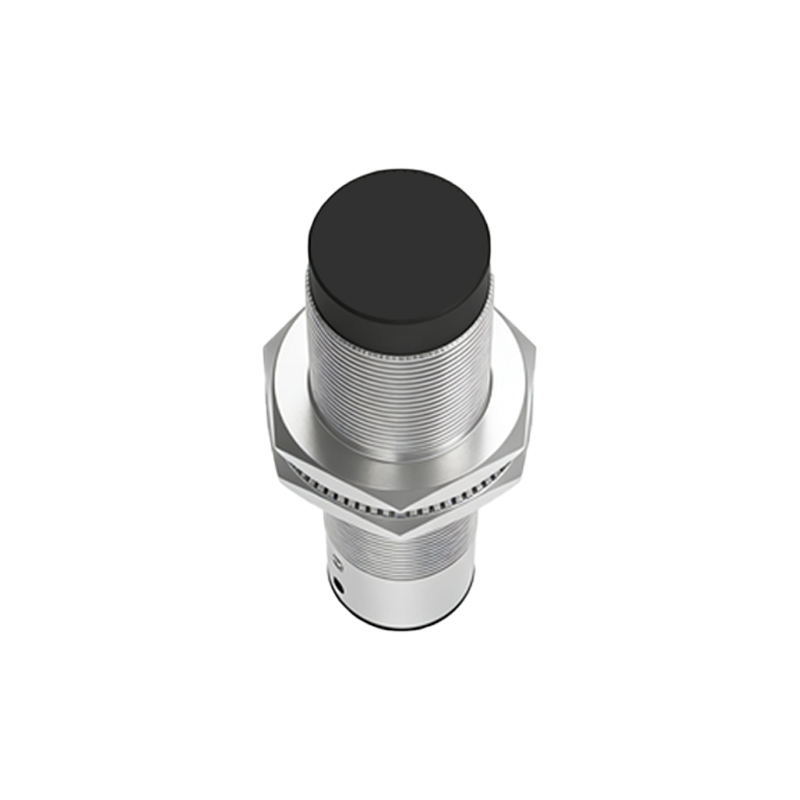
Inductive proximity sensors are the workhorses for detecting metallic objects. They generate an oscillating electromagnetic field from a coil. When a ferrous or non-ferrous metal target enters this field, it induces eddy currents, causing a change in the oscillation amplitude. This change is detected by the sensor's circuitry, triggering a solid-state output switch. Key advantages include high switching frequency, robustness against dirt, dust, and moisture (often rated IP67 or higher), and exceptional precision for positioning metal parts. They are ideal for use in harsh industrial environments like metal machining, stamping, and automotive manufacturing. Common sensing ranges vary from a few millimeters to about 60 millimeters, with factors like target material and size influencing the effective range.
Capacitive Proximity Sensors
Capacitive proximity sensors can detect both metallic and non-metallic materials, including liquids, plastics, glass, and wood. They operate by generating an electrostatic field. Any object with a dielectric constant different from air will alter the capacitance of the sensing field, triggering the output. This makes them incredibly versatile for applications involving material level detection of powders or liquids in tanks, presence detection of plastic bottles or cardboard boxes on a conveyor, or even detecting a human hand. They are sensitive to environmental factors like humidity and temperature, and their sensing range is typically shorter than inductive sensors. Proper mounting and calibration are essential to avoid false triggers from background objects.
Ultrasonic Proximity Sensors
Utilizing sound waves beyond human hearing, ultrasonic sensors measure the time it takes for an emitted pulse to reflect off a target and return. This time-of-flight principle allows them to detect objects of virtually any material, color, or transparency, and they are effective over longer distances—from a few centimeters to several meters. They excel in challenging applications such as clear glass detection, liquid level sensing in aggressive chemicals, and distance measurement on automated guided vehicles (AGVs). While highly reliable, their performance can be affected by temperature variations, air turbulence, and highly absorbent or angled surfaces. Advanced models feature temperature compensation for consistent accuracy.
Photoelectric Sensors
Photoelectric sensors use light beams to detect the presence, absence, or distance of an object. They consist of an emitter (light source, often LED) and a receiver. There are three primary operating modes. Through-beam sensors have separate emitter and receiver units; an object is detected when it interrupts the beam, offering the longest range and highest reliability. Retro-reflective sensors use a single unit and a reflector, detecting an object that breaks the beam to the reflector. Diffuse (proximity) sensors detect light reflected directly off the target object itself, with the emitter and receiver in one housing. They are perfect for detecting small parts, transparent materials, and for precise positioning, though they can be influenced by target color, reflectivity, and ambient light.
Magnetic Proximity Sensors (Reed Switches)
Magnetic proximity sensors, commonly reed switches, are simple, cost-effective devices activated by the presence of a magnetic field, typically from a permanent magnet. The switch contains two ferromagnetic reeds sealed in a glass tube. When a magnet approaches, the reeds attract and make contact, closing the circuit. They are renowned for their low power consumption, high reliability in billions of operations, and ability to operate in explosive or wet environments as they are hermetically sealed. Common applications include door and window security systems, detecting the position of pneumatic cylinders (using a magnet on the piston), and low-speed rotational sensing. Their main limitation is a relatively short sensing range and sensitivity only to magnetic fields.
Key Selection Criteria
Choosing the right proximity sensor requires a systematic evaluation of several parameters. First, identify the target material (metal, plastic, liquid) to narrow down the sensor type (inductive, capacitive, etc.). Next, determine the required nominal sensing range, considering that the actual range can be reduced for non-ideal