Introduction to Proximity Sensor Power Requirements
The power consumption of a proximity sensor is a critical parameter in system design, influencing everything from energy efficiency and heat dissipation to power supply selection and overall system longevity. Unlike high-power actuators or motors, proximity sensors are typically low-power devices, but their specific power draw varies significantly based on technology, size, sensing range, and output configuration. A fundamental understanding of these factors is essential for optimal integration into industrial automation, consumer electronics, or automotive applications. Power is usually specified in watts (W) or, more commonly for DC sensors, in terms of voltage range and maximum current draw.
Key Factors Influencing Sensor Power Draw
Several core elements dictate the operational power of a proximity sensor. The sensing technology is paramount. Inductive and capacitive sensors, which generate their own electromagnetic or electrostatic fields, typically consume more power than passive technologies like Hall-effect sensors, which rely on an external magnetic field. Sensing distance is another major factor; a sensor designed for a 40mm range requires a more powerful field than one for a 5mm range, directly increasing power needs. Furthermore, the output stage plays a role. A simple transistor output (PNP/NPN) consumes less power than a sensor with an analog output (4-20mA or 0-10V) or one with integrated diagnostics and IO-Link communication, which requires additional circuitry.
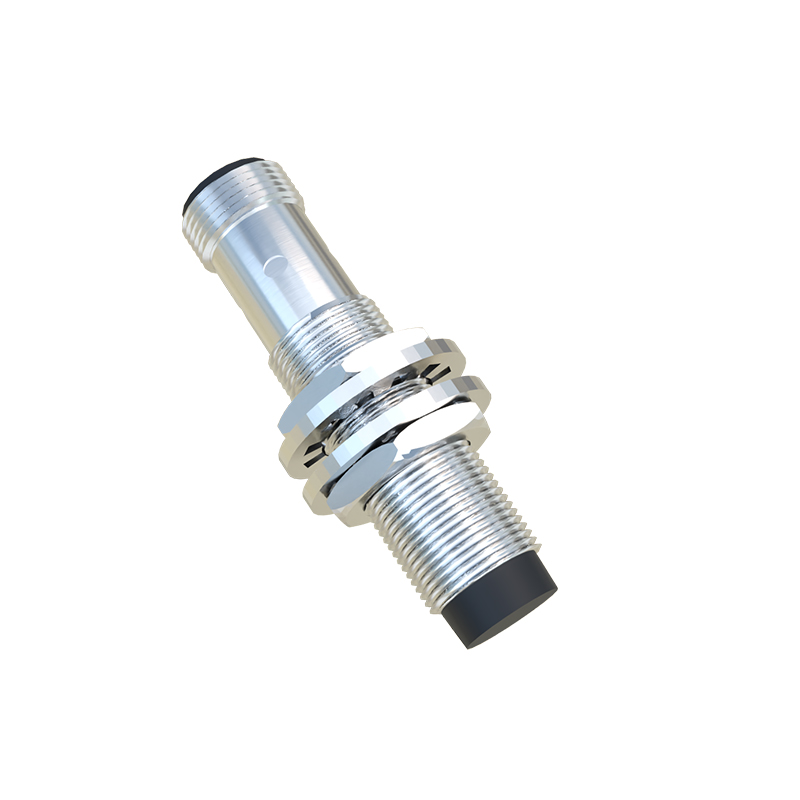
Typical Power Consumption by Sensor Type
Examining common sensor types provides concrete figures. Standard tubular inductive sensors (e.g., M12 or M18 housings) with a 10-15mm range and a 3-wire DC PNP output typically operate on 10-30V DC and draw between 10mA and 25mA. At 24V DC, this translates to a power consumption of approximately 0.24W to 0.6W. Capacitive sensors of similar size have comparable power profiles. Ultrasonic sensors, due to their piezoelectric transducers and more complex signal processing, often have higher current draws, ranging from 15mA to 50mA (0.36W to 1.2W at 24V). Photoelectric sensors vary widely; a compact diffuse sensor may use 15mA, while a long-range, modulated beam sensor could require 50mA or more.
Impact of Output Configuration and Features
The chosen output directly impacts the power budget. A standard two-wire AC sensor integrates the switching element directly into the power line, with leakage currents typically under 2mA. DC two-wire sensors have a residual current or voltage drop when "on," which constitutes their power loss. Three-wire DC sensors separate the supply and output, offering cleaner switching but drawing a continuous quiescent current for the internal oscillator and amplifier. Sensors with advanced features like teach-in functions, diagnostic LEDs (especially high-brightness ones), or digital communication protocols (IO-Link, AS-Interface) will have a higher base consumption to power the microcontroller and communication chip, often adding 5-15mA to the baseline.
Calculating and Managing System Power Load
For system design, engineers must calculate the total load. The formula is straightforward: Power (W) = Supply Voltage (V) x Current Draw (A). It is crucial to use the maximum current draw from the datasheet under worst-case conditions, including startup surges. When multiple sensors are connected to a single power supply, their currents sum. A PLC's digital input card also has a per-channel current limit that must not be exceeded by the sensor's output leakage current. To manage power, consider using energy-efficient sensor models, ensuring power supplies have adequate headroom (typically 20-30% above calculated load), and implementing sleep modes or pulsed operation where the application allows, which can drastically reduce average power consumption.
Low-Power Design for Battery-Powered Applications
In mobile or remote applications, minimizing sensor power is paramount. Here, sensor selection shifts towards technologies with inherently low quiescent current. Hall-effect and magnetoresistive sensors can draw microamps (µA) in a sleep state and only milliamps when active. Some photoelectric and ultrasonic sensors offer special low-power modes where the emitter is pulsed at a very low duty cycle, reducing average current to the sub-milliampere range. The key is to balance the required response time with the power-saving mode's wake-up period. Power management ICs can be used to switch power to the sensor only when needed, preserving battery life for months or years.
Conclusion: Selecting the Right Sensor for Power Constraints
There is no single answer to "how much power does a proximity sensor use." It ranges