Introduction to Proximity Sensing Technology
Proximity sensors are fundamental components in modern industrial automation, providing non-contact detection of objects. Among the various types, three-wire proximity metal sensors stand out for their reliability and widespread use in demanding environments. These sensors operate on the principle of electromagnetic induction, generating an oscillating electromagnetic field. When a metallic target enters this field, eddy currents are induced on the target's surface, causing a change in the sensor's oscillation amplitude. This change is detected by the internal circuitry, which then triggers a switching action. The "three-wire" designation refers to the standard wiring configuration: one wire for power supply (typically +V), one wire for ground (0V), and one wire for the output signal. This design offers a significant advantage over two-wire sensors by providing a separate output line, which allows for lower leakage current and more stable performance, especially when interfacing with programmable logic controllers (PLCs) and other sensitive control systems.
Core Components and Operating Principles
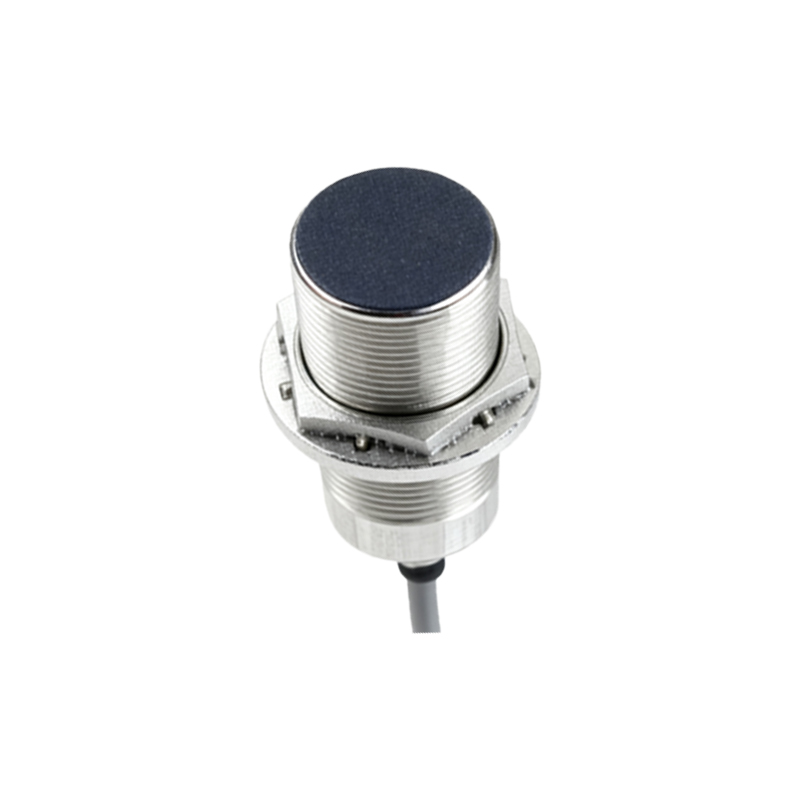
A standard three-wire inductive proximity sensor comprises several key components. The core element is an oscillator coil and ferrite core located at the sensing face. This assembly generates the high-frequency electromagnetic field. Accompanying circuitry includes an oscillator, a trigger circuit, and an output switching device, which is usually a solid-state transistor (NPN or PNP type). The housing is robust, often made of nickel-plated brass or stainless steel, ensuring resistance to mechanical impact, oils, and coolants. The operating principle is elegantly simple yet highly effective. In the absence of a target, the oscillator runs freely. The introduction of a conductive metal object absorbs energy from the electromagnetic field, damping the oscillations. The sensor's evaluation electronics monitor this damping. Once it reaches a predefined threshold—corresponding to the rated sensing distance—the trigger circuit activates, switching the output transistor state from "off" to "on" or vice versa, thereby sending a clear digital signal to the connected controller.
Wiring Configurations: NPN vs. PNP Outputs
A critical distinction in three-wire sensors is the type of output transistor, categorized as NPN or PNP. This classification determines how the sensor is wired into the control circuit and is essential for proper system integration. An NPN output sensor, often described as "sinking," switches the negative (0V) line to the load. In this configuration, the load (e.g., a PLC input) is connected between the sensor's output wire and the positive supply voltage (+V). When activated, the NPN transistor connects the output to 0V, completing the circuit and "sinking" current to ground. Conversely, a PNP output sensor, known as "sourcing," switches the positive voltage line. Here, the load is connected between the output and ground. Upon detection, the PNP transistor connects the output to +V, "sourcing" current to the load. The choice between NPN and PNP is largely dictated by regional conventions and the design of the control system's input modules, with PNP being more common in Europe and NPN in some other regions.
Key Performance Specifications and Selection Criteria
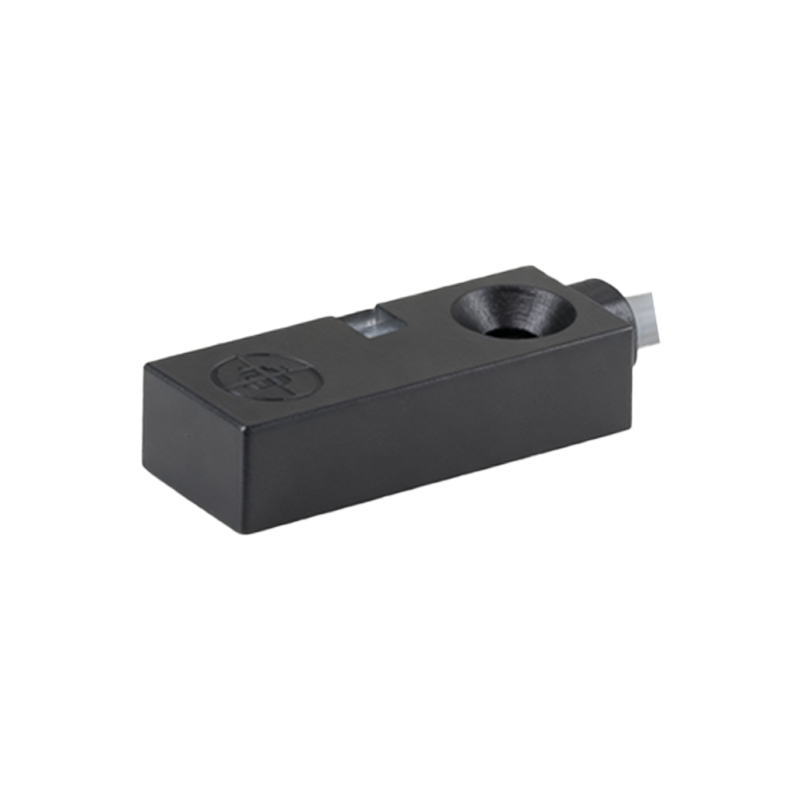
Selecting the appropriate three-wire metal sensor requires careful analysis of several technical parameters. The rated operating distance, or sensing range, is a primary specification, typically ranging from 1 to 15 mm for standard cylindrical models. It is crucial to note that this rating is defined for a standard mild steel target; different metals have correction factors (e.g., stainless steel may reduce the effective range). The switching frequency defines how quickly the sensor can respond, measured in Hertz (Hz), indicating the number of on/off cycles per second. Environmental ratings are paramount: the Ingress Protection (IP) code (e.g., IP67) defines resistance to dust and water, while temperature ranges specify operational limits. Electrical characteristics include the supply voltage range (commonly 10-30V DC), output current capacity, and whether the output is normally open (NO) or normally closed (NC). Engineers must also consider the housing style (threaded barrel, rectangular), mounting requirements, and connection type (pre-wired cable or quick-disconnect).
Common Industrial Applications and Use Cases
The versatility of three-wire proximity sensors makes them indispensable across numerous sectors. In automotive manufacturing, they are used for precise part presence verification on assembly lines, such as confirming a cylinder head is in place before machining. Packaging machinery relies on them for high-speed bottle or can counting on conveyor belts. In metalworking, they serve as limit switches for tool positioning on CNC machines or detect the end of a metal coil. Material handling systems