Understanding Capacitive Sensing Technology
Capacitive proximity sensors operate on a fundamental principle of physics: the ability to store an electrical charge. At its core, a capacitive sensor functions like an open capacitor. The sensor's active surface, or sensing face, forms one plate of this capacitor. When an object enters the sensor's electrostatic field, it acts as the second plate, altering the capacitance of the system. The sensor's internal oscillator circuit continuously monitors this capacitance. Once the change reaches a predetermined threshold, the sensor triggers a switching signal. Unlike inductive sensors that detect only metals, capacitive sensors can detect a vast range of materials, including liquids, powders, plastics, wood, and glass, by measuring their dielectric constant. This makes them exceptionally versatile for diverse industrial applications.
Design and Advantages of the Square Form Factor
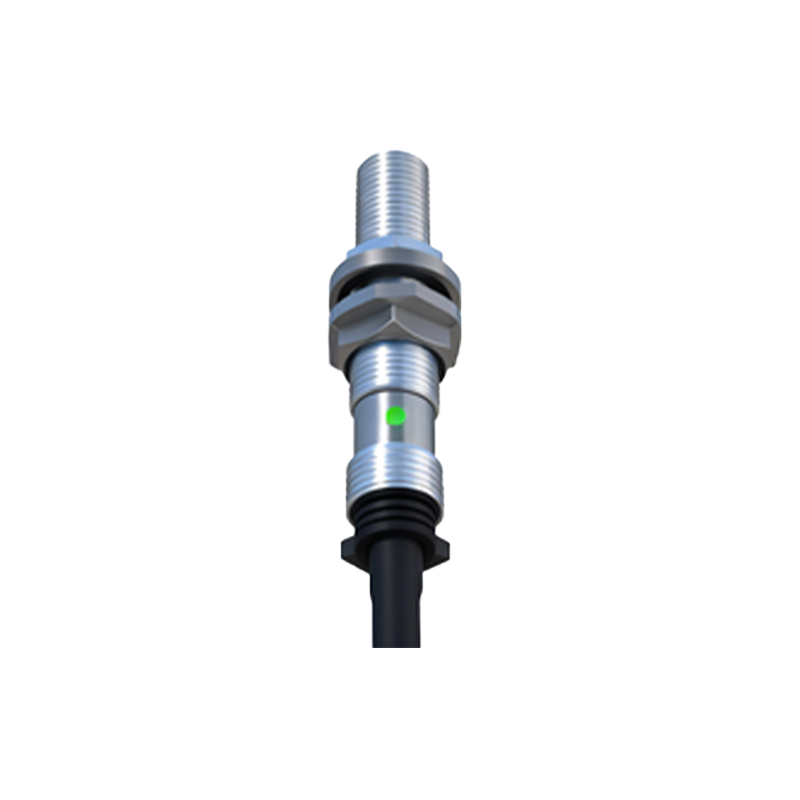
The square housing design of capacitive proximity sensors offers distinct mechanical and functional benefits. The flat, planar sensing surface provides a consistent and predictable detection field, which is particularly advantageous for level detection tasks. The square shape allows for easier integration into machinery with straight edges and flat surfaces, often simplifying mounting in tight spaces or on conveyor system frames. Many square models feature adjustable sensitivity potentiometers, enabling fine-tuning of the sensing range directly on the device. This adjustability is crucial for ignoring background materials, such as a container wall, to focus on the target material inside. The robust housing, typically made from materials like PBT or stainless steel, ensures high resistance to dust, moisture, and chemical splashes, aligning with IP67 or higher protection ratings.
Key Application Areas in Industrial Automation
Capacitive square proximity sensors are indispensable across numerous sectors. A primary application is level detection and control. They are mounted on the exterior of tanks, silos, or hoppers to monitor the presence or absence of liquids, granules, or powders without direct contact, preventing overfilling or running dry. In packaging lines, they verify the presence of non-metallic items like plastic bottles, cardboard boxes, or food products. They are also used for detecting transparent films or foils that optical sensors might miss. Furthermore, these sensors play a role in assembly verification, ensuring components like gaskets or plastic parts are present before a process continues. Their ability to function reliably in dirty or humid environments makes them suitable for wood processing, agriculture, and chemical plants.
Critical Selection Parameters and Installation Tips
Selecting the right capacitive square sensor requires careful consideration of several parameters. The sensing distance, or nominal range, is specified for a standard target (often metal). For non-metallic materials, the effective sensing range is reduced and depends on the material's dielectric constant. The output type—PNP (sourcing), NPN (sinking), or analog—must match the control system's input card. Environmental factors dictate the required housing material and ingress protection (IP) rating. For food-grade applications, FDA-compliant materials are necessary. Correct installation is paramount for reliable operation. Installers must ensure the sensor is mounted securely and that the sensing field is not influenced by surrounding conductive materials, which can cause false triggering. Maintaining a sufficient clearance around the active face, as specified in the datasheet, is essential for optimal performance.
Troubleshooting Common Operational Issues
Even with proper selection and installation, issues can arise. The most frequent problem is unstable switching or false triggers. This is often caused by material buildup on the sensing face, which alters the baseline capacitance. Regular cleaning is recommended. Another common cause is interference from a nearby grounded conductor or a variable background material. Adjusting the sensitivity potentiometer can usually resolve this. If the sensor fails to detect a target, verify that the target material's dielectric constant is sufficient and that it is within the adjusted sensing range. Always check the power supply voltage and wiring connections against the manufacturer's specifications. Understanding that the sensor's performance can be affected by temperature fluctuations and humidity levels is also key for diagnosing intermittent problems in harsh environments.