Understanding the Core Operating Principle
Diffuse reflective proximity sensors, often simply called diffuse sensors, represent a fundamental category in the world of industrial automation. Unlike through-beam or retro-reflective sensors that require separate components, a diffuse sensor houses both the light emitter (typically an LED or laser diode) and the receiver within a single housing. The principle is elegantly straightforward: the sensor emits a beam of light—commonly visible red, infrared, or laser light—towards a target. When this beam strikes an object, the light is scattered or "diffused" in all directions. A portion of this scattered light reflects back to the sensor's integrated receiver. The sensor's internal electronics then detect this returning light and trigger an output signal. The key differentiator is that the object itself acts as the reflector, eliminating the need for a separate reflector unit. This self-contained operation makes them exceptionally versatile for a vast array of applications where mounting a second component is impractical.
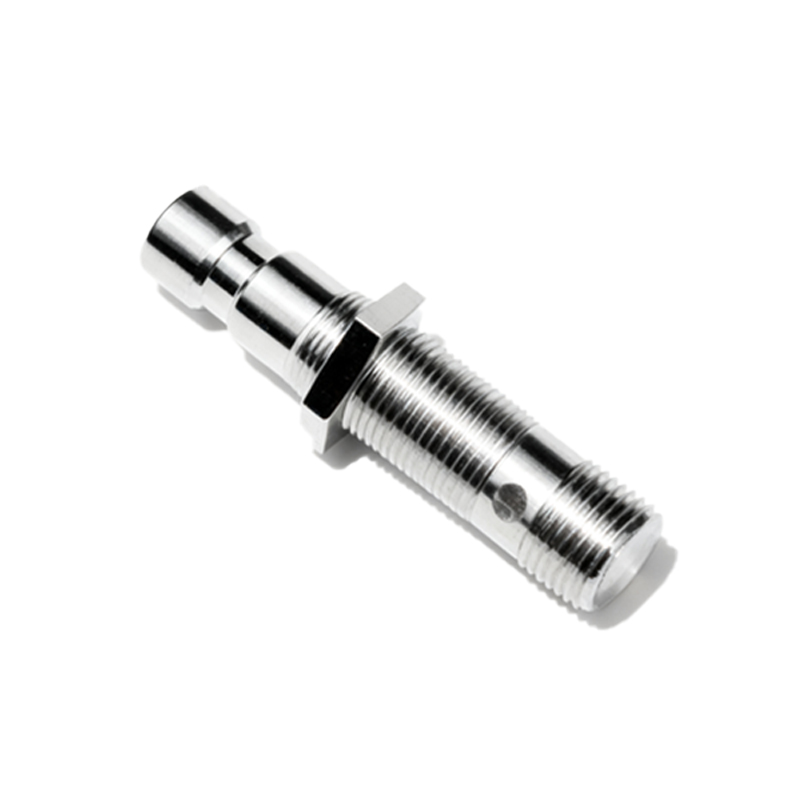
Evaluating Key Performance Advantages
The primary advantage of diffuse sensors lies in their simplicity of installation and setup. With only one device to wire and mount, they reduce mechanical complexity and installation time significantly. This one-sided mounting capability is invaluable in space-constrained environments. Furthermore, modern diffuse sensors offer impressive sensing ranges, with standard models detecting objects from a few millimeters up to several meters, depending on the technology (standard LED vs. laser-based). They are highly effective for detecting a wide variety of materials, including metals, plastics, wood, and even transparent glass or films when equipped with specialized background suppression technology. This technology allows the sensor to ignore distant background objects and only detect targets within a precise, adjustable window, solving a classic challenge of standard diffuse sensing. Their robust construction, often featuring IP67 or higher ratings, ensures reliable performance in harsh industrial settings with dust, moisture, and vibration.
Acknowledging Inherent Limitations and Challenges
Despite their versatility, diffuse sensors are not a universal solution. Their performance is inherently influenced by the color, surface texture, and reflectivity of the target object. A glossy white object will be detected at a much longer range than a matte black object of the same shape, which can affect application consistency. Environmental factors like ambient light, dust, or steam can also interfere with the light beam, potentially causing false triggers or missed detections. While background suppression models mitigate the issue of distant backgrounds, they can still be challenged by highly reflective surfaces in the sensing field. Additionally, the effective sensing range is always shorter than that of a through-beam sensor of comparable power, as the diffuse reflection process returns only a tiny fraction of the emitted light to the receiver. Understanding these constraints is crucial for proper sensor selection.
Critical Selection Criteria for Optimal Application
Selecting the right diffuse sensor requires a careful analysis of the application parameters. First, define the required sensing distance and factor in a substantial safety margin, considering the target's color and surface. Second, determine the necessary output type: discrete (PNP/NPN) or analog, and the required switching frequency for high-speed applications. The physical size and housing style (cylindrical, rectangular, slot-style) must suit the mounting constraints. For challenging environments, prioritize sensors with high IP ratings, robust housing materials like stainless steel, and features like polarized lenses to reduce glare interference. For detecting transparent objects or precise positioning, a laser-based diffuse sensor with background suppression is often the optimal choice. Always consult the sensor's detailed datasheet, paying close attention to its characteristic curves that show sensing distance versus target reflectivity.
Prevalent Industrial Use Cases and Applications
Diffuse sensors are workhorses across countless industries. In packaging and material handling, they reliably detect the presence of boxes, bottles, or bags on conveyors, controlling stops, starts, and counters. In assembly automation, they verify part presence in nests or fixtures before a robotic operation. Slot-style diffuse sensors are perfect for detecting the leading or trailing edge of web materials like paper, film, or foil. In the electronics industry, miniature diffuse sensors perform precise PCB positioning or component verification. Their ability to detect non-metallic objects makes them superior to inductive proximity sensors in many scenarios. From simple object detection to complex tasks like height differentiation and fill-level control in translucent containers, the diffuse reflective proximity sensor remains an indispensable, flexible tool in the engineer's arsenal, offering an excellent balance of performance, cost, and ease of use.