Introduction to M8 Long-Distance Proximity Sensors
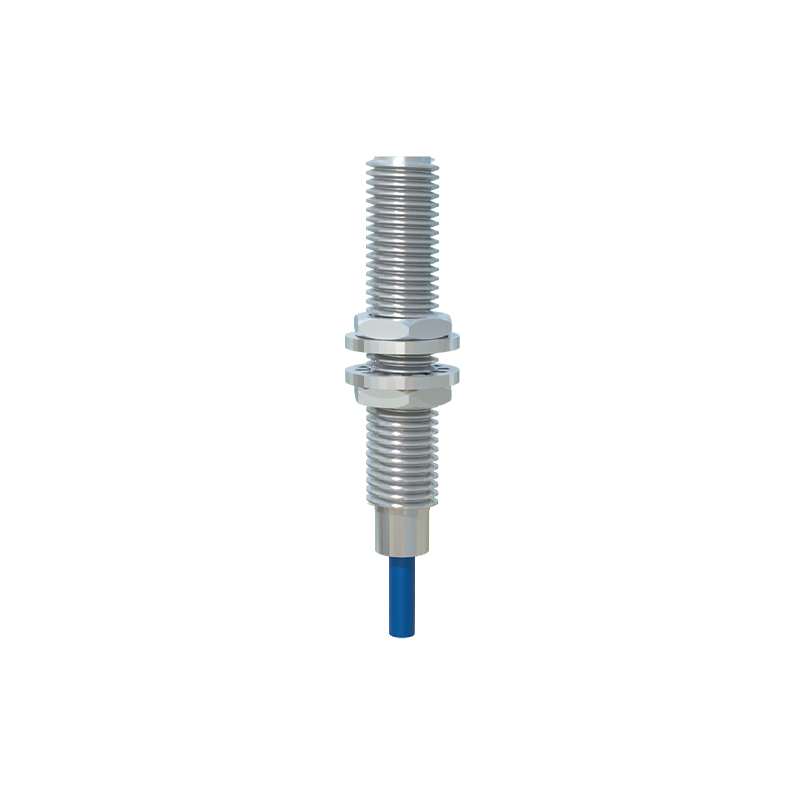
In the realm of industrial automation, precision and reliability are non-negotiable. The M8 long-distance proximity sensor represents a critical advancement in non-contact detection technology. Characterized by its compact 8mm cylindrical threaded housing, this sensor variant is engineered to deliver exceptional sensing ranges far exceeding those of standard M8 inductive or capacitive sensors. Unlike traditional proximity switches limited to a few millimeters, these specialized sensors can reliably detect metallic or specific non-metallic targets at distances ranging from 15mm to 40mm, and in some advanced models, even further. This capability makes them indispensable in applications where mounting space is constrained, but operational distance requirements are demanding. The fundamental principle often involves a tuned oscillation circuit or advanced ultrasonic/optical technology packaged within the robust M8 form factor, providing a unique blend of long-range performance and mechanical durability suitable for harsh industrial environments.
Core Technologies and Operating Principles
The extended range of M8 long-distance sensors is achieved through sophisticated engineering. Inductive models designed for metal detection utilize a high-frequency oscillating coil. When a metallic object enters the extended electromagnetic field, it causes a change in oscillation amplitude or frequency, which is then processed by the embedded ASIC (Application-Specific Integrated Circuit) to trigger a switching signal. For detecting non-metallic materials like plastics, liquids, or wood, capacitive M8 long-range sensors are employed. These measure changes in capacitance between the sensor's active face and the target object. Furthermore, some M8 long-distance sensors incorporate ultrasonic or modulated infrared light (photoelectric) principles. These types emit a signal—sound waves or light beams—and calculate distance based on the time-of-flight (ToF) of the reflected signal, enabling precise, long-range detection independent of the target's material properties, color, or surface finish.
Key Performance Specifications and Selection Criteria
Selecting the appropriate M8 long-distance sensor requires a meticulous analysis of key parameters. The primary specification is the rated operating distance (Sn), which defines the nominal detection range under standardized conditions. Engineers must also consider the hysteresis, which prevents output chatter, and the repeat accuracy, ensuring consistent triggering. The switching frequency defines how quickly the sensor can respond to objects passing by. Environmental robustness is encapsulated in the Ingress Protection (IP) rating, with IP67 and IP69K being common for washdown or dusty environments. The housing material, typically nickel-plated brass or stainless steel (e.g., V4A/AISI 316L), determines corrosion resistance. Output configuration (PNP/NPN, NO/NC) and electrical connection (pre-wired cable or connector) must align with the control system's PLC input card. Voltage range (commonly 10-30V DC) and current rating are also critical for seamless integration.

Advantages Over Standard Proximity Sensors
The advantages of implementing M8 long-distance proximity sensors are substantial. Their most prominent benefit is the ability to solve spatial challenges; machines can be designed with greater clearance between the sensor and the target, simplifying mechanical design and maintenance access. This extended range also enhances process safety by allowing detection earlier in a sequence, providing more time for the control system to react. Despite their long range, they retain the compactness of the M8 form factor, allowing for installation in tight spaces where larger sensors would be impossible. This combination leads to increased system flexibility and reliability. Additionally, by utilizing non-contact sensing, they eliminate mechanical wear, ensuring a long operational lifespan and reducing maintenance costs and downtime compared to mechanical limit switches.
Typical Industrial Applications and Use Cases
These sensors find critical roles across diverse industrial sectors. In automated packaging lines, they are used for precise carton presence verification on high-speed conveyors from a safe distance. Within automotive assembly, they monitor the position of robotic arms or verify the presence of components on pallets before a welding or assembly operation. In material handling, they are ideal for small-parts counting, bottle cap detection on filling lines, or monitoring the fill level in small hoppers. The food and beverage industry leverages their stainless-steel, washdown-ready variants for detecting transparent plastic containers or monitoring valve positions. In electronic assembly, their precision is key for verifying the placement of miniature components on PCBs. Essentially, any application requiring reliable, long-range detection in a compact, robust package is a candidate for the M8 long-distance sensor.
Installation Best Practices and Calibration
Correct installation is paramount to achieving specified performance. Mounting must be secure to prevent vibration-induced errors, and the use of proper locknuts is essential. A critical consideration is maintaining the recommended lateral and axial