Introduction to the LJ18A3 Proximity Sensor
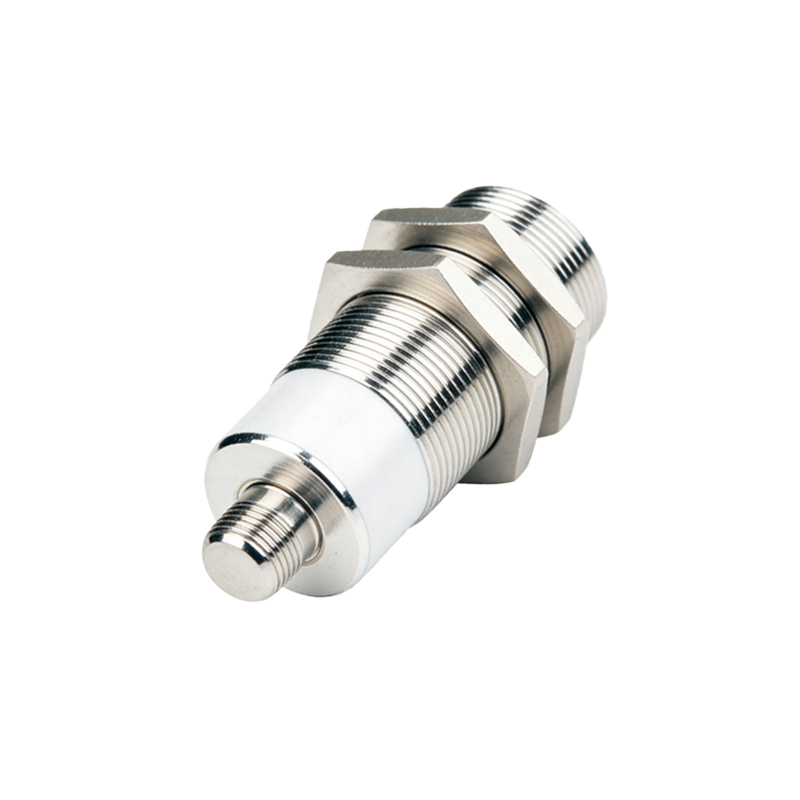
The LJ18A3 is a widely recognized model in the realm of inductive proximity sensors, serving as a fundamental component in industrial automation and control systems. This cylindrical, shielded sensor is designed for non-contact detection of metallic objects, offering reliability and durability in demanding environments. Its designation, LJ18A3, typically indicates an 18mm diameter cylindrical housing, with the "A3" often specifying key electrical characteristics like output configuration and sensing distance. These sensors operate on the principle of electromagnetic induction, generating an oscillating electromagnetic field from their sensing face. When a metallic target enters this field, eddy currents are induced, causing a change in the oscillator's amplitude. This change is detected by the sensor's circuitry, which then triggers a solid-state output switch.
Key Technical Specifications and Parameters
Understanding the technical specifications is crucial for proper integration. The LJ18A3 typically features a standard sensing range of 5mm or 8mm for mild steel, though this can vary slightly by manufacturer. It is commonly available in both NPN (sinking) and PNP (sourcing) transistor output configurations, with a 3-wire connection system (brown for V+, blue for V-, and black for the signal output). Operating voltage ranges are generally from 10-30V DC, making it compatible with standard industrial control voltages. The output current is typically around 200-300mA, sufficient to drive relays, PLC inputs, or small solenoids directly. Key performance metrics include a high switching frequency, often up to 1000 Hz, allowing for detection of rapidly moving objects, and a robust housing rated at IP67, ensuring protection against dust ingress and temporary immersion in water.
Wiring and Installation Best Practices
Correct installation is paramount for optimal performance and longevity. The LJ18A3's cylindrical body is designed for easy mounting via an M18 nut. It is a shielded (flush-mountable) type, meaning it can be installed flush with a metal mounting surface without a reduction in its nominal sensing range. When wiring, always refer to the manufacturer's datasheet. For an NPN version, the load is connected between the black output wire and the positive supply (brown wire). For a PNP version, the load is connected between the black output wire and the negative supply (blue wire). Ensure proper grounding and use shielded cables in electrically noisy environments to prevent false triggering. Maintain the recommended clearance distances from other metal objects and sensors to avoid mutual interference.
Application Scenarios in Industrial Automation
The LJ18A3 finds extensive use across various industrial sectors due to its robustness and precision. Common applications include object detection on conveyor belts for counting, sorting, or position verification. It is frequently employed in machine tools for detecting the presence or absence of a workpiece, tool, or fixture, serving as a critical input for safety interlocks and sequence control. In material handling systems, these sensors monitor the position of pallets, lifts, or robotic arms. They are also integral in packaging machinery for detecting metallic components or foil seals. Their non-contact nature makes them ideal for applications requiring wear-free operation, high-speed detection, or where physical contact with the target is undesirable or impossible.
Troubleshooting Common Operational Issues
Even reliable components like the LJ18A3 can encounter issues. A frequent problem is failure to detect a target. This can stem from an incorrect power supply, wiring errors (mixing NPN and PNP with incompatible controllers), or using the sensor beyond its specified sensing range. Ensure the target material is ferrous (like iron or steel) for standard inductive sensors; non-ferrous metals like aluminum or copper have a reduced effective range. False triggering is another common issue, often caused by electrical noise from nearby motors or welders, or by vibration causing metal chips to enter the sensing field. Verify grounding, check for environmental contaminants, and inspect the sensor face for buildup of metallic dust or debris, which can diminish performance.
Comparison and Selection Considerations
When selecting a proximity sensor, the LJ18A3 is often compared to other form factors and technologies. Compared to capacitive or photoelectric sensors, inductive sensors like the LJ18A3 are exclusively for metals, offering high immunity to environmental factors like dust, smoke, or light. Within the inductive family, considerations include the housing size (e.g., M12 for tighter spaces), sensing distance, and output type (2-wire AC/DC vs.