Introduction to the Sensing Paradigm Shift
The industrial automation landscape is in a constant state of evolution, driven by the relentless pursuit of higher efficiency, reliability, and flexibility. For decades, inductive and capacitive proximity switches have been the stalwarts of object detection in manufacturing and process control. Their robustness in harsh environments and simplicity made them a default choice. However, the advent of advanced photoelectric sensors is catalyzing a significant shift. These optical devices are no longer just niche alternatives; they are becoming preferred solutions for a broadening spectrum of applications, challenging the traditional dominance of proximity switches by offering superior range, versatility, and precision.
Fundamental Operating Principles Compared
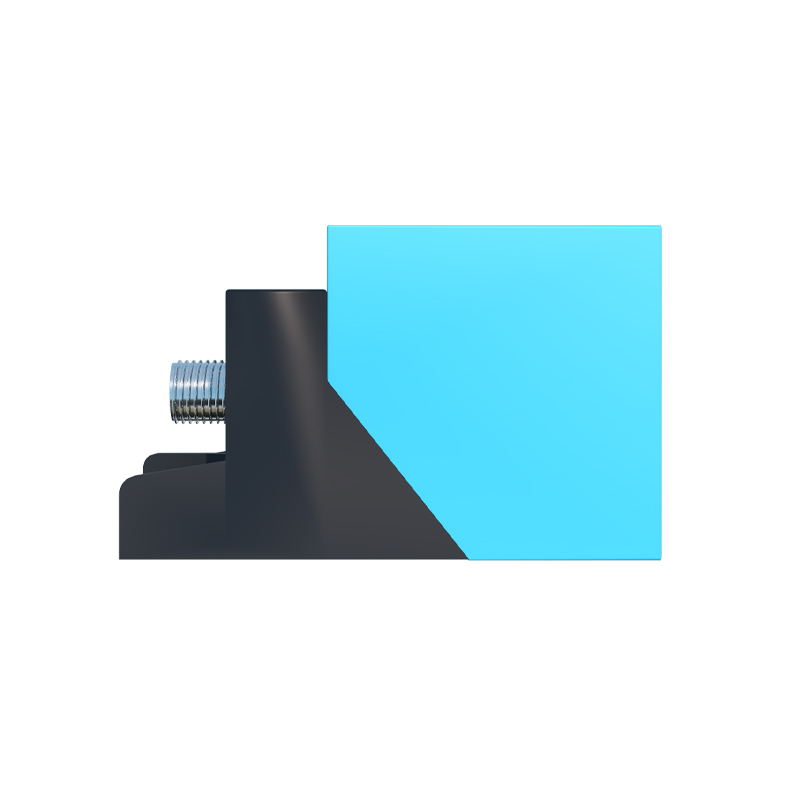
Understanding the core technology is key to appreciating the differences. A proximity switch, typically inductive for metals or capacitive for various materials, operates by generating an electromagnetic field. The presence of a target object within this field causes a detectable change (like eddy current loss or capacitance shift), triggering the switch. Its effectiveness is inherently tied to the material properties and the need for close physical proximity, usually within a few tens of millimeters. In contrast, a photoelectric sensor functions by emitting a beam of light—often visible red, infrared, or laser—from a transmitter. A receiver then detects the presence, absence, or intensity of this light beam. The detection is based on the interruption (through-beam), reflection (retro-reflective), or diffusion (diffuse) of this light, allowing it to sense objects irrespective of their material composition, from transparent glass to opaque metals, and at distances ranging from centimeters to hundreds of meters.
Key Advantages of Photoelectric Sensors
The benefits of photoelectric sensors are multifaceted. First is the exceptional sensing range. While a standard inductive sensor may detect a metal object at 20mm, a through-beam photoelectric sensor can reliably detect small objects several meters away. Second is material versatility. Photoelectric sensors can detect virtually any material: plastic, wood, liquid, glass, and metal. This eliminates the need for multiple sensor types on a line handling diverse products. Third is precision and speed. The focused light beam allows for the detection of very small objects and high-speed counting applications, with response times often in the microsecond range. Features like background suppression and precise background evaluation enable reliable detection of objects against complex backgrounds, a significant challenge for standard proximity sensors.
Addressing Traditional Limitations
Historically, photoelectric sensors were perceived as less robust in environments with dust, dirt, or heavy vibration. Modern designs have largely overcome these hurdles. Manufacturers now offer sensors with IP67, IP69K, and even higher ingress protection ratings, making them resistant to washdowns, oils, and particulates. Advanced lens designs and modulated LED light sources prevent interference from ambient light. Furthermore, the development of fiber optic cables, which can be attached to the sensor's amplifier, allows the sensing head to be extremely small, durable, and placed in incredibly tight or hostile locations (high temperature, high pressure), while the electronics remain safely housed elsewhere. This flexibility was unimaginable with traditional self-contained proximity switches.
Application-Specific Replacement Scenarios
The decision to replace a proximity switch with a photoelectric sensor is often application-driven. In packaging machinery, photoelectric sensors excel at detecting transparent films, labels, and low-reflectivity materials that capacitive sensors struggle with. On assembly lines, they are ideal for precise bottle cap placement verification or detecting missing components on PCBs from a distance. In material handling, they provide long-range detection for pallet positioning and warehouse automation. Even in traditional metalworking, where inductive sensors reign, photoelectric sensors with laser technology are used for precise edge detection or weld seam tracking due to their pinpoint accuracy. The ability to perform non-contact color detection and contrast sensing further opens doors in quality control that are closed to standard proximity switches.
Economic and Operational Considerations
While the initial unit cost of a photoelectric sensor can be higher than a basic proximity switch, the total cost of ownership and operational benefits often justify the investment. The reduced downtime from fewer false triggers, the flexibility to handle product changeovers without sensor replacement, and the increased line speed contribute to a faster return on investment. Furthermore, the diagnostic capabilities of modern photoelectric sensors, often featuring IO-Link communication, provide real-time data on signal strength, contamination levels, and operating temperature, enabling predictive maintenance and integration into Industry 4.0 data ecosystems—a strategic advantage over simple binary-output proximity switches.
Conclusion: A Complementary Future
The narrative is not about photoelectric sensors completely eradicating proximity switches. Inductive proximity sensors remain unbeatable for short-range, wear-free detection of metals in extremely dirty or metallic chip-l