Introduction to Proximity Sensing Technology
Proximity sensors are fundamental components in modern industrial automation, providing non-contact detection of objects. The CX-421 model represents a significant advancement in this field, engineered for reliability and precision in demanding environments. Unlike mechanical limit switches, proximity sensors like the CX-421 operate by emitting an electromagnetic field or a beam of electromagnetic radiation and detecting changes in the field or return signal. This technology allows for the detection of metallic objects without physical contact, thereby eliminating mechanical wear and tear, increasing operational lifespan, and enabling high-speed counting and positioning applications. The core principle hinges on the oscillation of a high-frequency circuit, which is damped when a metallic target enters the sensing field, triggering the output state change.
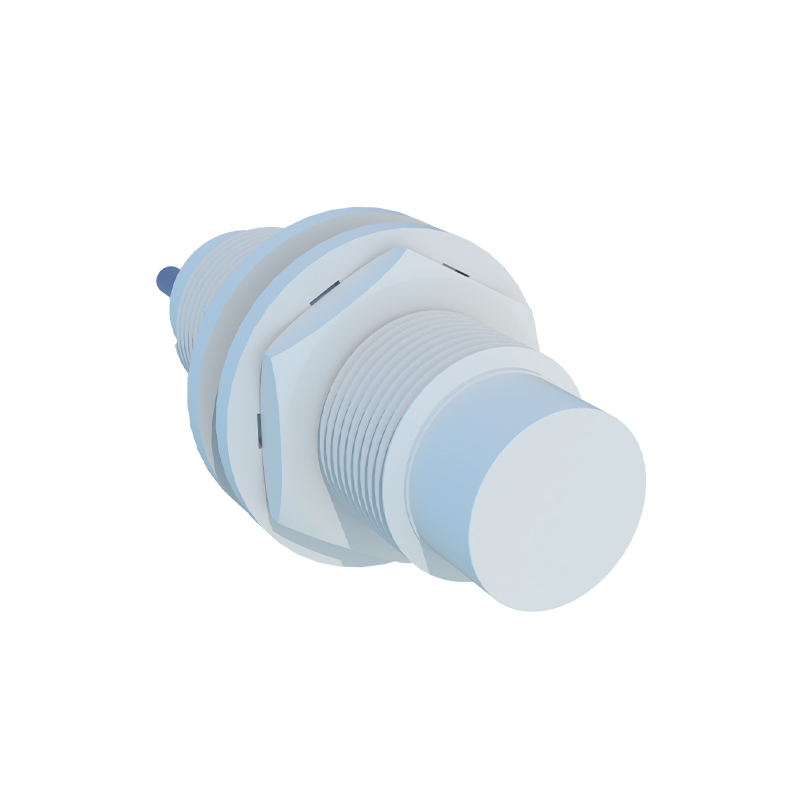
Key Specifications and Operating Principles of the CX-421
The CX-421 is typically an inductive proximity sensor designed for detecting ferrous and non-ferrous metals. Its key specifications define its application scope. The sensing distance, often rated at 5mm or 8mm depending on the variant, is a critical parameter. It operates on a standard DC voltage range, commonly 10-30V DC, with a stable current consumption. The output configuration is usually a 3-wire system with PNP (sourcing) or NPN (sinking) transistor outputs, providing a clean switching signal compatible with PLCs (Programmable Logic Controllers) and other control systems. The housing is constructed from nickel-plated brass or stainless steel, offering high resistance to corrosion, oils, and coolants. The operating principle involves a coil and oscillator that generates a high-frequency electromagnetic field at the active face of the sensor. When a metal object enters this field, eddy currents are induced on the metal surface, which loads the oscillator circuit, leading to a change in amplitude. This change is detected by the subsequent circuitry, which then switches the solid-state output.
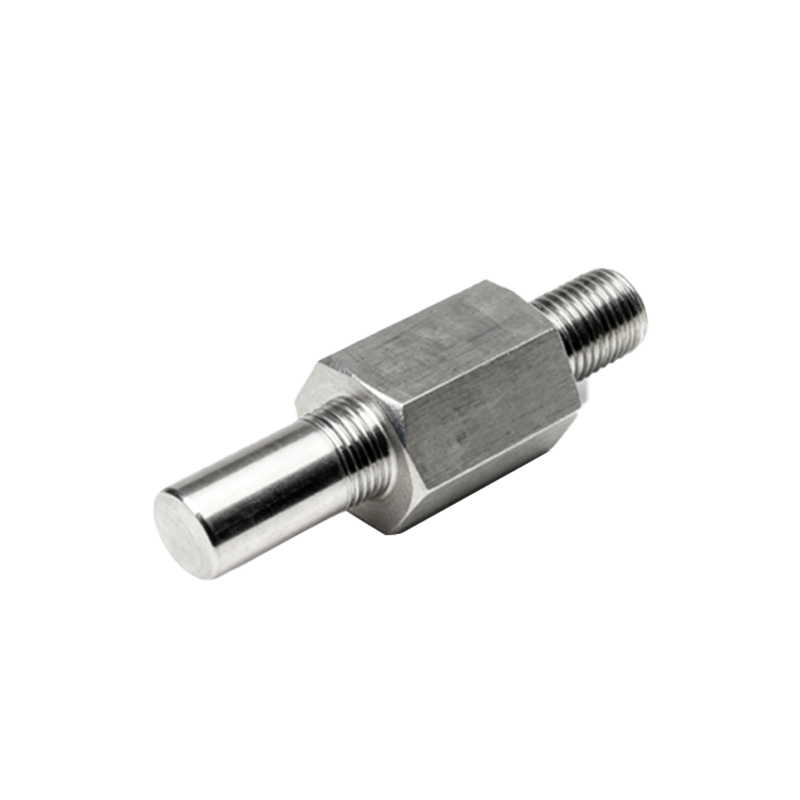
Design Features and Environmental Robustness
A standout feature of the CX-421 is its robust design tailored for harsh industrial settings. It boasts an IP67 or higher ingress protection rating, meaning it is dust-tight and can withstand temporary immersion in water. This makes it suitable for washdown areas in food processing or machining environments with heavy coolant use. The sensor incorporates built-in protection against short-circuit, reverse polarity, and voltage spikes, enhancing system reliability and reducing downtime. Many models also feature an LED status indicator that provides visual confirmation of power and output switching, aiding in installation and troubleshooting. The compact, cylindrical M12 or M18 threaded barrel design allows for easy mounting in confined spaces and standard industrial fittings. The temperature stability across a wide range, typically from -25°C to +70°C, ensures consistent performance in both freezing cold storage and hot factory floors.
Application Scenarios in Industrial Automation
The versatility of the CX-421 proximity sensor lends itself to a multitude of applications. In automated assembly lines, it is used for part presence verification, ensuring a component is in place before a robotic arm performs an operation. In material handling, it serves as a limit switch for detecting the position of pallets on conveyors or the end-of-travel for actuators. Machine tools extensively use these sensors for tool positioning, spindle orientation, and part counting. Packaging machinery relies on them for detecting metallic elements on packaging films for precise cut-off or seal operations. Furthermore, they are integral in safety interlocks, though not as primary safety devices, by confirming guard doors are closed before machine initiation. The non-contact nature is crucial in applications involving delicate materials or high-speed processes where physical contact would cause damage or inaccuracy.
Installation Guidelines and Best Practices
Correct installation is paramount for optimal performance of the CX-421. Mounting must consider the sensor's sensing direction (axial or lateral) and ensure the target approaches the correct active face. A minimum clearance, typically one to two times the sensor diameter, should be maintained between adjacent sensors to prevent mutual interference. The target material and size must meet the sensor's specifications; for instance, a standard mild steel target should be at least equivalent to the sensor's sensing face area. For non-ferrous metals like aluminum or copper, the effective sensing distance is reduced, and this derating factor must be accounted for in the design. Wiring should follow the manufacturer's diagram precisely, connecting the brown wire (typically +V), blue wire (0V), and black wire (output) to the correct terminals. Proper shielding and routing of cables away from high-power lines minimize electrical noise interference.
Troubleshooting Common Operational Issues
Even with robust design, operational issues can arise. A frequent problem is failure to detect the target. This can stem from an incorrect target material,