Introduction to Sensing Technology
Proximity and gesture sensors represent a significant leap in human-machine interface (HMI) technology. These components detect the presence, distance, or specific motions of an object, typically a human hand, without any physical contact. Operating on principles such as infrared (IR), capacitive, ultrasonic, or time-of-flight (ToF) sensing, they translate spatial information into electrical signals. This capability has become foundational for creating intuitive, responsive, and energy-efficient systems across consumer electronics, automotive interfaces, industrial automation, and smart appliances. The evolution from simple binary detection to sophisticated multi-axis gesture recognition has opened new frontiers in user experience design.
Core Operating Principles
The functionality hinges on the specific technology employed. Capacitive sensors, common in smartphones, detect changes in an electrical field caused by a conductive object like a finger. Infrared sensors, often used for simple proximity detection, emit an IR beam and measure the reflection. More advanced systems utilize modulated IR light and ToF calculations to determine precise distance. For complex gesture recognition, sensor arrays or 3D imaging sensors (like those based on structured light or ToF cameras) capture spatial data points. This data is then processed by dedicated algorithms to interpret specific motion patterns, such as swipes, zooms, or rotations, translating them into actionable commands for the host system.
Key Applications in Consumer Electronics
The most visible application is in smartphones and tablets. Proximity sensors disable touchscreens during calls to prevent accidental inputs, conserving power. Gesture sensors enable features like "air gestures" for scrolling or answering calls without touch. In laptops, sensors can wake devices as a user approaches or dim screens when the user looks away. Smart home devices leverage this technology for touchless light switches, faucet controls, and interactive displays. Virtual and augmented reality systems heavily rely on precise gesture tracking to create immersive environments where hand movements control virtual objects, enhancing realism and interactivity.
Automotive Industry Integration
Modern vehicles increasingly incorporate these sensors to improve safety and convenience. Proximity sensors are integral to parking assistance and blind-spot detection systems. Inside the cabin, gesture control is being adopted for infotainment systems, allowing drivers to adjust volume, accept calls, or navigate menus with simple hand movements, minimizing distraction compared to touchscreens or physical buttons. Some systems monitor driver presence and alertness through proximity and gesture monitoring, contributing to advanced driver-assistance systems (ADAS). This hands-free interaction paradigm is crucial for developing the user experience in next-generation autonomous vehicles.
Industrial and Medical Implementations
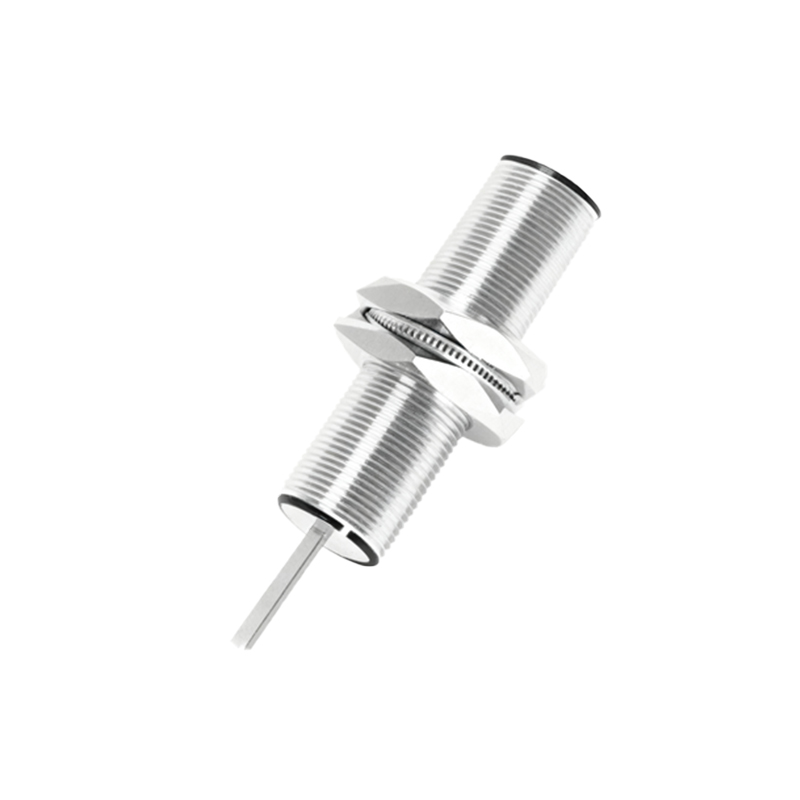
In industrial settings, proximity sensors are workhorses for object detection, counting, and machine safety interlocks, often in harsh environments where contact-based switches would fail. Gesture control finds use in sterile environments like operating rooms or cleanrooms, where surgeons or technicians can manipulate medical imaging displays or control equipment without compromising sterility. This touchless interaction reduces contamination risk and improves workflow efficiency. Furthermore, gesture-based interfaces can provide control for individuals with mobility challenges, offering an alternative to traditional input devices.
Design Considerations and Challenges
Implementing these sensors requires careful engineering. Key design parameters include sensing range, field of view, response time, power consumption, and immunity to environmental interference such as ambient light (for optical sensors) or conductive materials (for capacitive sensors). Sensor fusion—combining data from multiple sensor types (e.g., IR and ultrasonic)—is often employed to improve accuracy and reliability. Algorithm development for gesture recognition is complex, needing to filter noise and accurately interpret user intent across diverse conditions. Designers must also consider the human factors, ensuring gestures are intuitive, ergonomic, and fatigue-free for the end-user.
Future Trends and Developments
The future points toward greater miniaturization, lower power consumption, and enhanced intelligence. Sensors will become more integrated, with processing capabilities embedded directly into the sensor module (often called "smart sensors"). Machine learning algorithms will enable more adaptive and personalized gesture recognition, understanding user-specific motion patterns. The expansion of the Internet of Things (IoT) will drive demand for sensors that enable natural interaction with a proliferating number of connected devices. Furthermore, research into sub-millimeter wave radar and advanced 3D sensing promises even more precise detection of micro-gestures and subtle movements, potentially revolutionizing fields like sign language translation and advanced robotics control.