Introduction to M8 Proximity Sensors
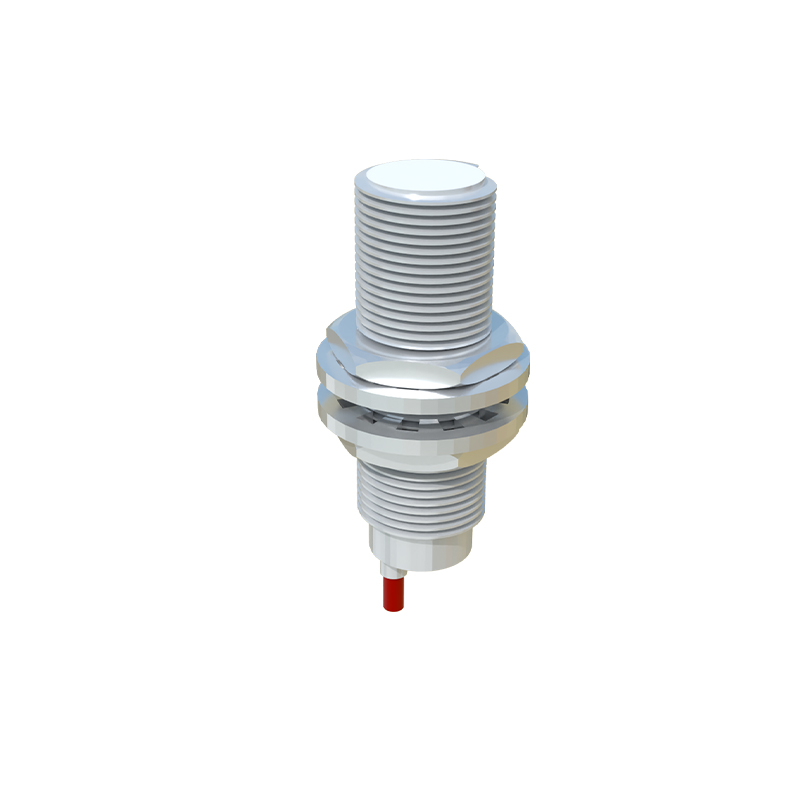
M8 proximity sensors are a fundamental component in modern industrial automation. Characterized by their compact 8mm cylindrical threaded housing, these sensors are designed for reliable non-contact detection of metallic objects. Their small form factor allows for installation in tight spaces where larger sensors cannot fit, making them indispensable in machinery, conveyor systems, and robotic applications. The "M8" designation refers specifically to the metric thread size of the sensor body, which is standardized for easy mounting and replacement. This standardization ensures compatibility with a wide range of mounting brackets and fixtures available on the market, simplifying integration for engineers and maintenance personnel.
Operating Principles and Technologies
M8 proximity sensors primarily utilize two core sensing technologies: inductive and capacitive. Inductive M8 sensors are the most common, generating an electromagnetic field to detect ferrous and non-ferrous metals without physical contact. When a metal object enters this field, it causes a change in oscillation, which the sensor's circuitry detects and converts into a switching signal. Capacitive M8 sensors, on the other hand, can detect both metallic and non-metallic materials, such as plastics, liquids, or wood, by measuring changes in capacitance. The choice between inductive and capacitive depends entirely on the target material and the specific application requirements, with inductive being favored for pure metal detection due to its high precision and immunity to environmental factors like dust or moisture.
Key Electrical Specifications and Output Types
Understanding the electrical specifications is crucial for proper selection. M8 sensors are typically available in DC voltage versions, commonly 10-30V DC. The output configuration is a critical parameter. Three-wire versions are standard, offering either PNP (sourcing) or NPN (sinking) transistor outputs. PNP sensors switch the positive voltage to the load, while NPN sensors switch the negative or ground side. Two-wire AC/DC versions also exist, simplifying wiring but often with slightly higher voltage drops. The output state can be normally open (NO) or normally closed (NC), defining the signal behavior when no target is present. The sensing range for a standard inductive M8 sensor is typically up to 2mm, though this can vary by model and target material.
Environmental Protection and Housing Materials
Industrial environments are harsh, demanding robust protection. M8 proximity sensors are frequently rated with an Ingress Protection (IP) code, such as IP67 or IP68. An IP67 rating guarantees protection against dust ingress and temporary immersion in water, while IP68 offers protection against prolonged immersion under specified conditions. The housing is usually constructed from nickel-plated brass or stainless steel (e.g., AISI 303, 304), providing excellent resistance to corrosion, chemicals, and mechanical impact. The sensing face is often made of a durable plastic like PBT or PPS, which allows the electromagnetic field to pass through while protecting the internal coil. This rugged construction ensures long-term reliability in demanding settings like automotive manufacturing, food processing, and packaging lines.
Wiring and Connection Standards
Connection is standardized for ease of use. Most M8 sensors feature a built-in 2-meter cable or a quick-disconnect (QD) connector system. The QD system, often following the M8 x 1 connector standard, allows for rapid sensor replacement without rewiring, drastically reducing machine downtime. The cable or connector wires are color-coded: typically, brown for positive supply (+V), blue for negative/ground (0V), and black for the switched output signal. Correct wiring according to the datasheet is essential to prevent damage to the sensor or the connected programmable logic controller (PLC). Proper shielding of cables is also recommended in environments with high electromagnetic interference (EMI) to ensure signal integrity.
Application Examples in Automation
The versatility of M8 sensors is demonstrated across countless applications. In robotic arms, they are used for end-of-arm tooling detection and verifying gripper positions. On assembly lines, they count products, detect the presence of components, or verify correct positioning before a machining operation. Within hydraulic or pneumatic cylinders, M8 sensors act as compact limit switches to detect piston rod position. They are also integral in rotary encoders for speed monitoring. Their small size is particularly advantageous in multi-axis CNC machines and compact electronic assembly equipment, where space is at a premium. Selecting the right sensor involves considering the target material, required sensing distance, switching frequency, and environmental conditions.
Installation and Maintenance Best Practices
Correct installation maximizes performance and lifespan. Engineers must ensure adequate clearance around the sensor, as metallic mounting brackets or machine frames can influence the sensing field if too close—a phenomenon known as "side-metal influence." The