Introduction to Inductive Proximity Sensing
Inductive proximity sensors are fundamental components in industrial automation, renowned for their non-contact detection of metallic objects. Operating on the principle of electromagnetic induction, these sensors generate an oscillating electromagnetic field from a coil wound around a ferrite core. When a conductive metal target enters this field, eddy currents are induced on the target's surface. This causes a change in the oscillation amplitude within the sensor's coil, which is detected by an internal circuit, triggering a solid-state output signal. This robust operating principle makes them immune to environmental factors like dust, oil, and moisture, distinguishing them from optical or capacitive sensors. Their primary application lies in position sensing, object counting, and speed detection in machinery, offering high reliability and long operational life without physical wear.
Shielded (Flush-Mountable) Type
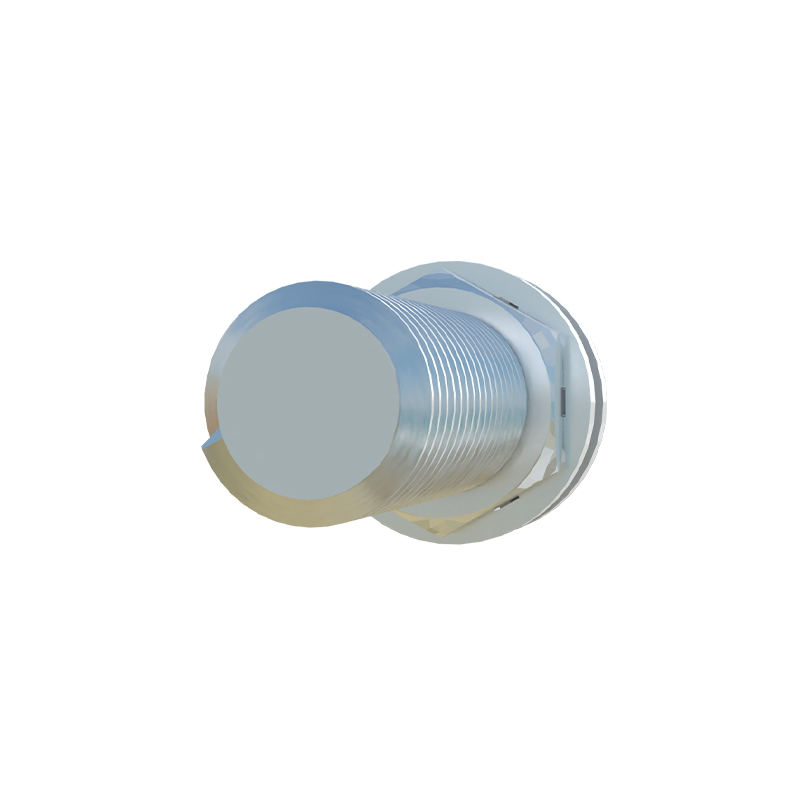
The shielded, or flush-mountable, inductive proximity sensor is characterized by a metal ring surrounding its sensing face. This shielding focuses the electromagnetic field directly in front of the sensor, preventing lateral dispersion. This design allows the sensor to be installed flush into a metal bracket or mounting surface without the risk of the bracket itself being detected as a target—a phenomenon known as "side sensing." Shielded sensors typically have a shorter sensing range compared to unshielded models of the same diameter. They are the preferred choice in applications with tight space constraints or where sensors must be mounted directly within metal machine frames, providing a clean, integrated installation. Their focused field makes them less susceptible to interference from adjacent metallic objects or other sensors.
Unshielded (Non-Flush Mountable) Type
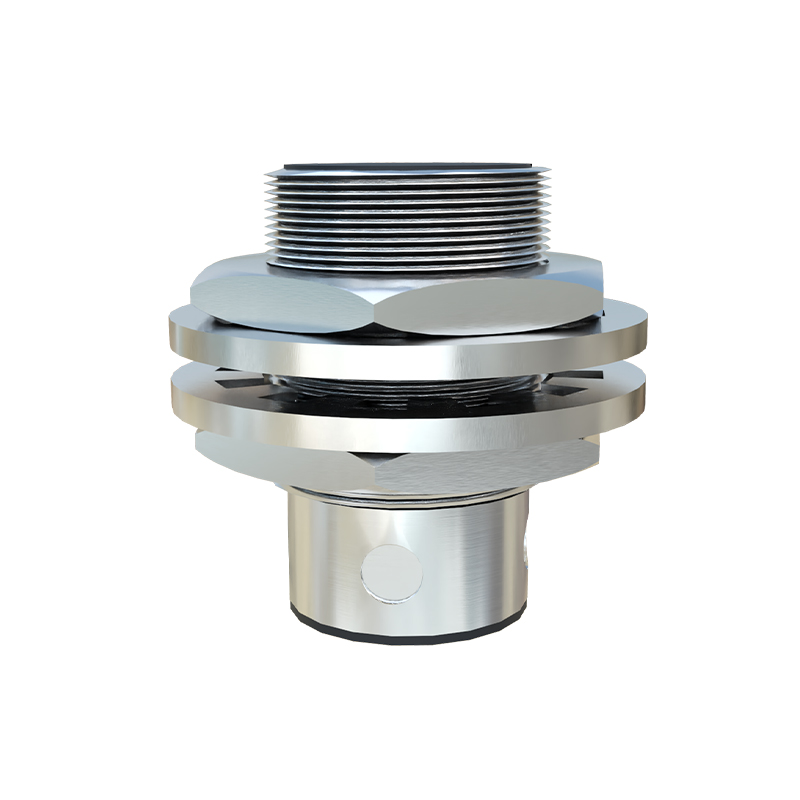
In contrast, the unshielded type lacks the front-facing metal ring, allowing its electromagnetic field to extend both forward and laterally. This results in a longer sensing range for a given sensor size. However, because the field is not contained, the sensor body must protrude from its mounting surface. If mounted flush in metal, the surrounding material would be detected, causing constant activation. Unshielded sensors are ideal for applications requiring extended range or where mounting in non-metallic materials is possible. Engineers must carefully consider the installation environment to avoid false triggers from nearby metallic structures. The extended range can be advantageous for detecting smaller targets or for providing an earlier warning in fast-moving production lines.
Analog Output Type
Moving beyond simple on/off detection, analog output inductive sensors provide a continuous signal proportional to the distance between the sensor and the target. Instead of a discrete switch, the output is typically a standardized analog voltage (e.g., 0-10V) or current (e.g., 4-20mA). This allows for precise measurement of an object's position, thickness, or vibration within the sensor's range. They are crucial in applications like monitoring brake pad wear, controlling robotic arm positioning, or gauging the diameter of a rotating metal shaft. The output curve can be linear or non-linear, depending on the sensor's design and calibration. These sensors offer a cost-effective solution for applications that require rudimentary analog positioning feedback without the complexity of a dedicated laser or ultrasonic measurement system.
Special Application Types: Factor 1 and All-Metal Sensing
Standard inductive sensors have a reduction factor—their effective sensing range decreases for non-ferrous metals like aluminum or copper compared to steel. "Factor 1" sensors are specifically engineered to have the same sensing range for all metals, including stainless steel, aluminum, and brass. This is achieved through specialized coil designs and advanced evaluation circuits. They simplify inventory and selection for plants using diverse materials. Another specialized variant is the "all-metal" sensor, optimized to detect any conductive material with high sensitivity, often at the expense of a slightly reduced maximum range. These types are indispensable in recycling facilities, food processing (with stainless steel), or automotive manufacturing where multiple metal types are present on the same line.
High-Temperature and Welding-Robust Types
Industrial environments often present extreme conditions. High-temperature inductive proximity sensors are built with heat-resistant materials, special cables, and electronics rated to withstand ambient temperatures exceeding 100°C, sometimes up to 200°C. They are used near furnaces, die-casting machines, or in engine test cells. Welding-robust sensors are another critical category. They are specifically shielded to resist damage from electromagnetic interference (EMI) generated by resistance welding equipment and are physically protected from spatter. Their circuitry is designed to ignore the massive electrical noise, ensuring reliable operation in automotive body shops and other heavy welding applications where standard sensors would fail prematurely or provide erratic signals.
Selection Criteria and Key Specifications
Choosing the correct inductive proximity sensor requires analyzing several key parameters