In the automated world of modern manufacturing, the ability to detect the presence, absence, or position of an object without physical contact is fundamental. This critical task falls to industrial proximity sensors, the silent sentinels that ensure precision, safety, and efficiency on countless production lines. Unlike basic switches, these robust devices operate reliably in harsh environments filled with dust, coolant, vibration, and electromagnetic interference, forming the essential sensory layer of industrial automation.
At their core, proximity sensors work by emitting a field or beam and detecting changes in that field caused by a target object. The technology behind this detection defines the primary sensor types, each with distinct advantages and ideal use cases. Inductive proximity sensors are the workhorses of metal detection. They generate an electromagnetic field and are triggered when a metallic target enters this field, causing a change in oscillation. Renowned for their durability, high switching frequency, and resistance to environmental factors, they are ubiquitous in machining, material handling, and robotic applications for detecting pistons, clamps, and metal parts. However, they are ineffective for non-metallic materials.
For detecting objects regardless of material composition—be it plastic, wood, glass, or liquid—capacitive proximity sensors are the solution. These sensors generate an electrostatic field and detect the change in capacitance when any object with a different dielectric constant enters the field. This makes them perfect for level detection in tanks (liquids or granules), monitoring presence of non-metallic products on conveyor belts, or detecting filled vs. empty bottles. Their sensitivity can often be adjusted, but they can be influenced by ambient humidity or contaminants.
For longer-range detection and precise positioning, photoelectric sensors use light. An emitter sends a light beam (often infrared, visible red, or laser) to a receiver. The three main operating modes are through-beam (separate emitter and receiver, offering the longest range and highest reliability), retro-reflective (a single unit using a reflector), and diffuse (or proximity) mode, where the sensor detects light reflected directly from the target. Photoelectric sensors excel at detecting small objects, seeing through transparent materials, and functioning over distances from a few centimeters to several meters, making them vital in packaging, assembly, and logistics.
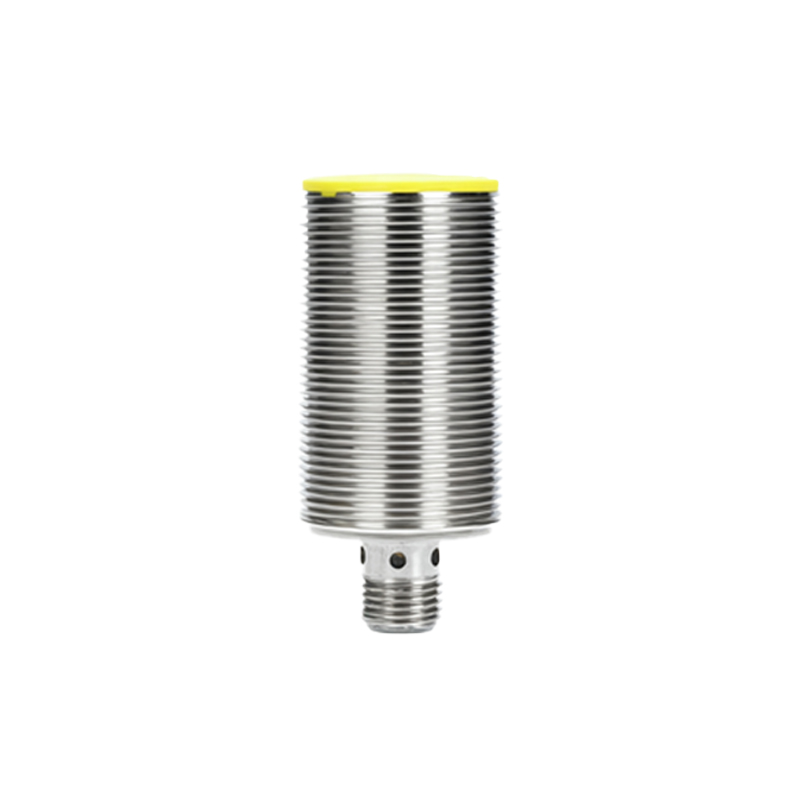
Finally, ultrasonic proximity sensors use sound waves, emitting high-frequency pulses and measuring the time for an echo to return. They are excellent for detecting objects of virtually any material, shape, or color, and are particularly adept at distance measurement and level sensing for bulk solids or clear liquids. They perform well in dirty environments but can be affected by temperature fluctuations and soft, sound-absorbing materials.
Selecting the right industrial proximity sensor requires a careful analysis of several key parameters beyond just the target material. The sensing distance, or nominal range, must be specified with a safety margin to account for installation tolerances and target variations. The sensor's housing material (often nickel-plated brass, stainless steel, or PBT plastic) must withstand the environmental conditions, including exposure to chemicals, washdowns, or extreme temperatures. Electrical characteristics are equally crucial: the operating voltage (commonly 10-30V DC or 90-250V AC), output type (PNP/NPN for DC, normally open/closed), and current rating must match the control system's PLC or input module.
Installation and environmental considerations can make or break sensor performance. Inductive sensors require a non-metallic "zone" around their sensing face to function correctly. All sensors must be protected from physical damage and excessive stress on their cables. In environments with heavy welding or strong motors, sensors with weld-field immunity or shielded designs are necessary to prevent false triggering. Understanding these nuances is key to achieving stable, maintenance-free operation.
The applications are as diverse as industry itself. On a high-speed bottling line, photoelectric sensors count and verify filled bottles. In an automotive welding cell, inductive sensors confirm the precise position of a robot arm. In a food processing plant, capacitive sensors control the level of flour in a silo, while ultrasonic sensors manage the filling of liquid tanks. By providing reliable, real-time feedback, these sensors enable the complex dance of automation, reducing downtime, preventing equipment damage, and ensuring consistent product quality.
In conclusion, industrial proximity sensors are far from generic components. They are sophisticated, application-specific devices. A successful implementation hinges on a thorough understanding of the target object, the environmental challenges, and the required electrical interface. By carefully matching the sensor technology—inductive, capacitive, photoelectric, or ultrasonic—to the specific task, engineers and technicians build a more reliable, efficient, and intelligent automated system, forming the foundational layer upon which modern industrial productivity is built.