In the world of automation and smart technology, proximity sensors are the silent, unseen workhorses. These devices detect the presence or absence of an object within a specific range without any physical contact. Their ability to perform reliably in harsh environments, provide fast response times, and offer non-contact operation makes them indispensable across countless industries, from manufacturing and automotive to consumer electronics and security systems.
At their core, proximity sensors operate by emitting a field or beam of electromagnetic radiation or by using an electrostatic field. When a target object enters this field, it causes a change in the signal. The sensor's circuitry detects this change and converts it into an electrical output signal, typically to trigger an action like stopping a machine, counting items, or activating a display. The key advantage is the lack of mechanical wear and tear, leading to exceptional longevity and minimal maintenance.
Several primary types of proximity sensors dominate the market, each with distinct operating principles and ideal use cases. Inductive proximity sensors are among the most common. They generate an electromagnetic field and detect only metallic targets, making them perfect for industrial automation—counting metal parts, determining position in machinery, or as limit switches. Their robustness allows them to function effectively in environments with dust, oil, or coolant.
Capacitive proximity sensors, on the other hand, can detect both metallic and non-metallic materials, including liquids, plastics, wood, and granules. They work by measuring changes in capacitance. When an object nears the sensing face, it alters the capacitance of the sensor's circuit, triggering detection. This makes them ideal for level detection in tanks, material handling, and presence detection of non-metal objects.
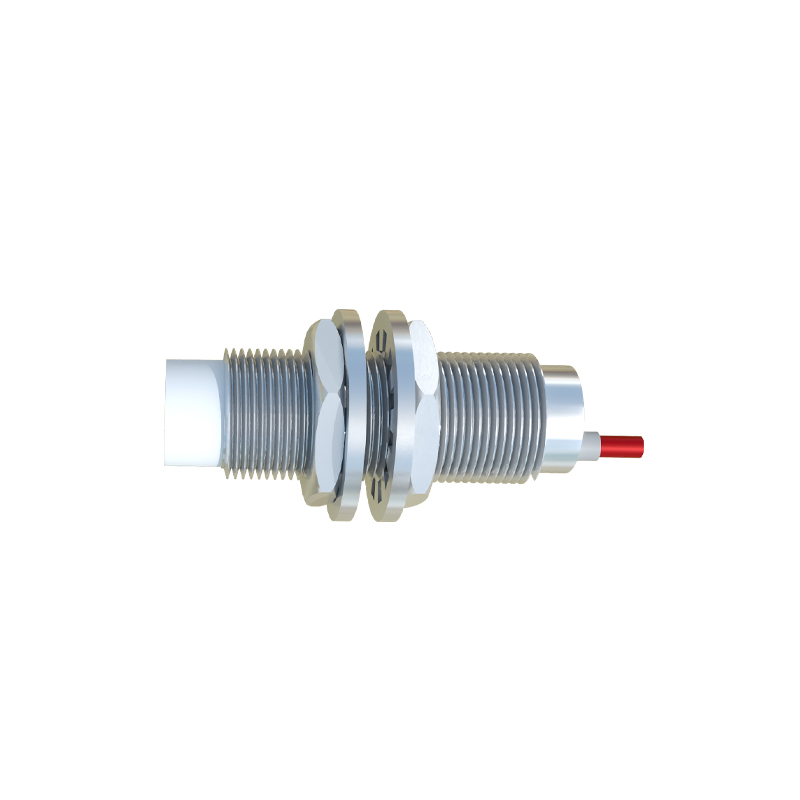
Photoelectric sensors use light, typically infrared, LED, or laser, to detect objects. They consist of a light emitter and a receiver. When the light beam is interrupted or reflected by an object, the sensor outputs a signal. These are highly versatile with long sensing ranges and are used for object detection, counting, and sorting on assembly lines, as well as in packaging machinery.
Ultrasonic proximity sensors measure the time it takes for a sound wave to reflect back from an object. They are excellent for detecting objects of any material, shape, or color, and are unaffected by dust, smoke, or light conditions. Common applications include distance measurement, liquid level control, and presence detection in challenging environments like car wash systems or bulk material handling.
The selection of the right proximity sensor is critical for system performance. Key parameters to consider include sensing distance, or the maximum range at which the sensor can reliably detect a standard target. The target material is paramount; choosing an inductive sensor for a plastic bottle would be futile. Environmental factors like temperature, humidity, and potential exposure to chemicals or washdowns dictate the required housing material and ingress protection (IP) rating. Output type—whether NPN, PNP, analog, or IO-Link—must be compatible with the control system. Finally, physical size and mounting style must fit the mechanical constraints of the application.
In practical applications, proximity sensors are everywhere. In a smartphone, a miniature capacitive or infrared sensor detects when the phone is held to your ear, turning off the display to save power and prevent accidental touches. In modern cars, they are used for parking assistance, blind-spot monitoring, and automatic door opening systems. On a factory floor, they ensure robotic arms pick and place items accurately, control the filling level of containers, and provide safety interlocks on machine guards.
Looking ahead, the evolution of proximity sensing continues. Miniaturization allows sensors to be integrated into ever-smaller devices. Enhanced intelligence through IO-Link communication enables sensors to provide diagnostic data, not just a simple on/off signal, facilitating predictive maintenance. Furthermore, the integration of multiple sensing technologies into single units is creating more adaptive and capable systems for the complex demands of Industry 4.0 and the Internet of Things (IoT).
In conclusion, proximity sensors are a foundational technology enabling automation, safety, and efficiency. Understanding their different types, operating principles, and selection criteria is essential for engineers, technicians, and anyone involved in designing or maintaining modern electronic and mechanical systems. By choosing the correct sensor for the specific application, one ensures reliability, longevity, and optimal performance of the entire system.