In the world of industrial automation and control systems, proximity sensors are indispensable components. Among the various types available, the two-wire proximity sensor stands out for its simplicity and widespread application. This guide delves into the fundamentals, operation, advantages, and key considerations for implementing these robust sensing devices.
A two-wire proximity sensor is a non-contact electronic device designed to detect the presence or absence of an object within its sensing range without physical contact. Unlike its three-wire or four-wire counterparts, it requires only two wires for connection: one for power supply and the other as the load line. This streamlined design integrates the power supply and switching signal into a single loop, making it a fundamental building block in many control circuits.
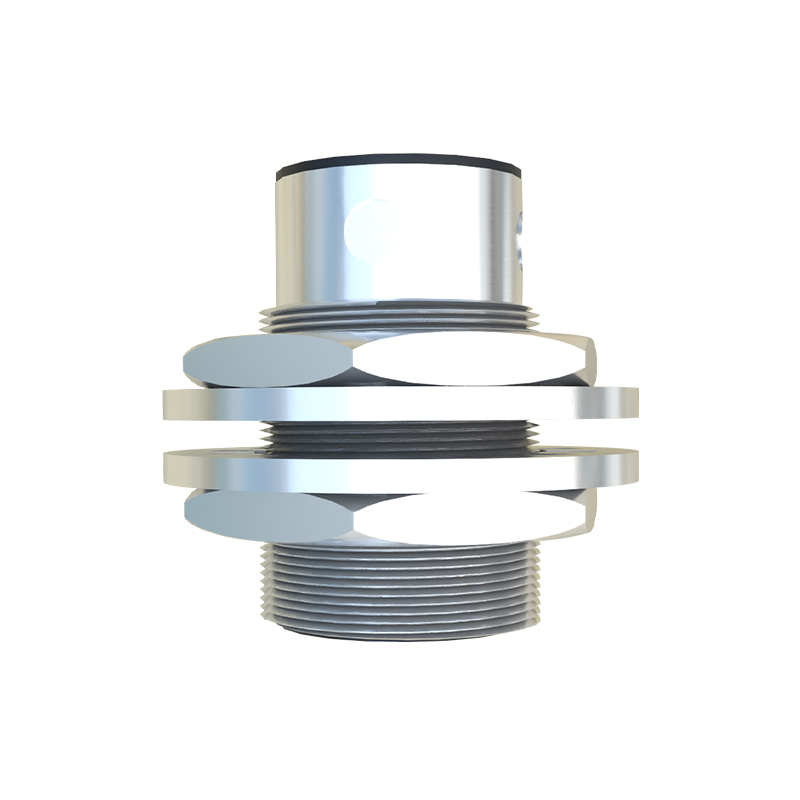
The core principle of operation is consistent across most types. The sensor contains an oscillator circuit that generates a high-frequency electromagnetic field at its active face. When a metallic target (ferrous or non-ferrous, depending on the sensor type) enters this field, it induces eddy currents, causing a change in the oscillator's amplitude. This change is detected by a threshold circuit, which then triggers a change in the state of the output switch. In a two-wire configuration, this switching action is performed by a solid-state semiconductor (like a MOSFET or a TRIAC) or, in some older models, a relay, directly in the power supply line.
There are two primary output types for two-wire sensors: Normally Open (NO) and Normally Closed (NC). In a NO configuration, the switch is open (non-conducting) when no target is present, and it closes (conducting) when a target is detected, allowing current to flow to the load. The NC configuration operates inversely. It is crucial to note that these sensors always have a small leakage current (typically under 2 mA) even in the "off" state. This residual current is necessary to power the sensor's internal electronics but is usually insufficient to activate most loads, like PLC inputs or relays, preventing false triggering.
The advantages of two-wire sensors are significant, driving their popularity. Their primary benefit is simplified installation and reduced wiring costs. With only two wires, connection is straightforward, minimizing potential wiring errors and saving on cable and conduit expenses. They are often directly interchangeable with mechanical limit switches, facilitating easy upgrades in existing systems. Furthermore, the absence of a separate signal wire can enhance reliability in electrically noisy environments, as the power and signal are inherently combined.
However, certain operational characteristics must be carefully considered. The aforementioned leakage current is paramount. Designers must ensure the connected load has a minimum required current draw (the minimum load current) to keep the sensor operational when "off," and that the leakage current is below the maximum off-state current tolerance of the load to prevent unintended activation. Voltage drop is another factor; since the sensor is in series with the load, the voltage available to the load will be slightly less than the supply voltage. Compatibility with AC or DC power supplies is also sensor-specific, with many modern models being DC-only or featuring wide-range AC/DC capability.
When selecting a two-wire proximity sensor, key specifications include:
Sensing Distance: The nominal range at which it can reliably detect a standard target.
Output Function: NO or NC.
Supply Voltage Range: The operating voltage limits (e.g., 10-30V DC, 20-250V AC).
Rated Operating Current: The maximum continuous current the switch can handle.
Leakage Current: The current flowing in the "off" state.
Housing Material: Typically nickel-plated brass, stainless steel, or PBT plastic, chosen for environmental resilience.
Protection Rating (IP Code): Such as IP67, indicating resistance to dust and temporary immersion.
Common applications span numerous industries. They are used for part detection on conveyor lines, position sensing of cylinders in pneumatic systems, end-of-travel limits on machinery, and bin level detection. Their ruggedness makes them suitable for harsh factory environments involving vibration, coolant, or metal chips.
In conclusion, the two-wire proximity sensor offers an elegant, cost-effective solution for object detection. Its integration of power and signal simplifies system design and maintenance. A thorough understanding of its operating principles, particularly regarding leakage current and load compatibility, is essential for successful implementation. By carefully matching the sensor's specifications to the application's electrical and environmental requirements, engineers can build reliable, efficient, and durable automation systems.