In the realm of precision measurement and detection, blue laser sensors have emerged as a transformative technology, offering significant advantages over their traditional red laser counterparts. Operating at shorter wavelengths, typically around 405 to 450 nanometers, blue lasers provide a fundamental improvement in resolution and accuracy. This characteristic makes them exceptionally suited for applications where minute details and high precision are paramount.
The core principle behind their superiority lies in the physics of light. A laser's spot size and its ability to resolve fine features are directly related to its wavelength. The shorter wavelength of blue light allows it to be focused into a much smaller, more concentrated spot compared to red lasers. This results in dramatically improved resolution for tasks like profile measurement, edge detection, and surface inspection. For instance, in electronics manufacturing, a blue laser sensor can accurately detect the finest circuit traces, solder joint defects, or microscopic contaminants on a silicon wafer that might be invisible to a red laser.
Beyond resolution, the interaction of blue light with various materials offers another set of benefits. Many materials, especially plastics, organic substances, and certain metals, have higher absorption rates for blue wavelengths. This stronger absorption leads to a clearer, more defined signal return for the sensor's receiver. It enhances contrast, allowing the sensor to reliably detect objects with low reflectivity, such as dark-colored or matte-finish surfaces, which often pose challenges for red lasers. This makes blue laser sensors indispensable in industries like automotive, where they inspect black rubber components, or in packaging, where they handle a wide variety of material types.
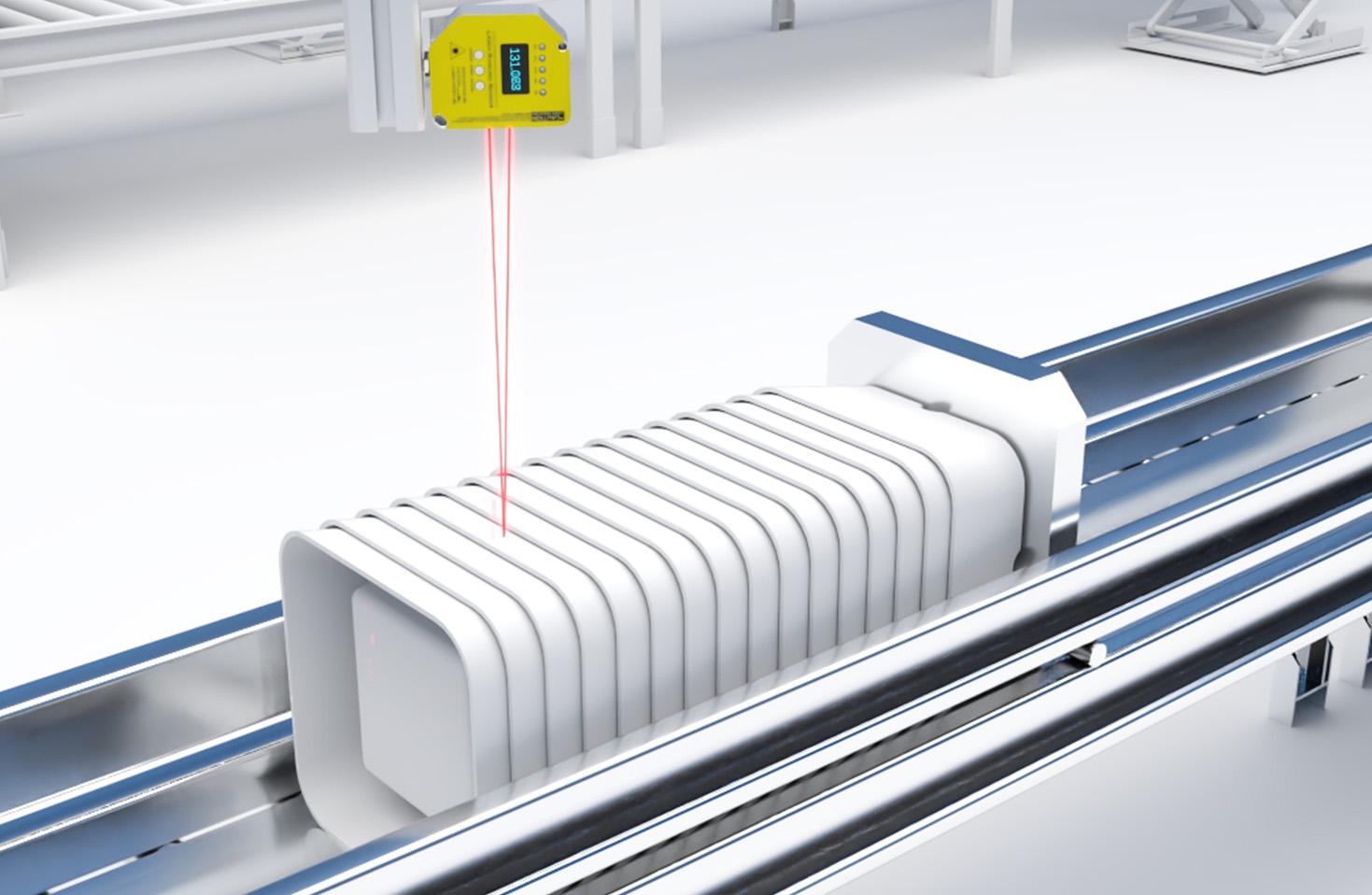
The applications of blue laser sensors are vast and growing. In high-precision manufacturing, they are integrated into coordinate measuring machines (CMMs) and optical profilometers for 3D scanning and dimensional analysis. They play a critical role in quality control, performing non-contact inspections for scratches, dents, and thickness variations. In the realm of automation and robotics, these sensors provide the accurate positioning data needed for delicate assembly tasks, pick-and-place operations, and guidance of autonomous mobile robots (AMRs) in dynamic environments.
Furthermore, the development of blue laser diode technology has made these sensors more compact, energy-efficient, and cost-effective. Early blue lasers were large and complex, but modern solid-state diodes have enabled the design of robust, industrial-grade sensors that can withstand harsh factory conditions involving vibration, dust, and variable temperatures.

When selecting a blue laser sensor, several key specifications must be considered. These include the measuring range, spot size, repeatability, and response time. The choice of a diffuse-reflective model for distance measurement versus a through-beam model for precise object detection depends on the specific application. Integration with industrial networks like EtherCAT, PROFINET, or IO-Link is also a standard requirement for modern smart factories, allowing for seamless data communication and control.
In conclusion, blue laser sensors represent a significant leap forward in sensing technology. By harnessing the properties of shorter wavelength light, they deliver unmatched precision, superior performance on challenging surfaces, and enhanced reliability. As industries continue to push the boundaries of miniaturization and quality standards, the adoption of blue laser technology is set to expand, driving innovation in automation, metrology, and beyond. Their ability to see and measure what was previously difficult or impossible makes them a cornerstone of advanced industrial systems.