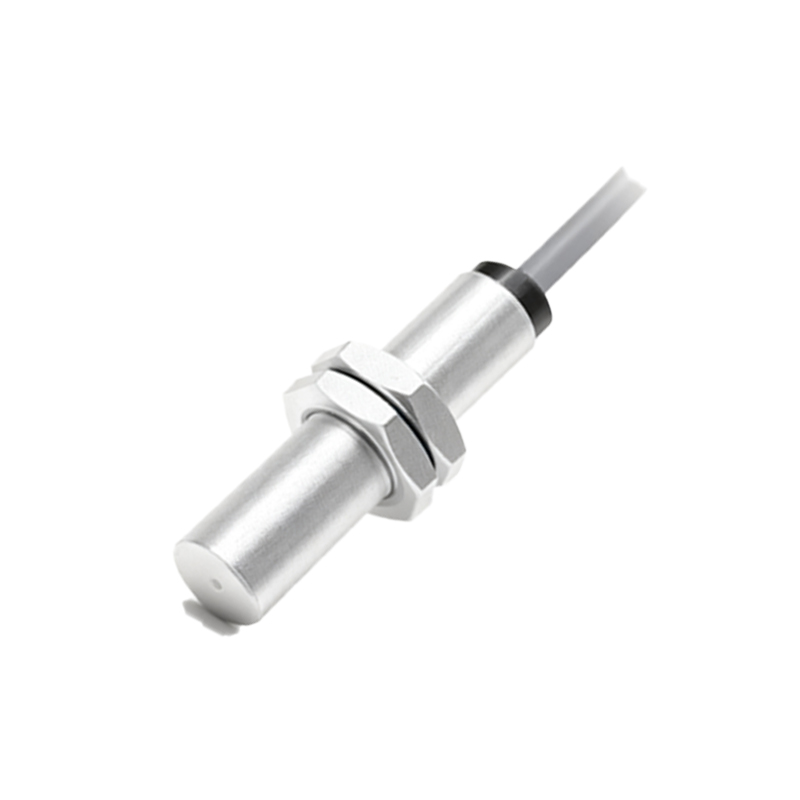
Capacitive proximity sensing is a non-contact detection technology that measures changes in capacitance to determine the presence or absence of a target object. Unlike mechanical switches or optical sensors, it operates by detecting the dielectric properties of objects, making it versatile for various materials, including metals, plastics, liquids, and even human skin. The core principle relies on an electrical field generated by a sensor electrode. When an object enters this field, it alters the local dielectric constant, leading to a measurable change in capacitance. This change is processed by integrated circuitry to trigger an output signal.
The fundamental operation involves an oscillator circuit. The sensor electrode forms part of the capacitor in an RC or LC oscillator. In its idle state, the circuit oscillates at a specific baseline frequency. The introduction of a target object into the sensing field increases the system's effective capacitance. This increase causes a decrease in the oscillator's frequency or a change in its amplitude. Sophisticated measurement techniques, such as measuring the charge/discharge time or using sigma-delta modulation, convert this analog change into a digital signal for the microcontroller. Modern controllers use algorithms to filter environmental noise, such as temperature drift or humidity changes, ensuring stable and reliable detection.
A key advantage of this technology is its ability to sense through non-conductive materials. The sensor can be placed behind a glass panel, plastic housing, or even a wooden surface. This enables the creation of sleek, sealed user interfaces without moving parts, ideal for appliances in humid or dirty environments. For instance, touch-sensitive buttons on kitchen appliances or proximity-activated faucets use this principle. The sensor does not require physical contact, reducing mechanical wear and tear.
The technology is broadly categorized into two modes: self-capacitance and mutual capacitance. In self-capacitance mode, a single electrode measures capacitance relative to ground. The human body, being a conductive object, has a relatively large ground-referenced capacitance. When a finger approaches, it couples to the electrode, significantly increasing the measured capacitance. This mode is highly sensitive and is commonly used for simple touch buttons and proximity detection. Mutual capacitance, in contrast, involves two electrodes: a transmitter and a receiver. The electric field couples between them. An object, especially a conductive one, disrupts this coupling, reducing the mutual capacitance. This method is the basis for multi-touch capacitive screens, as it can accurately detect multiple touch points independently.
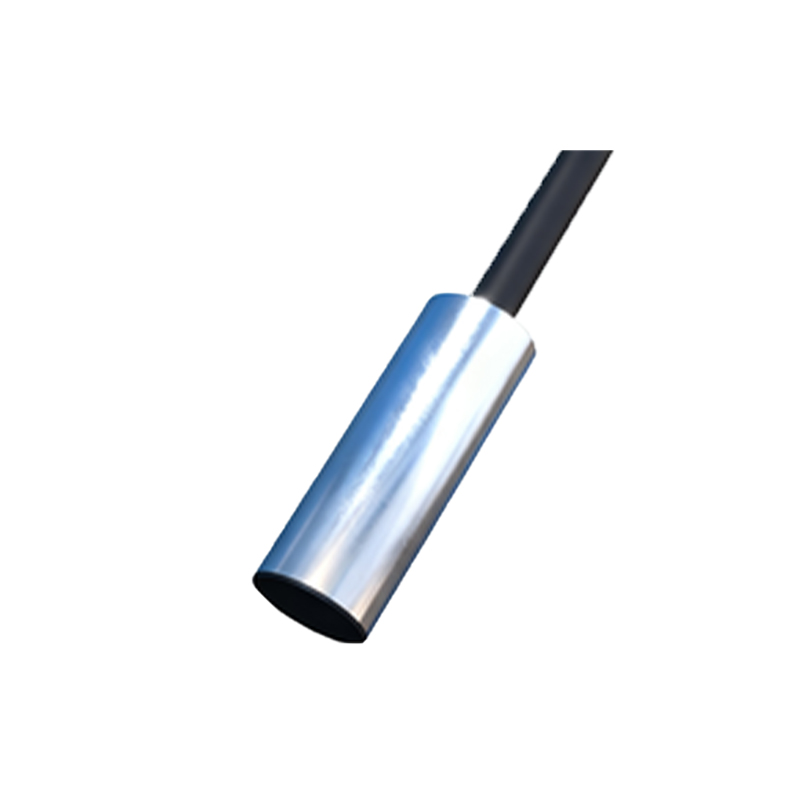
Designing a robust capacitive sensing system requires careful consideration. The sensor electrode's size, shape, and layout directly influence the sensing range and pattern. Larger electrodes generally offer longer ranges but may be less precise. The surrounding ground plane must be properly designed to shield the sensor from unwanted interference and to shape the electric field effectively. The choice of dielectric material covering the sensor is also critical; materials with a high dielectric constant will increase sensitivity but may also make the system more susceptible to environmental effects like condensation.
Applications are vast and growing. In consumer electronics, it enables touchscreens, touchpads, and gesture recognition. In the automotive industry, capacitive sensors create intuitive interior controls and detect occupant presence for advanced airbag systems. Industrial automation utilizes them for liquid level detection, part presence verification, and as non-contact limit switches. In the Internet of Things (IoT), low-power capacitive sensors can wake devices from sleep mode when a hand approaches, conserving energy. Furthermore, they are pivotal in creating interactive surfaces in public displays and smart home controls.
Compared to other sensing methods like inductive or ultrasonic, capacitive sensing excels with non-metallic targets and offers excellent resolution for short ranges. However, its performance can be affected by conductive contaminants like water or dust, and it typically has a shorter operational range than ultrasonic sensors. Ongoing advancements in integrated circuit design, such as microcontrollers with dedicated capacitive sensing peripherals, continue to simplify implementation, reduce power consumption, and enhance noise immunity. This ensures capacitive proximity sensing remains a cornerstone technology for intuitive and reliable human-machine interfaces across countless industries.