Through-beam laser sensors represent a pinnacle of precision in industrial automation and safety systems. Unlike diffuse or retro-reflective sensors, this technology relies on two separate units: a laser transmitter and a receiver. The transmitter emits a focused, coherent beam of light, which is then captured by the receiver positioned directly opposite. Detection occurs when an object physically interrupts this beam, triggering an output signal. This fundamental principle grants through-beam sensors unparalleled performance in specific applications.
The core advantage lies in their exceptional sensing range and reliability. Because the receiver detects the direct, unmodulated beam, these sensors can operate over long distances—often tens of meters—with extreme accuracy. The focused beam is minimally affected by environmental factors like ambient light, dust, or the color, reflectivity, or surface finish of the target object. This makes them ideal for scenarios where other photoelectric sensors might fail. For instance, detecting clear glass bottles on a high-speed filling line or verifying the presence of a highly reflective metal component becomes a straightforward task.
Typical applications span numerous industries. In material handling and logistics, they are deployed for precise object counting, high-speed break detection on conveyor belts, and ensuring proper package separation. Within automated assembly and robotics, they provide critical position verification for robotic arms and confirm part placement before a process cycle begins. Safety is another critical domain, where pairs of through-beam lasers create immaterial "light curtains" to guard hazardous areas around machinery, instantly halting operation if the beam is broken by a person or object.
Selecting the right through-beam laser sensor involves several key considerations. First is the required sensing distance, which dictates the necessary optical power. Next, the size of the target object determines the needed beam diameter and the receiver's lens specifications; detecting very small objects requires a finely collimated beam. Environmental conditions are paramount. While resistant to many interferences, extreme conditions may necessitate sensors with robust IP ratings, specialized housings, or even heated windows to prevent fogging or icing in cold environments. Finally, the output type (e.g., NPN/PNP transistor, relay, analog) must be compatible with the control system.

Installation and alignment, while critical, are often simplified in modern sensors. Precise mechanical mounting is the first step. Many contemporary models feature built-in visual or audible alignment aids, such as LED indicators that change color or brightness when the beam is optimally centered on the receiver. Some advanced versions even incorporate servo-driven mirror mechanisms for automatic alignment, reducing setup time and maintenance.
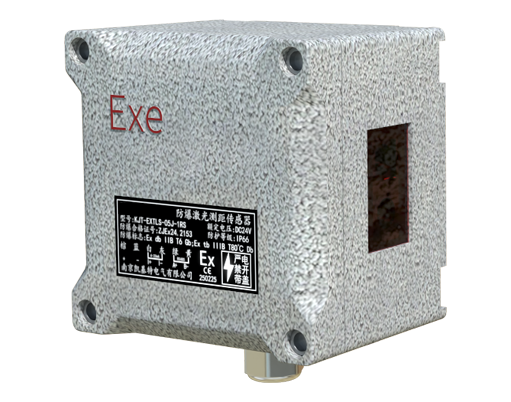
Looking forward, the integration of through-beam laser sensors with Industrial Internet of Things (IIoT) platforms is a growing trend. Modern sensors can provide not just a simple on/off signal but also diagnostic data like received light intensity, operating temperature, and lens contamination levels. This predictive maintenance capability allows plants to schedule cleaning or replacement before a failure causes downtime, enhancing overall system reliability.
In summary, through-beam laser sensors offer a robust, long-range, and highly reliable solution for object detection where maximum precision and environmental immunity are non-negotiable. Their fundamental operating principle, while simple, enables complex automation and safety functions that are essential in modern manufacturing, packaging, and robotic systems. When application demands exceed the capabilities of other sensor types, the through-beam laser sensor stands as the definitive choice.
