LiDAR sensors have become a cornerstone technology in the development of autonomous vehicles, providing a critical layer of perception that complements cameras and radar. Standing for Light Detection and Ranging, LiDAR works by emitting rapid pulses of laser light and measuring the time it takes for each pulse to reflect off surrounding objects and return to the sensor. This data is used to generate highly accurate, three-dimensional point cloud maps of the vehicle's environment in real-time. Unlike cameras, which can struggle with varying lighting conditions, or radar, which offers lower spatial resolution, LiDAR excels at creating precise depth maps regardless of ambient light, making it indispensable for object detection, classification, and distance measurement.
The core components of a typical automotive LiDAR system include the laser emitter, the scanner, the photodetector, and the navigation system. Modern systems often utilize solid-state designs, which have no moving mechanical parts, offering greater durability, a smaller form factor, and lower cost compared to earlier mechanical rotating units. These sensors are typically mounted on the roof, front grille, or around the vehicle's perimeter to achieve a 360-degree field of view. The resolution and range of a LiDAR unit are key performance metrics. Long-range LiDAR can detect objects over 200 meters away, which is crucial for highway driving, while higher angular resolution allows the system to distinguish finer details, such as the shape of a pedestrian's limbs or the contours of a bicycle.
The primary function of LiDAR in an autonomous driving stack is to create a reliable model of the world. The point cloud data is processed by sophisticated algorithms for simultaneous localization and mapping (SLAM), object tracking, and free-space detection. This enables the vehicle's computer to identify other cars, pedestrians, lane markings, curbs, and static obstacles with high fidelity. This environmental model is then fused with data from other sensors in a process called sensor fusion. By combining the precise depth information from LiDAR with the rich texture and color data from cameras and the velocity data from radar, the vehicle gains a robust, redundant understanding of its surroundings, which is essential for safe navigation.
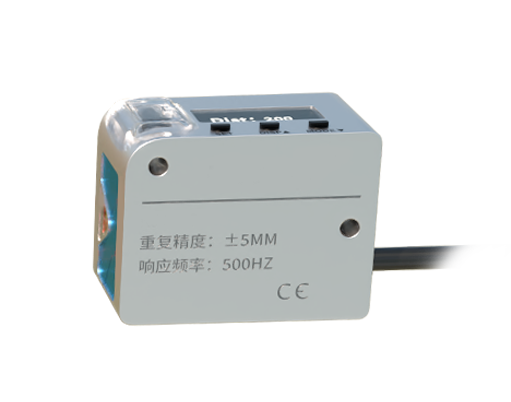
Despite its advantages, the widespread adoption of automotive LiDAR has faced challenges. Historically, the high cost of precision laser and scanning components was a significant barrier. However, advancements in semiconductor technology and the rise of mass production for consumer-grade LiDAR have driven prices down considerably. Another challenge is performance under adverse weather conditions. Heavy rain, fog, or snow can scatter the laser beams, reducing the sensor's effective range and accuracy. Manufacturers are addressing this through signal processing techniques, the use of different laser wavelengths, and by designing systems specifically to filter out noise from precipitation.
Looking forward, the evolution of LiDAR technology is focused on increasing performance while reducing size, power consumption, and cost. Key trends include the development of Flash LiDAR, which illuminates the entire scene with a single, wide beam instead of scanning, enabling faster data capture. Furthermore, chip-scale LiDAR, where the entire system is integrated onto a single semiconductor chip, promises to revolutionize the industry by enabling tiny, ultra-low-cost sensors that can be embedded throughout a vehicle's body. As these innovations mature, LiDAR will move from being a premium feature on high-end vehicles to a standard, ubiquitous component, accelerating the safe deployment of fully autonomous transportation.
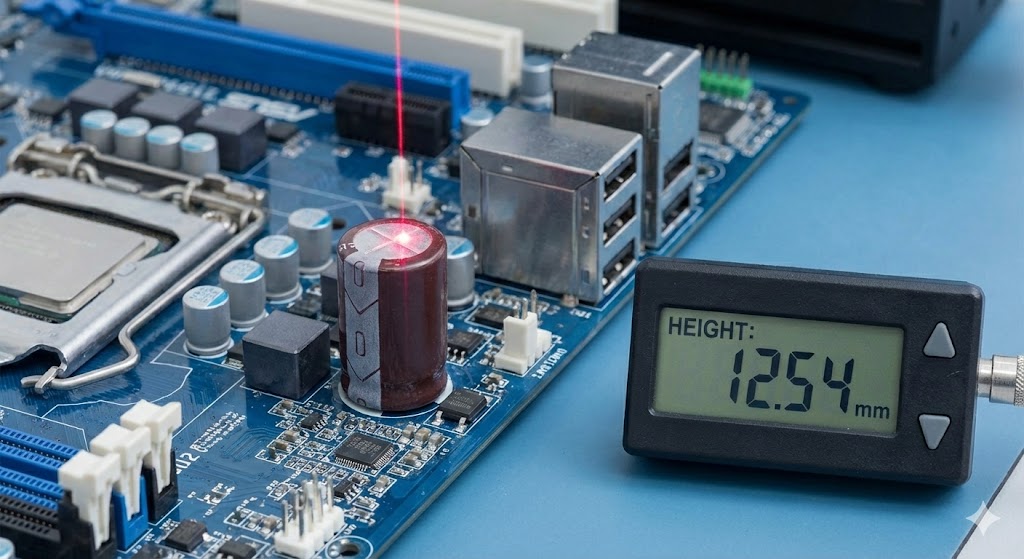
The integration of LiDAR is not just about hardware; it necessitates equally advanced software. Machine learning models are increasingly used to interpret point cloud data more efficiently, distinguishing between a plastic bag blowing in the wind and a small animal running into the road. The computational demands are immense, pushing development in onboard processing power and edge computing. Regulatory bodies and standardization organizations are also beginning to define performance and safety standards for automotive LiDAR, which will provide clearer benchmarks for manufacturers and increase public trust in the technology. Ultimately, the synergy between robust LiDAR sensing, intelligent software, and comprehensive sensor fusion will define the safety and capability of the self-driving cars of the future.