Laser Doppler Velocimetry (LDV), also known as Laser Doppler Anemometry (LDA), represents a cornerstone technology in the field of non-contact, high-precision velocity measurement. At its core, LDV operates on the fundamental principle of the Doppler effect, where the frequency of light scattered by moving particles within a fluid or from a moving surface undergoes a shift proportional to the velocity of that particle or surface. A typical LDV sensor system consists of a laser source, transmitting and receiving optics, photodetectors, and sophisticated signal processing electronics.
The operational principle is elegantly straightforward. A coherent laser beam is split into two beams of equal intensity. These beams are then focused and crossed at a specific point in space, known as the measurement volume. Within this tiny intersection region, an interference pattern of bright and dark fringes is created. When a seed particle, such as dust, aerosol, or a deliberately introduced tracer particle, passes through this fringe pattern, it scatters light whose intensity fluctuates at a frequency directly related to the particle's velocity component perpendicular to the fringes. A photodetector captures this scattered light, and the resulting signal's frequency is extracted through electronic processors like frequency trackers or spectrum analyzers. This frequency, known as the Doppler frequency, is linearly related to the velocity: v = (λ * f_D) / (2 sin(θ/2)), where λ is the laser wavelength, f_D is the Doppler frequency, and θ is the angle between the two intersecting laser beams.
The advantages of LDV sensors are numerous and significant. They offer exceptional spatial and temporal resolution, capable of measuring velocities from millimeters per second to supersonic speeds without any physical contact, thereby eliminating flow disturbance. They provide a linear output with high accuracy and are inherently calibrated by the laser wavelength and beam intersection angle. Furthermore, LDV is direction-sensitive, able to distinguish between forward and reverse flow based on signal processing techniques.
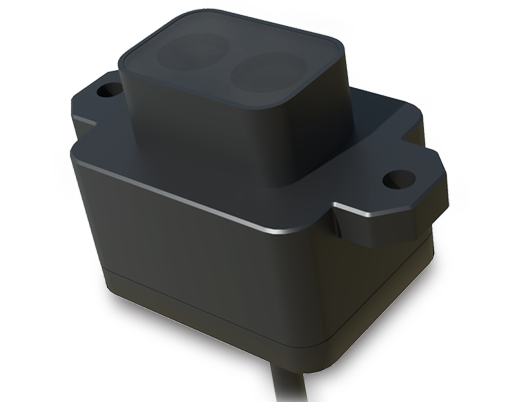
These attributes make LDV sensors indispensable across a vast spectrum of scientific and industrial applications. In fluid dynamics research, they are the gold standard for mapping turbulent flows in wind tunnels, water channels, and combustion studies. Automotive and aerospace engineers rely on LDV to optimize the aerodynamic profiles of vehicles and aircraft components. In the medical field, LDV techniques are adapted for measuring blood flow in microvasculature. Industrial applications include monitoring paper web speed in manufacturing, analyzing airflow in HVAC systems, and controlling processes in chemical reactors.
Recent advancements continue to push the boundaries of LDV technology. The development of fiber-optic LDV probes has increased flexibility, allowing measurements in confined or hazardous spaces. Miniaturization of components is leading to more compact and robust sensor designs for field use. The integration of advanced digital signal processors (DSPs) and algorithms has improved the handling of low signal-to-noise ratio data and enabled real-time, high-speed data acquisition. Furthermore, the evolution from single-point measurements to planar (2D) and volumetric (3D) systems, often using multiple laser colors, allows for the capture of complex flow fields.
Despite its strengths, LDV is not without limitations. It requires the presence of scattering particles in the flow, which may necessitate seeding. The equipment can be expensive and requires precise optical alignment. Measurements are typically made at a single point, so scanning is required for field mapping, which can be time-consuming compared to full-field techniques like Particle Image Velocimetry (PIV).

In conclusion, Laser Doppler Velocimetry sensors remain a vital and evolving tool for precision metrology. Their non-invasive nature, high accuracy, and versatility ensure their continued relevance in research laboratories and industrial settings alike. As laser and photonic technologies advance, LDV systems are becoming more accessible, robust, and capable, opening new frontiers for understanding and measuring motion in gases, liquids, and on solid surfaces.
