In the realm of industrial automation and consumer electronics, the ability to detect the presence or absence of an object without physical contact is paramount. Among the various non-contact sensing technologies, the capacitive proximity sensor, often designated with model identifiers like "C," stands out for its versatility and reliability. This article delves into the working principles, key applications, and critical factors for selecting the right capacitive sensor for your needs.
At its core, a capacitive proximity sensor operates by generating an electrostatic field. The sensor itself acts as one plate of a capacitor, with the target object acting as the other plate. When an object enters the sensing field, it alters the dielectric constant and thus the capacitance of the system. The sensor's internal oscillator circuit detects this change in capacitance. Once the change exceeds a predetermined threshold, the sensor's output state switches, signaling the detection of an object. Unlike inductive sensors that primarily detect metals, capacitive sensors can detect a wide range of materials, including liquids, powders, plastics, wood, and glass, provided the material has a dielectric constant different from air.
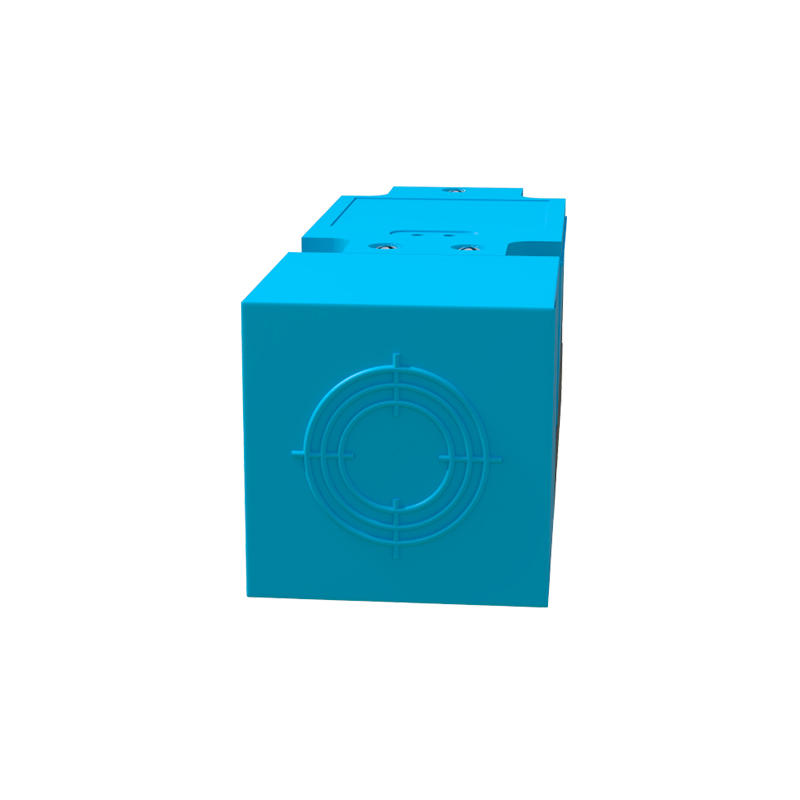
The "C" in a sensor model often signifies a specific series or type, potentially indicating characteristics like a cylindrical housing, a particular sensing range, or output configuration. Common features of these sensors include adjustable sensitivity, which allows users to fine-tune the detection threshold to ignore background interference or target specific materials. They are also known for their robustness, often housed in materials like PBT or stainless steel to withstand harsh industrial environments involving dust, moisture, or chemical exposure.
The applications for capacitive proximity sensors are extensive. In manufacturing, they are used for level detection in tanks containing liquids or granular solids, ensuring processes do not run dry or overflow. They detect the presence of bottles or containers on filling lines, regardless of whether the container is glass, plastic, or cardboard. In packaging machinery, they verify the presence of a product label or foil seal. Beyond industry, they are integral to modern touchscreens and touch-sensitive buttons in consumer devices. A common, yet clever, application is in touch-activated faucets and soap dispensers, where the sensor detects the presence of a hand.
Selecting the appropriate capacitive sensor, such as a "C" series model, requires careful consideration of several parameters. First, the sensing distance, typically specified for a standard target, must be suitable for the application, with a safety margin factored in. The target material significantly affects performance; sensing distances can vary for different substances. The housing material and size (e.g., M8, M12, M18, M30 cylindrical threads) must be compatible with the installation space and environmental conditions. Output type is another crucial decision: NPN (sinking) or PNP (sourcing) transistor outputs are standard for programmable logic controller (PLC) interfaces, while some sensors offer analog outputs for distance-proportional signals or relay outputs for high-current switching. Finally, factors like supply voltage range, operating temperature, and protection ratings (IP67/IP68 for dust and water resistance) ensure reliable operation in the intended setting.
Installation and setup are straightforward but vital for optimal performance. Sensors should be mounted securely, and the surrounding area should be free of other large metallic or dielectric objects that could cause false triggering. The sensitivity potentiometer is adjusted while the target is present at the desired detection point, turning it until the output indicator activates. For challenging applications, like detecting a material through a non-metallic container wall, the sensor's sensitivity may need to be increased significantly.
In conclusion, the capacitive proximity sensor, exemplified by versatile "C" series models, is a fundamental component in modern sensing technology. Its ability to detect a broad spectrum of non-metallic objects through non-contact means makes it indispensable across diverse sectors from factory automation to everyday appliances. By understanding its operating principle and carefully matching its specifications—sensing range, output, housing, and environmental ratings—to the application requirements, engineers and technicians can leverage this technology to create more efficient, reliable, and intelligent systems.