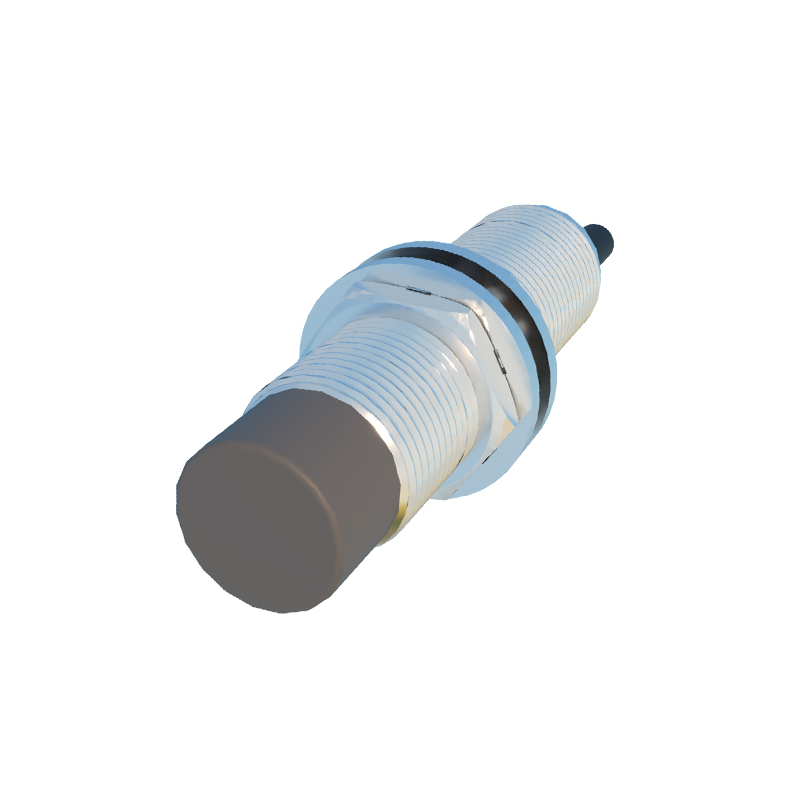
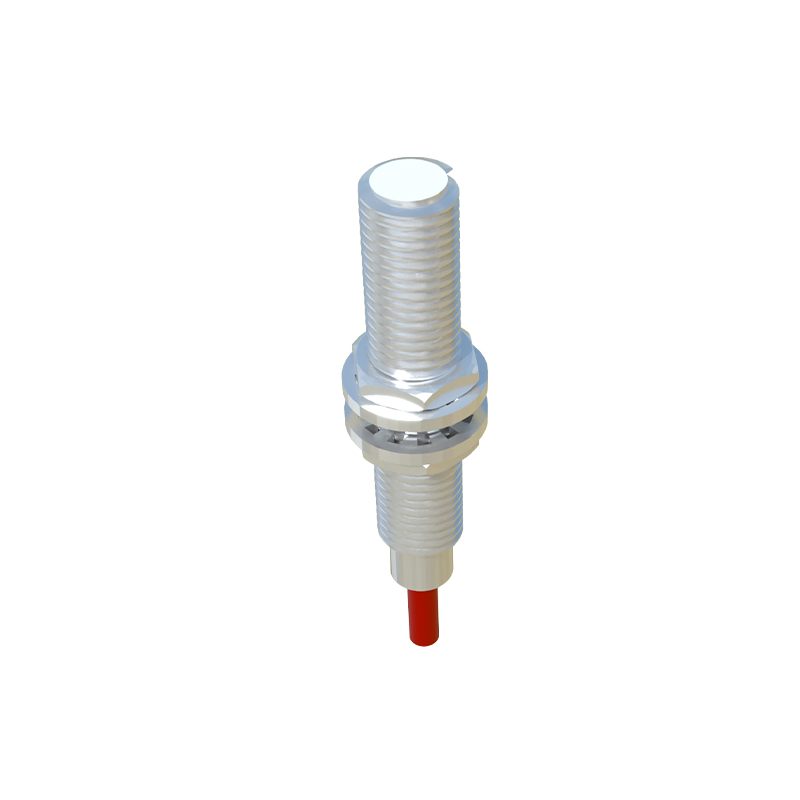
In the realm of industrial automation and electronic design, the ability to detect the presence or absence of an object without physical contact is fundamental. Among the various technologies enabling this capability, low-level proximity sensors stand out for their precision, reliability, and versatility in applications requiring detection at very short ranges. Unlike standard proximity sensors that might operate over distances of several centimeters or more, low-level variants are engineered to function effectively at distances typically measured in millimeters. This makes them indispensable in scenarios where space is constrained and detection tolerances are exceptionally tight.
The core principle behind most low-level proximity sensors is electromagnetic induction. These sensors, often of the inductive type, generate an oscillating electromagnetic field from a coil within their sensing face. When a metallic target enters this field, eddy currents are induced in the target, causing a change in the oscillation amplitude or frequency within the sensor's circuit. This change is detected and converted into a clean, digital output signal—often a simple ON/OFF switch—that can be read by a programmable logic controller (PLC) or other control system. For non-metallic targets, capacitive low-level proximity sensors are employed. These detect changes in capacitance caused by the presence of any material that alters the dielectric constant near the sensor's face, making them suitable for plastics, liquids, and other materials.
The defining characteristic of a low-level proximity sensor is its remarkably short sensing range, or "sn," which can be as little as 0.1 mm to 2 mm for standard inductive models. This ultra-short range is not a limitation but a deliberate design feature. It provides several critical advantages. First, it offers extremely high repeat accuracy, meaning the sensor can consistently detect a target at the exact same position every time, which is crucial for precision assembly, machining, and positioning tasks. Second, the short sensing field minimizes the risk of false triggers from nearby objects or background materials, enhancing operational reliability. Finally, these sensors can be mounted flush with metal surfaces without triggering on the mounting material itself, allowing for very compact and protected installations.
Typical applications for low-level proximity sensors are found across high-precision industries. In semiconductor manufacturing, they are used to verify the precise placement of wafers on chucks or within processing equipment. In automated watchmaking or micro-mechanics, they confirm the presence of tiny screws or components. They act as end-position verification for pneumatic cylinders with very short strokes, ensuring a cylinder is fully retracted or extended before the next cycle begins. In printing and packaging machinery, they detect the leading edge of thin materials like foil or film with high accuracy to control cut-off points. Their robust, solid-state construction—usually housed in stainless steel or nickel-plated brass—makes them resistant to vibration, shock, and harsh industrial environments involving coolants or washdowns.
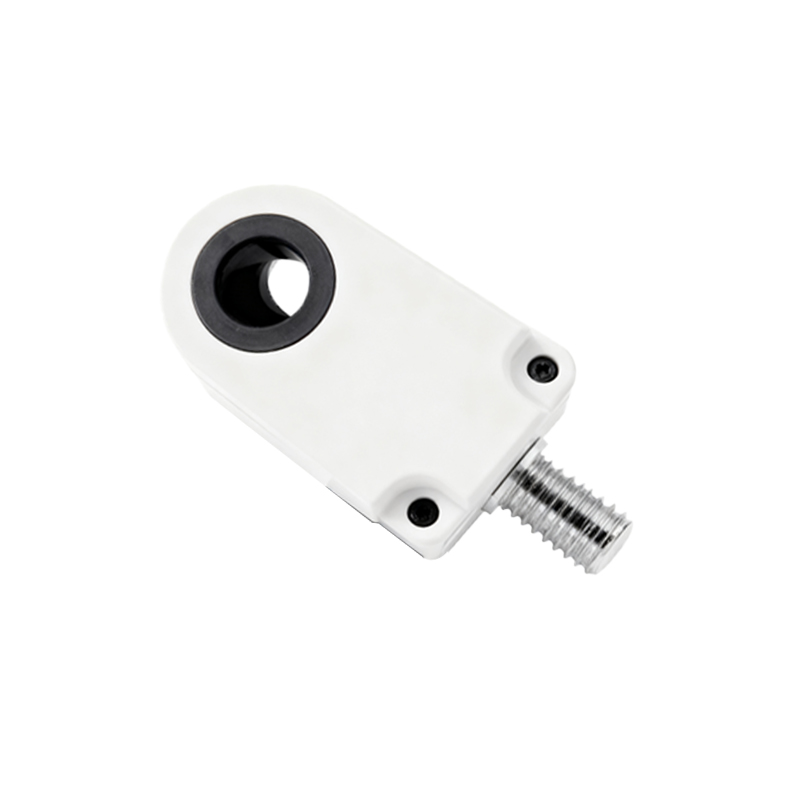
Selecting the right low-level proximity sensor requires careful consideration of several parameters. The target material is primary; inductive sensors are for metals, while capacitive handle a broader range. The specific sensing distance (sn) must match the application's mechanical tolerances. The sensor's housing size and shape (e.g., threaded barrel, rectangular block) must fit the available space. Output type (NPN vs. PNP, normally open vs. normally closed) must be compatible with the control system's input card. Environmental factors like temperature extremes, potential chemical exposure, and required ingress protection (IP) rating are also critical. Proper installation is equally important; even a slight misalignment or the presence of metal chips near the sensing face can affect performance.
In summary, low-level proximity sensors are specialized components that solve specific challenges in precision detection and positioning. Their ability to provide unwavering, contactless feedback at microscopic distances makes them a silent yet vital contributor to quality, efficiency, and reliability in modern automated systems. From intricate assembly lines to high-speed packaging, these sensors ensure that machines "know" with certainty when a component is perfectly in place, enabling the next step in a process to proceed with confidence.