In the world of industrial automation and electronic control, proximity switch sensors stand as silent sentinels, enabling countless machines to operate with precision and safety. Among the various technologies powering these devices, magnetism plays a foundational and versatile role. This article delves into the core principles of magnetic proximity sensors, explores their common types, and highlights their critical applications across industries.
At its heart, a magnetic proximity sensor operates on the principle of detecting changes in a magnetic field. The core components typically involve a permanent magnet and a magnetically sensitive switching element, such as a reed switch or a Hall-effect sensor. The permanent magnet generates a stable magnetic field. When a ferromagnetic target object—like a piece of iron or steel—enters this field, it causes a disturbance or a concentration of the magnetic flux lines. This change is sensed by the switching element, which triggers an electrical signal, effectively indicating the presence or absence of the target without any physical contact.
This non-contact detection is the key advantage, leading to exceptional reliability, long operational life, and minimal maintenance, as there are no mechanical parts to wear out from repeated actuation.
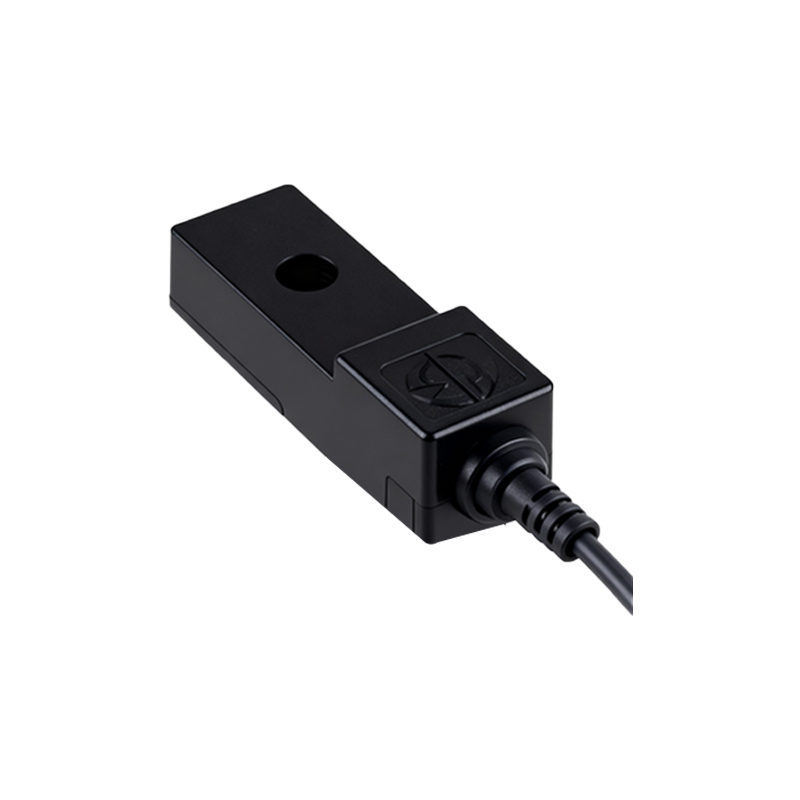
Several types of magnetic proximity sensors are prevalent, each with distinct characteristics. Reed switch-based sensors are among the most common. They contain two ferromagnetic reed contacts sealed within a glass tube filled with inert gas. When the external magnetic field from the actuator (or target magnet) reaches sufficient strength, the reeds magnetize, attract each other, and make contact, closing the circuit. They are known for their simplicity, low cost, and ability to switch relatively high loads directly. However, they can be susceptible to shock and vibration and have a limited switching speed.
Hall-effect sensors represent a more modern and solid-state approach. They utilize a semiconductor element that generates a voltage (the Hall voltage) proportional to the strength of an applied magnetic field perpendicular to the current flow. Integrated circuitry then processes this voltage to provide a clean, digital on/off signal or even an analog output proportional to distance. Hall-effect sensors are highly robust, offer very fast response times, are immune to contact bounce, and can operate at higher frequencies than reed switches. They are the preferred choice for applications requiring precision, speed, and durability.
A third category involves magnetoresistive sensors, which change their electrical resistance in the presence of a magnetic field. They offer high sensitivity and can detect both the presence and the direction of a magnetic field, making them suitable for specialized positioning and encoding tasks.
The applications for magnetic proximity sensors are vast and varied. In factory automation, they are indispensable for position sensing—detecting the open/closed status of doors, valves, or robotic arm endpoints. They serve as limit switches in linear actuators and conveyors, ensuring machinery operates within safe boundaries. In the automotive industry, they are embedded in anti-lock braking systems (ABS) to measure wheel speed, in transmission systems for gear position detection, and in seat belt buckle detection circuits.
Beyond heavy industry, these sensors are found in everyday consumer electronics and appliances. They provide lid-open detection in washing machines and laptops, act as simple flow meters in water systems by counting rotations of a magnet-embedded impeller, and are used in security systems for door and window contact sensing. Their inherent ability to function in harsh environments—resisting dust, dirt, moisture, and even certain chemicals—makes them superior to optical or capacitive sensors in many challenging conditions.
When selecting a magnetic proximity sensor, engineers must consider several factors: the sensing distance (which is typically shorter than inductive sensors for non-ferrous metals), the type of target material (must be ferromagnetic), the required switching frequency, output type (PNP/NPN, NO/NC), and environmental ratings for temperature, humidity, and potential exposure to oils or coolants.
In conclusion, the marriage of magnetism and proximity sensing technology creates a robust, reliable, and versatile solution for non-contact detection. From the simple reed switch to the sophisticated Hall-effect IC, magnetic proximity sensors form a critical backbone in automated systems, ensuring efficiency, safety, and precision in an invisible yet profoundly impactful way. Their continued evolution promises even greater integration and intelligence in the machines of tomorrow.