Laser range finding sensors represent a critical technology in modern measurement systems, offering high precision and reliability across diverse applications. The design of these sensors involves a sophisticated integration of optical, electronic, and mechanical components to achieve accurate distance measurements through time-of-flight or phase-shift principles.
At the core of a laser range finder is the laser diode, typically emitting infrared or visible light pulses. The choice of wavelength, such as 905nm or 1550nm, depends on factors like eye safety regulations, atmospheric absorption, and target reflectivity. For instance, 1550nm lasers are often preferred in outdoor environments due to better penetration through fog and reduced risk to human vision. The laser driver circuit must generate short, high-power pulses with precise timing to minimize measurement errors. Pulse widths can range from nanoseconds to microseconds, with narrower pulses enabling higher resolution but requiring more complex electronics.
The optical system includes collimating lenses to shape the laser beam into a narrow, focused profile, reducing divergence over long distances. Beam divergence angles typically fall between 0.1 to 5 milliradians, with lower values essential for long-range applications like topographic surveying. A beam splitter or separate receiver channel captures the reflected light, directing it to a photodetector—often an avalanche photodiode (APD) or photomultiplier tube for weak signal detection. The detector's sensitivity, measured by its noise-equivalent power (NEP), directly impacts the sensor's maximum range and signal-to-noise ratio.
Signal processing electronics form the brain of the sensor. Time-of-flight systems measure the interval between emitted and received pulses using high-speed timers like time-to-digital converters (TDCs), achieving resolutions down to picoseconds. Phase-shift systems, common in continuous-wave lasers, compare the phase difference between modulated outgoing and incoming light, suitable for shorter ranges with millimeter accuracy. Microcontrollers or FPGAs handle real-time calculations, compensating for environmental variables such as air temperature and pressure that affect the speed of light.

Mechanical design ensures stability and alignment, with housings made from materials like anodized aluminum to withstand thermal expansion and vibration. In industrial settings, IP-rated enclosures protect against dust and moisture. Calibration procedures involve reference targets at known distances to correct systematic errors, while firmware algorithms filter noise through averaging or digital signal processing techniques.
Applications drive specific design choices. For autonomous vehicles, sensors prioritize fast update rates (>100 Hz) and wide field-of-view scanning via rotating mirrors or MEMS mirrors. In construction, handheld devices emphasize portability and battery efficiency, using lower-power lasers with ranges up to 200 meters. Aerospace applications may incorporate fiber lasers for extreme precision in docking systems.
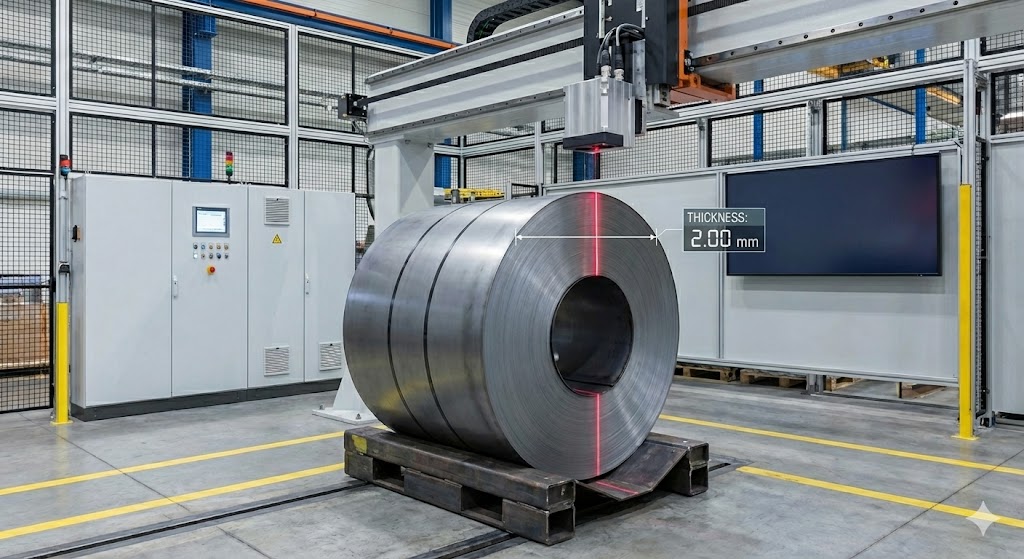
Challenges in design include mitigating interference from ambient light—addressed with optical filters or modulated laser codes—and ensuring eye safety per IEC 60825 standards. Future trends involve miniaturization through integrated photonics and enhanced algorithms for multi-target discrimination. By balancing performance parameters like range, accuracy, power consumption, and cost, engineers can tailor laser range finding sensors to meet evolving demands in robotics, metrology, and beyond.