In the intricate dance of modern automation, where machines perform with precision and reliability, there exists a class of silent sentinels. These are proximity switch sensors, the fundamental components that detect the presence or absence of an object without any physical contact. Their operation is deceptively simple, yet their impact on industrial efficiency, safety, and innovation is profound. From the assembly lines of automotive giants to the packaging of consumer goods, these sensors form the essential sensory layer of automated systems.
At its core, a proximity sensor works by emitting a field or beam of electromagnetic radiation, often an infrared light, laser, ultrasonic wave, or magnetic field. The sensor then looks for changes or returns in that signal. When a target object enters this predefined field, it causes a detectable change—a reflection, a capacitance shift, or an eddy current loss. This change is converted by the sensor's electronics into a clean, binary electrical signal that tells a controller, such as a PLC (Programmable Logic Controller): "Object detected" or "Object absent." This seamless, non-contact detection is their key advantage, eliminating mechanical wear and tear and allowing for high-speed, reliable operation in harsh environments.
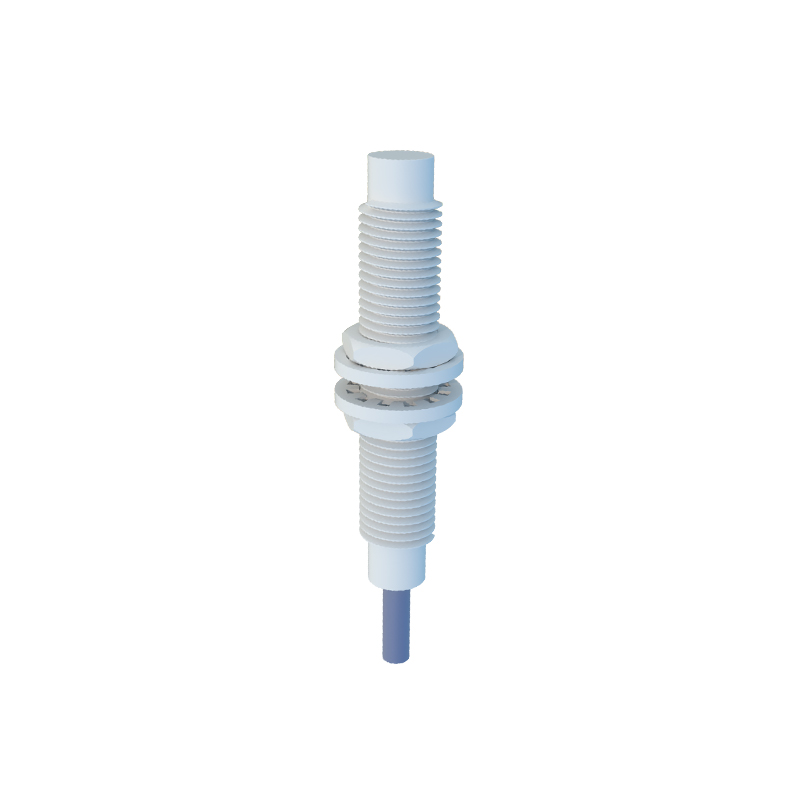
The world of proximity sensors is not monolithic; it is categorized primarily by the underlying technology used for detection. Inductive proximity sensors are the workhorses of metal detection. They generate an oscillating electromagnetic field. When a metallic object enters this field, it induces eddy currents within the metal, which dampens the oscillator's amplitude. The sensor detects this damping and triggers a switch. These sensors are incredibly robust, resistant to dirt, dust, and moisture, making them ideal for machine tools, robotic arms, and metal stamping presses.
For non-metallic targets, such as plastic, wood, glass, or liquids, capacitive proximity sensors come into play. They can detect virtually any material by sensing changes in capacitance. The sensor forms one plate of a capacitor, with the target object acting as the other. As the object approaches, the capacitance increases until it reaches a threshold that triggers the switch. This makes them perfect for level detection in tanks, material handling of plastics, and presence detection of filled containers on a conveyor belt.
Another major category is the photoelectric sensor, which uses light. An emitter sends out a beam of light (visible, infrared, or laser), and a receiver detects it. The presence of an object is sensed either by the interruption of the beam (through-beam), by the reflection from the object back to a receiver housed in the same unit (retro-reflective), or by the diffusion of light off the object (diffuse reflective). Photoelectric sensors offer very long sensing ranges and are excellent for detecting small objects or for applications requiring precise positioning.
Ultrasonic sensors complete the primary family, using sound waves beyond human hearing. They measure the time it takes for an emitted sound pulse to bounce back from a target. Excellent for distance measurement and level sensing of bulk materials, they are unaffected by color, transparency, or dust, though they can be influenced by temperature and wind.
The selection of the right proximity sensor is a critical engineering decision. Key parameters include sensing distance, repeat accuracy, response frequency, and environmental factors like temperature, pressure, and potential chemical exposure. The housing material, typically nickel-plated brass or stainless steel for industrial durability, and the output type (NPN or PNP, normally open or normally closed) must match the control system's requirements.
The applications are virtually limitless. In automotive manufacturing, inductive sensors count gears, verify piston placement, and ensure robotic welders are in position. In food and beverage, capacitive sensors monitor liquid levels in stainless steel tanks, while photoelectric sensors ensure labels are correctly placed on bottles. On automated guided vehicles (AGVs), ultrasonic and laser sensors provide collision avoidance. In the realm of consumer electronics, miniature capacitive sensors enable touchless interfaces and detect when a smartphone is held to the ear.
Looking forward, the evolution of proximity sensors is intertwined with Industry 4.0 and the Internet of Things (IIoT). Modern sensors are becoming smarter, equipped with IO-Link communication that allows them to transmit not just a switch signal, but also diagnostic data like operating temperature, signal strength, and contamination warnings. This predictive maintenance capability transforms them from simple switches into intelligent nodes on the factory network, preventing downtime and optimizing processes.
In conclusion, proximity switch sensors are far more than simple on/off devices. They are the foundational elements that grant machines the sense of touch and sight. By enabling precise, reliable, and contactless detection, they ensure the smooth, safe, and efficient flow of automated operations. As technology advances, their role will only deepen, continuing to act as the invisible, yet indispensable, guardians of the automated world.