Virtual laser sensor simulation represents a critical frontier in the development and validation of complex automated systems, from autonomous vehicles to smart manufacturing robotics. By creating high-fidelity digital models of laser-based sensing environments, engineers can test, refine, and deploy systems with unprecedented efficiency and safety. This process transcends simple modeling; it involves the intricate replication of physics-based interactions between emitted laser signals and virtual objects within a simulated world.
At its core, the simulation mimics the operational principles of real laser sensors, such as LiDAR (Light Detection and Ranging). A virtual sensor emits photon pulses, and the simulation engine calculates the time-of-flight, intensity, and angle of return signals based on the material properties, geometry, and surface characteristics of the encountered virtual objects. Environmental factors like fog, rain, or varying light conditions are parametrically integrated to assess sensor robustness. This digital twin approach allows for the generation of vast, diverse, and often hazardous test scenarios—like sudden pedestrian crossings or extreme weather—that would be prohibitively expensive, time-consuming, or dangerous to recreate physically.
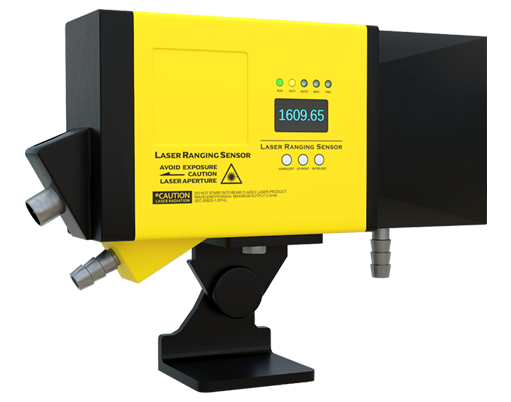
The primary advantage lies in accelerated development cycles. Iterations that once required hardware prototyping and field testing can now be conducted in parallel within a cloud-based simulation suite. This enables rapid algorithm training for perception stacks, particularly for machine learning models that require millions of annotated data points. Simulation generates perfectly labeled data (object class, distance, velocity) automatically, solving a major bottleneck in AI-driven perception development.
Furthermore, simulation supports standardization and verification. It provides a controlled, repeatable benchmark to validate sensor performance against industry standards and functional safety requirements (e.g., ISO 26262 for automotive). Engineers can probe edge cases and failure modes by deliberately introducing sensor noise, occlusion, or interference, leading to more resilient system designs.
The technology stack typically involves several integrated layers. A physics engine handles the fundamental light-matter interactions. A rendering engine generates the correlated visual scene, often crucial for sensor fusion development. Scenario generation tools create logical and dynamic traffic or operational flows. Finally, the sensor model itself, which can be based on raycasting or more advanced wave optics models, produces the final point cloud or detection output.
Despite its power, the fidelity gap between simulation and reality remains a key challenge. The computational cost of modeling every physical nuance is immense. Therefore, a critical focus is on developing intelligent abstraction—simulating only the details that significantly impact the sensor's output for a given application. Validation through targeted real-world testing is essential to calibrate and trust the simulation models.
Looking ahead, the integration of virtual laser sensor simulation with broader digital twin ecosystems will become standard. As computational power grows and models become more refined, simulation will evolve from a testing tool to a central component in the continuous lifecycle management of cyber-physical systems, enabling predictive maintenance and in-service performance optimization. It is not merely a substitute for real-world testing but a transformative methodology that expands the boundaries of what is testable and knowable before physical deployment.