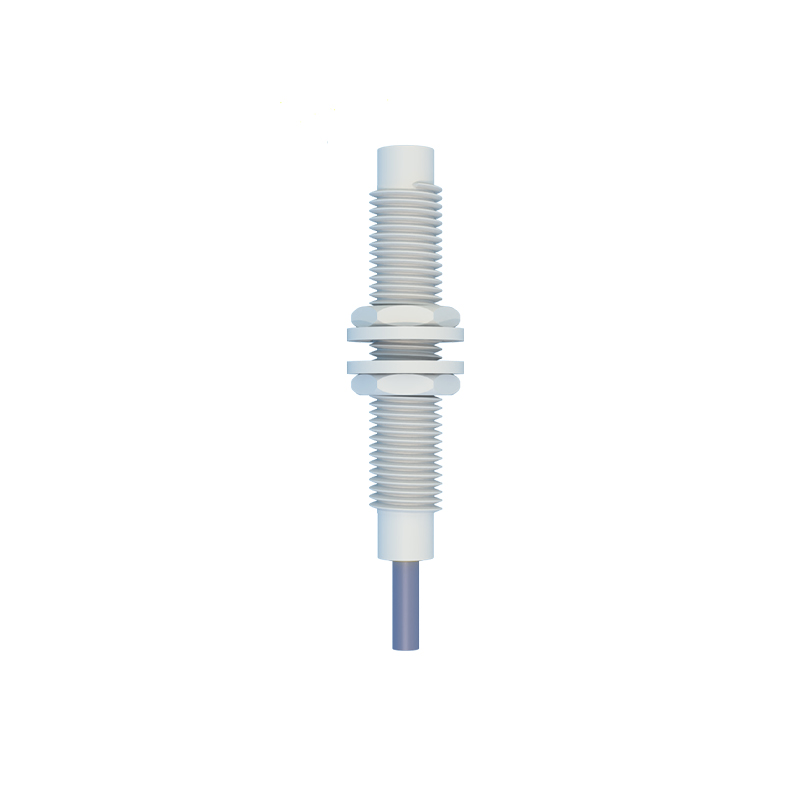
Square proximity sensors are widely used in industrial automation, robotics, and consumer electronics for non-contact detection of objects. Unlike cylindrical sensors, their square or rectangular housing offers advantages in specific mounting situations and space-constrained environments. The core principle revolves around generating an electromagnetic field or beam and detecting changes caused by a target object entering its sensing range.
The most common type is the inductive square proximity sensor. It contains four key components: an oscillator coil, a detection circuit, a trigger circuit, and an output switching element. The oscillator generates a high-frequency alternating electromagnetic field at the active face of the sensor. When a metallic object (the target) enters this field, eddy currents are induced on the surface of the metal. These eddy currents draw energy from the oscillator, causing a reduction in its oscillation amplitude. The sensor's detection circuit monitors this amplitude. Once the amplitude drop reaches a predetermined threshold, the trigger circuit activates, which in turn switches the output state. This output is typically a solid-state switch (like a transistor) that changes from open to closed (or vice-versa), sending a signal to a controller like a PLC. It's crucial to note that these sensors primarily detect ferrous and non-ferrous metals, with different sensing distances depending on the metal type.
Another prevalent type is the capacitive square proximity sensor. Its operating principle extends beyond metals to include liquids, plastics, wood, and granular materials. It utilizes a single sensing electrode (often the sensor face itself) that forms one plate of a capacitor, with the ground potential acting as the other plate. The internal oscillator circuit measures the capacitance of this field. When any material with a different dielectric constant than air enters the sensing field, it alters the capacitance. This change is detected by the circuit, leading to the activation of the output switch. The sensitivity of capacitive sensors is often adjustable to compensate for different materials or to ignore unwanted backgrounds like container walls.
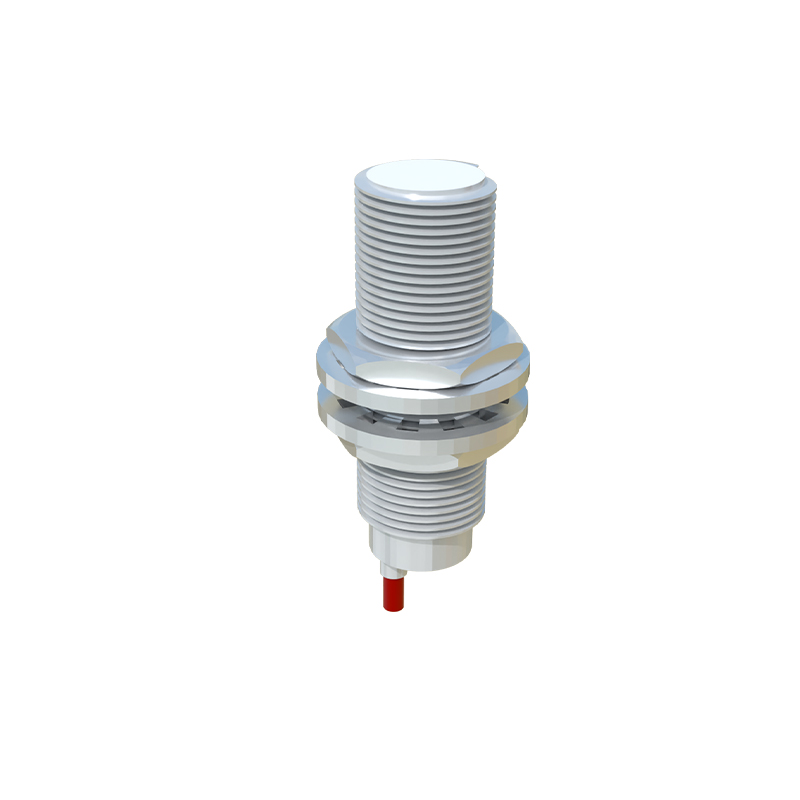
For non-metallic object detection, especially where color contrast exists, square diffuse reflective photoelectric sensors are employed. These house an emitter (usually an LED) and a receiver in a single square unit. The emitter projects a beam of light (visible red, infrared, or laser). When the light hits a target object within its range, a portion is diffusely reflected back to the receiver. The receiver detects this reflected light intensity. When the intensity surpasses a set level, the sensor's output is triggered. The sensing distance depends on the target's size, color, and surface texture, with lighter colors typically providing longer ranges.
Key performance parameters define a square proximity sensor's operation. The nominal sensing distance (Sn) is the theoretical range under standardized conditions. The operating distance is the practical range, accounting for manufacturing tolerances and voltage fluctuations, typically 90% of Sn. A critical feature is the hysteresis, a differential between the switch-on point when the target approaches and the switch-off point when it recedes. This prevents output chatter if the target vibrates at the sensing edge. Repeatability indicates how consistently the sensor triggers at the same point. Most square sensors also feature built-in protection against short-circuits, overloads, and reverse polarity.
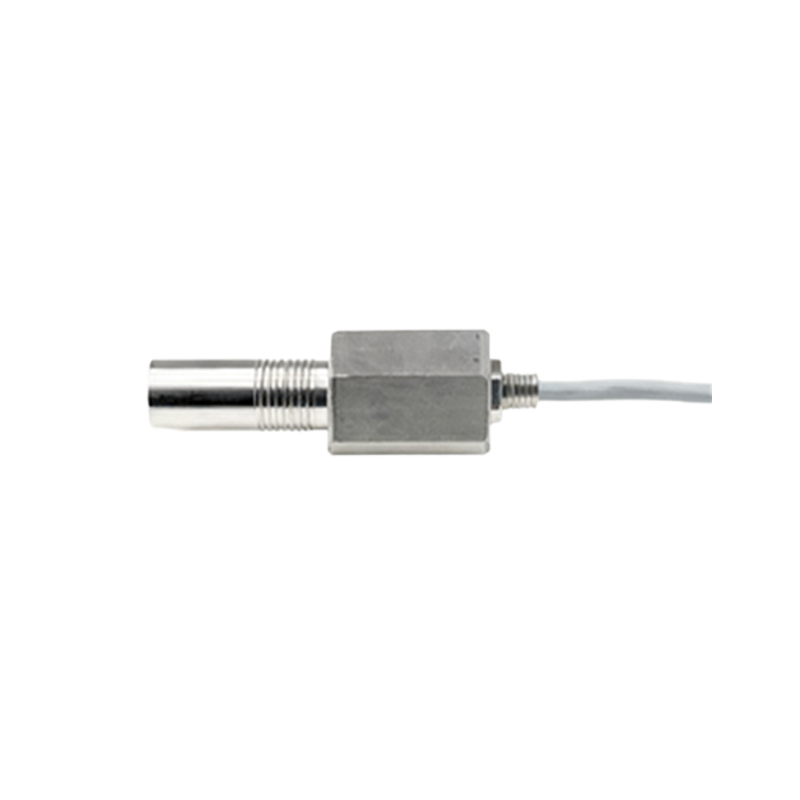
Selecting the correct sensor involves analyzing the target material, required sensing distance, environmental conditions (like dust, moisture, or temperature), output type (NPN/PNP, NO/NC), and power supply. Their square form factor allows for efficient side-by-side mounting without dead zones, making them ideal for applications like conveyor line object counting, machine tool position verification, robotic end-effector presence sensing, and liquid level detection in tanks. Understanding the underlying electromagnetic or optical principles ensures reliable integration and troubleshooting in automated systems.