In the modern world, monitoring air quality and particulate matter has become a critical concern for health, safety, and industrial processes. At the heart of many monitoring devices lies a sophisticated yet compact component: the laser particle sensor module. This technology has revolutionized how we detect and measure airborne particles, providing data that was once only accessible through large, laboratory-grade equipment.
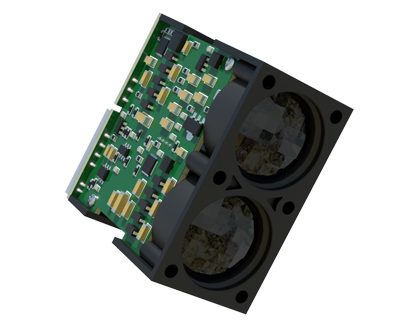
A laser particle sensor module operates on the principle of light scattering, often referred to as laser diffraction or Mie scattering. The core components typically include a laser diode, a photodetector, a fan or pump for air sampling, and a processing circuit. The laser diode emits a highly focused beam of light into a sensing chamber. As air is drawn through this chamber, suspended particles pass through the laser beam. When a particle intersects the light path, it scatters the light in various directions. The photodetector, positioned at a specific angle (commonly 90 degrees), captures this scattered light. The intensity of the scattered light pulse is proportional to the size of the particle. By analyzing these pulses, the module's internal processor can count particles and categorize them into different size bins, such as PM1.0, PM2.5, and PM10.
The advantages of using laser-based technology are significant. These modules offer real-time detection with high sensitivity, capable of identifying particles as small as 0.3 microns. They are generally more accurate and responsive than older, cheaper resistive or optical methods. Modern modules are also designed for low power consumption and longevity, making them ideal for integration into portable and battery-operated devices. Furthermore, digital output via protocols like UART or I2C simplifies connection to microcontrollers and single-board computers, accelerating product development.

The applications for laser particle sensor modules are vast and growing. In consumer electronics, they are the key component in popular air quality monitors and smart purifiers, allowing users to track indoor pollution from cooking, smoking, or outdoor sources. In the HVAC industry, these sensors enable smart ventilation systems to optimize airflow based on real-time particulate levels. Industrial settings use them for monitoring cleanrooms, manufacturing processes, and workplace safety to ensure compliance with health regulations. They are also increasingly deployed in urban environmental monitoring networks to provide granular data on pollution hotspots.
When selecting a laser particle sensor module for a project, several key specifications must be considered. The particle size range and detection resolution define what the sensor can see. The concentration measurement range indicates the maximum density of particles it can handle before saturation. Accuracy and consistency are paramount for reliable data; looking at error margins under standardized test conditions is crucial. Response time determines how quickly the sensor reflects changes in the environment. Physical factors like size, weight, and interface type (digital vs. analog) impact the mechanical and electrical design of the end product. Finally, the expected operational lifespan, often stated in hours, is critical for maintenance planning, as the laser source and internal components can degrade over time, especially in dirty environments.
It is important to acknowledge the limitations of this technology. Laser particle sensors excel at relative measurement and trend analysis but may require calibration against reference instruments for absolute accuracy, particularly with different particle types (e.g., dust, smoke, pollen). High humidity levels can sometimes cause condensation, affecting readings. Dense, prolonged exposure to very high concentrations of fine dust can also lead to contamination of the optical chamber, necessitating cleaning or replacement. Therefore, they are measurement tools whose data should be interpreted with an understanding of their operational context.
The future of laser particle sensing is geared towards even greater miniaturization, lower cost, and enhanced intelligence. Integration with environmental sensor hubs that combine VOC, CO2, temperature, and humidity sensing is becoming common. Advances in algorithms and data fusion techniques aim to not only count particles but also infer their probable source. As awareness of air quality's impact on health and productivity continues to rise, the demand for reliable, accessible laser particle sensor technology will undoubtedly expand, embedding this sophisticated detection capability into an ever-wider array of devices in our homes, workplaces, and cities.
