Proximity sensors are ubiquitous in modern automation, robotics, and consumer electronics, silently performing critical detection tasks without physical contact. Their operation hinges on converting the presence or absence of a target object into an electrical signal. The underlying sensing principle varies significantly depending on the technology employed, each with distinct advantages and ideal applications. Understanding these core principles is essential for selecting the right sensor for any given task.
The most common type is the inductive proximity sensor. This sensor generates an oscillating electromagnetic field from a coil wound around a ferrite core at its sensing face. When a conductive metal target enters this field, eddy currents are induced on the target's surface. These currents draw energy from the sensor's oscillator, causing a reduction in the oscillation amplitude. An internal circuit monitors this amplitude change. Once the amplitude drops below a predefined threshold—corresponding to a specific sensing distance—the sensor's output state switches, signaling the detection of the target. A key characteristic is that inductive sensors primarily detect metals, with sensing ranges and effectiveness varying based on the metal's conductivity and permeability; for instance, steel is detected at a longer range than aluminum or copper.
In contrast, capacitive proximity sensors can detect both conductive and non-conductive materials, including liquids, plastics, wood, and glass. They operate by generating an electrostatic field between two electrodes (often the sensor face and a ground electrode). Any object approaching the sensing face alters the dielectric constant of the surrounding space, which in turn changes the capacitance of the sensor's internal circuit. This capacitance change is measured, typically by incorporating it into an oscillator circuit where it affects the oscillation frequency or amplitude. When the change exceeds a set level, the output triggers. This principle makes capacitive sensors versatile but also susceptible to environmental factors like humidity or contamination, which can alter the dielectric constant and cause false triggers if not properly adjusted.
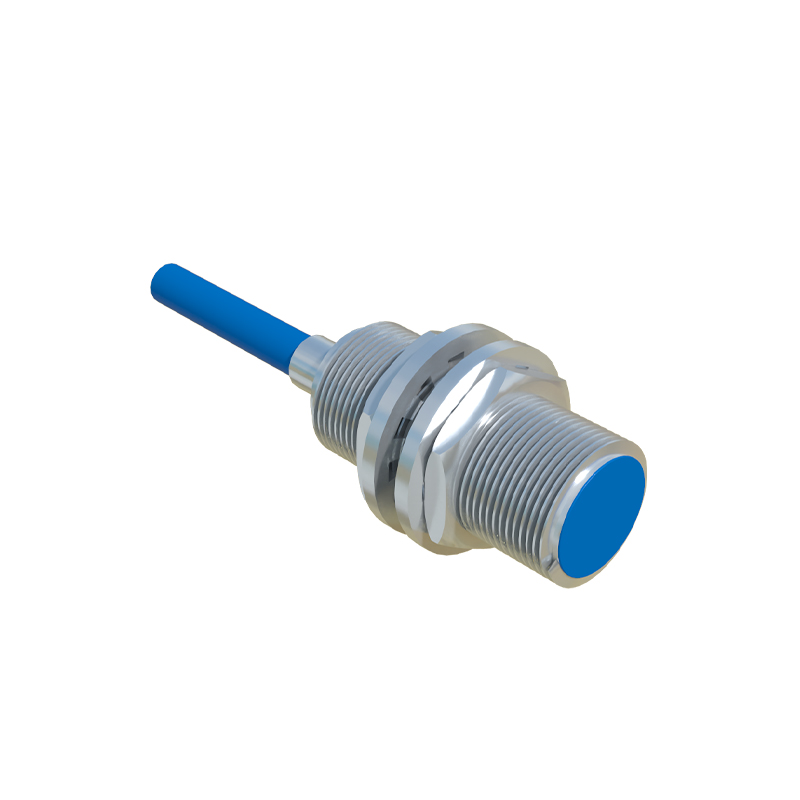
Another widely used principle is based on photoelectric sensing. Here, a photoelectric proximity sensor (often a diffuse reflective type) contains both an emitter (usually an LED producing visible red, infrared, or laser light) and a receiver. The emitter constantly projects a light beam. When a target object is present within the detection range, it reflects a portion of this light back to the receiver. The receiver, typically a phototransistor or photodiode, converts the received light intensity into an electrical current. The sensor's electronics process this signal, and when the intensity surpasses a calibrated threshold, the output is activated. The effective sensing range depends on the target's color, reflectivity, size, and surface texture. For example, a white matte surface is detected at a greater distance than a black glossy one.
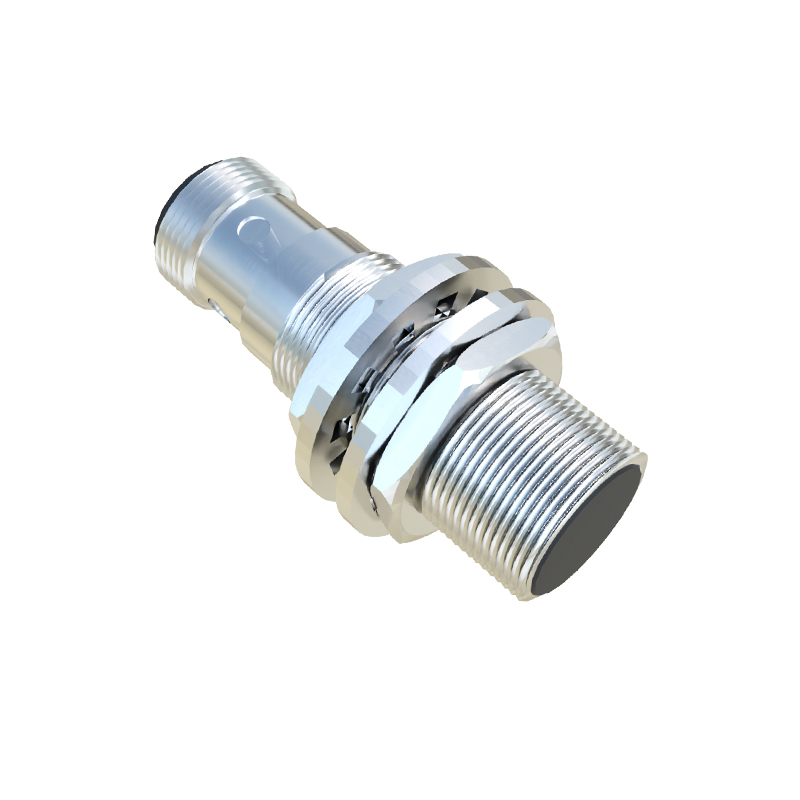
Ultrasonic proximity sensors utilize sound waves beyond the human hearing range. They contain a transducer that acts as both a transmitter and receiver. The sensor emits short bursts of high-frequency ultrasonic pulses. These pulses travel through the air, hit a target object, and are reflected back as an echo. The sensor measures the time interval between the emission of the pulse and the reception of the echo. Since the speed of sound in air is known, the sensor's microprocessor can calculate the distance to the target using the formula: Distance = (Speed of Sound × Time of Flight) / 2. An output is switched when the calculated distance falls within the preset sensing window. This technology is excellent for detecting objects regardless of color, transparency, or material, but it can be influenced by temperature (which affects sound speed), air turbulence, and soft, sound-absorbing surfaces.
Magnetic proximity sensors, or reed switches, represent a simpler principle. They consist of two ferromagnetic reeds sealed in a glass tube filled with inert gas. When a permanent magnet (the target) approaches, the reeds become magnetized and attract each other, making contact and closing the electrical circuit. When the magnet is removed, the reeds spring apart, breaking the circuit. Hall Effect sensors are a solid-state alternative; they generate a voltage (the Hall voltage) when a magnetic field is applied perpendicular to a current-carrying conductor. This voltage change is detected by an integrated circuit to provide a digital output.
The choice of sensing principle dictates the sensor's performance. Inductive sensors offer high precision and reliability for metal detection in harsh industrial environments. Capacitive sensors provide material versatility for level detection or presence sensing of non-metals. Photoelectric sensors allow for long-range detection and are sensitive to small objects. Ultrasonic sensors are ideal for distance measurement and detecting complex surfaces. Magnetic sensors are perfect for simple, low-power position sensing in clean environments. By matching the fundamental physical principle to the application's requirements for target material, sensing distance, environmental conditions, and required output, engineers can ensure robust and reliable operation in any automated system.