In the realm of precision measurement and industrial automation, laser displacement sensors have become indispensable tools. These non-contact devices project a laser beam onto a target surface and analyze the reflected light to determine distance, position, thickness, or vibration with micron-level accuracy. The market for these sophisticated sensors is driven by a cadre of specialized companies, each contributing to advancements in speed, resolution, and robustness for challenging environments. This article explores the landscape of key players and the technological trends shaping the industry.
The core technology behind laser displacement sensors, such as triangulation and time-of-flight (ToF), has seen continuous refinement. Leading companies invest heavily in R&D to overcome traditional limitations. For instance, issues with measuring shiny, transparent, or dark surfaces are being addressed through innovative optical designs, multi-pixel sensing elements, and advanced signal processing algorithms. Companies are developing sensors with integrated processors that can handle complex surface conditions in real-time, significantly reducing setup time and measurement errors on production lines.
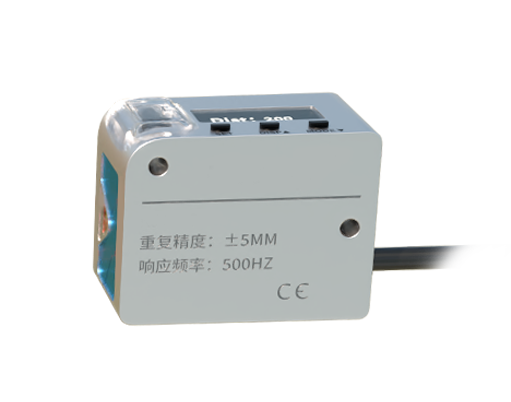
A prominent segment of the market is occupied by established Japanese and European manufacturers known for their high-precision engineering. Companies like Keyence and Omron from Japan, and Micro-Epsilon and SICK from Germany, have set industry benchmarks. Keyence's LK series, for example, is renowned for its ultra-high sampling rate and stability, crucial for dynamic measurements in electronics manufacturing. Micro-Epsilon, with its focus on laser triangulation, offers sensors capable of measuring everything from hot metals in forging plants to delicate biological samples, showcasing exceptional versatility.

North American companies also play a vital role, often with strengths in specific application niches or ruggedized designs for heavy industry. Firms like Banner Engineering and MTI Instruments provide robust solutions for sectors such as aerospace, automotive, and primary metals. Their sensors are engineered to withstand extreme temperatures, vibration, and contaminants, ensuring reliability in harsh factory conditions. Meanwhile, the rise of Chinese manufacturers is notable, offering cost-effective solutions that are progressively closing the gap in performance for standard applications, making automation more accessible to a broader range of businesses.
The driving force for innovation is the evolving demand from end-user industries. In the automotive sector, laser sensors are pivotal for robotic guidance, weld seam inspection, and panel gap measurement. In electronics, they ensure the precise placement of components on circuit boards and measure the thickness of coatings and films. The burgeoning field of lithium-ion battery production presents new challenges, requiring high-speed measurement of electrode coatings and separator materials, a niche where several specialized sensor companies are now focusing their efforts.
Beyond traditional manufacturing, applications are expanding into logistics, agriculture, and healthcare. Companies are developing long-range ToF sensors for warehouse automation, guiding autonomous mobile robots and measuring parcel dimensions. In agriculture, laser sensors monitor crop growth and guide harvesting equipment. This diversification pushes companies to develop product portfolios with varying ranges, from sub-micron resolution at short distances to meter-level measurements at longer ranges.

Choosing the right laser displacement sensor company depends heavily on the specific application requirements. Factors such as required accuracy, measurement range, target surface properties, environmental conditions, and necessary data output frequency are critical. Leading companies differentiate themselves not only through hardware but also through software support, offering intuitive configuration tools, SDKs for system integration, and comprehensive technical assistance. The trend is towards smarter sensors with built-in IoT connectivity, enabling predictive maintenance and seamless data integration into Industry 4.0 frameworks.
The future of laser displacement sensing is intertwined with advancements in adjacent fields. The integration of artificial intelligence for automatic parameter optimization and anomaly detection is on the horizon. Furthermore, the miniaturization of components is enabling the development of smaller, more compact sensor heads for installation in space-constrained robotic cells. As global industries strive for greater efficiency, quality control, and automation, the companies at the forefront of laser displacement sensor technology will continue to be essential partners in innovation, providing the eyes for modern intelligent machinery.