Introduction to Inductive Proximity Sensing
The CLJ-C18-5ANA represents a specific class of non-contact detection devices known as inductive proximity sensors. These sensors are fundamental components in modern industrial automation, providing reliable object detection without physical contact. Operating on the principle of electromagnetic induction, they generate an oscillating electromagnetic field from a coil within the sensing face. When a metallic target enters this field, eddy currents are induced on the target's surface, causing a change in the oscillation amplitude. The sensor's internal circuitry detects this change and triggers a solid-state switching output. This mechanism makes the CLJ-C18-5ANA exceptionally robust, capable of withstanding harsh industrial environments filled with dust, oil, and vibration where mechanical limit switches would fail prematurely.
Key Specifications of the CLJ-C18-5ANA Model
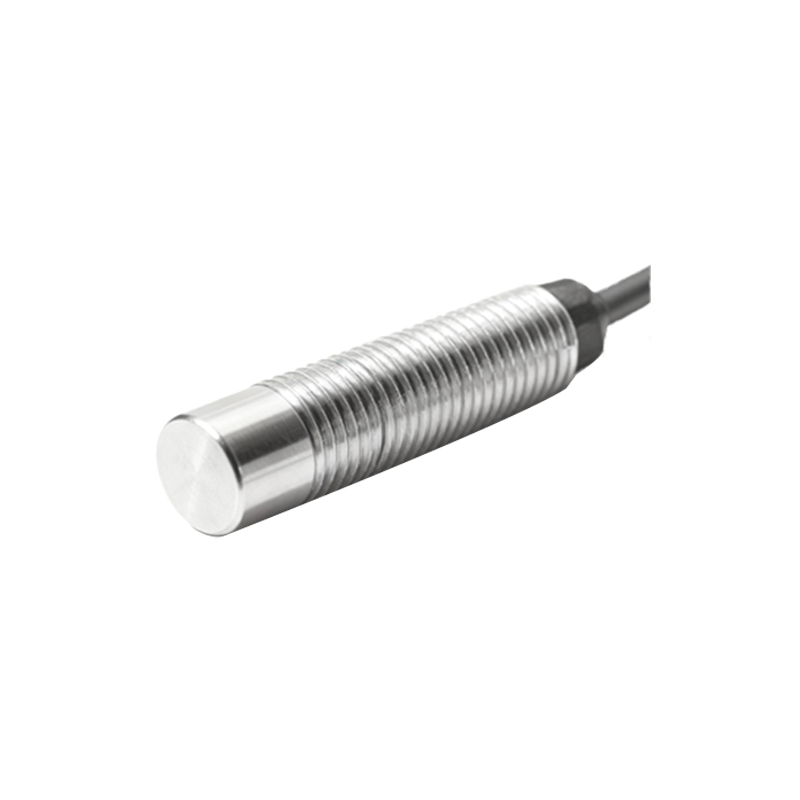
The model designation "CLJ-C18-5ANA" encodes critical technical parameters. Typically, "C18" indicates an 18mm diameter cylindrical housing, a common industry-standard size offering a balance between sensing range and physical footprint. The "5ANA" suffix often specifies key electrical characteristics: a 5mm nominal sensing distance (Sn), an analog output (ANA), and likely a DC-powered device. The analog output, usually a 4-20mA or 0-10V signal, is a defining feature. Unlike standard digital (on/off) sensors, the CLJ-C18-5ANA provides a continuous signal proportional to the distance of the target within its sensing range. This allows for applications beyond mere detection, such as monitoring positional changes, checking for part presence with tolerance verification, or measuring slight variations in thickness.
Electrical Characteristics and Wiring Configuration
As a three-wire device, the CLJ-C18-5ANA requires a DC power supply, commonly 10-30V DC. The wiring configuration is straightforward: one wire for power supply positive (brown), one for power supply negative (blue), and one for the output signal (black). The analog output provides a continuous current or voltage signal. For instance, a 4-20mA output might correspond to 4mA when no target is present and 20mA when a target is at the nominal sensing distance. This linear relationship enables precise monitoring by Programmable Logic Controllers (PLCs) or other control systems. Proper shielding and grounding are essential in electrically noisy environments to ensure signal integrity and prevent electromagnetic interference from corrupting the analog measurement.
Application Scenarios in Industrial Systems
The analog capability of the CLJ-C18-5ANA opens a wide array of sophisticated applications. In automated assembly lines, it can be used to verify the correct insertion depth of a piston in a cylinder or confirm the proper seating of a component. On conveyor systems, it can monitor the height of stacked materials or detect warped metal sheets by observing the signal deviation as they pass. In machine tooling, it can provide feedback for tool wear compensation by sensing the position of a reference surface. Its robust M18 threaded metal housing ensures easy installation and durability in demanding settings like welding cells, stamping presses, and material handling robots, where it performs continuous, wear-free monitoring.
Installation Considerations and Environmental Factors
Correct installation is paramount for optimal performance. The sensor must be mounted securely to prevent vibration-induced signal noise. A critical rule is to maintain adequate clearance from surrounding metal objects, known as the "non-flush" or "side-clearance" requirement. Installing an inductive sensor too close to a metal mounting bracket or machine frame can reduce its effective sensing range or cause false triggering. The sensor's datasheet specifies the necessary lateral and axial clearances. Furthermore, while inductive sensors are immune to most contaminants, the sensing face should be kept free of accumulated metallic debris, which could act as a permanent target. Operating temperature ranges, typically from -25°C to +70°C, must also be respected.
Advantages Over Alternative Sensor Technologies
Compared to other sensing technologies, the CLJ-C18-5ANA offers distinct benefits. Versus capacitive sensors, it is unaffected by non-metallic materials like plastics or liquids, ensuring stable operation. Compared to photoelectric sensors, it is highly resistant to interference from ambient light, dust, fog, or steam, making it ideal for dirty environments. The primary limitation is its exclusive sensitivity to metals; it cannot detect plastics, wood, or glass. However, for metal detection and analog distance measurement, its combination of ruggedness, high switching frequency, long operational life (due to no moving parts), and precise analog output makes it an indispensable tool for advanced automation and process control tasks requiring more than