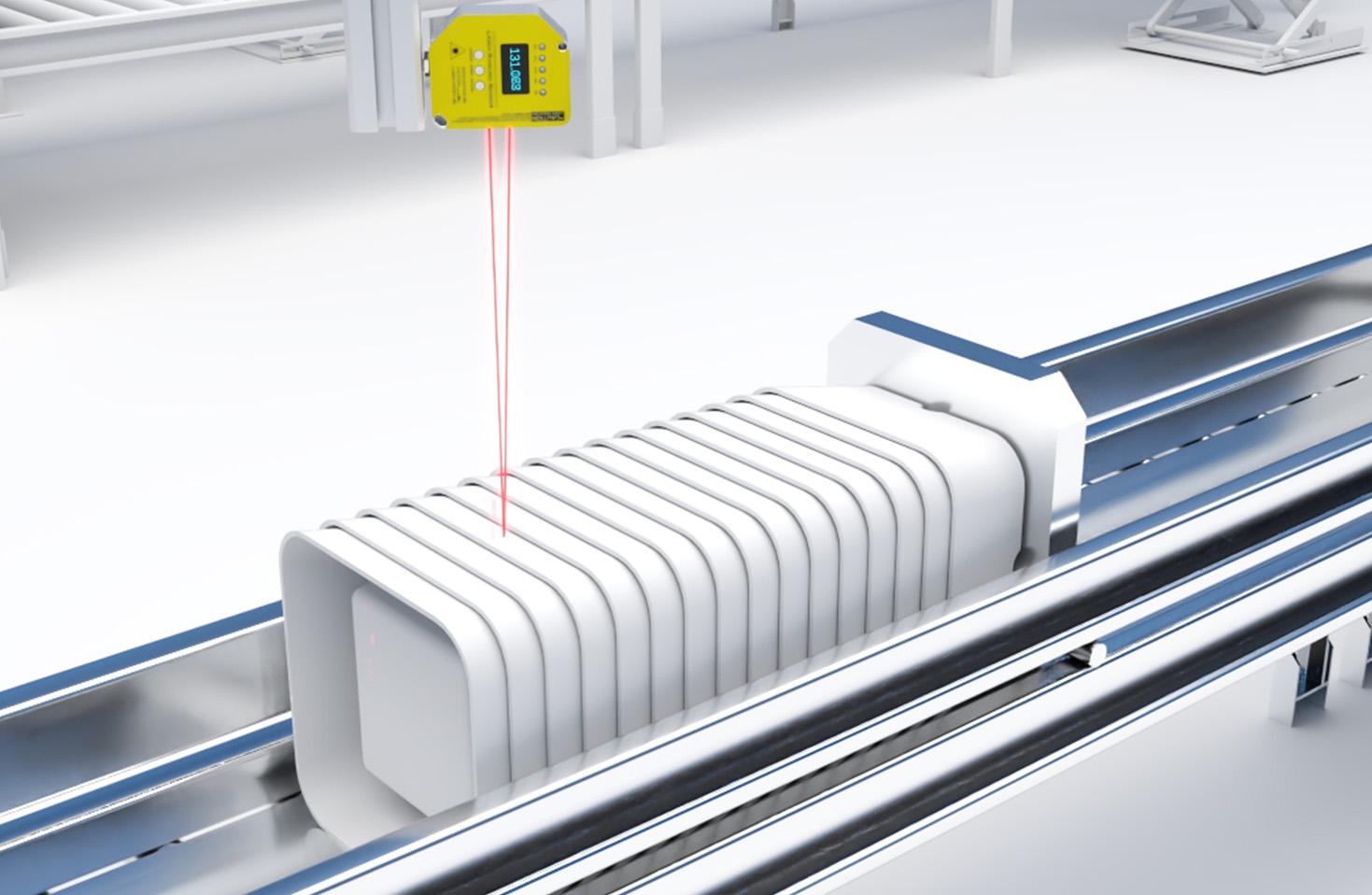
Laser sensors have become indispensable tools across various industries, offering precise, non-contact measurement and detection. Selecting the right model requires a thorough understanding of key specifications, which directly impact performance, accuracy, and suitability for specific tasks. This guide delves into the critical parameters that define laser sensor capabilities, helping engineers and procurement specialists make informed decisions.
The core operating principle involves emitting a focused laser beam towards a target. The sensor then analyzes the reflected light—its intensity, phase, or time-of-flight—to determine distance, presence, or profile. Different technologies cater to distinct needs. Time-of-Flight (ToF) sensors measure the round-trip time of a laser pulse for long-range distance measurement, suitable for logistics and level monitoring. Triangulation sensors use a precise geometric setup for extremely high-resolution displacement and thickness measurements in quality control. Confocal chromatic sensors utilize white light split into a spectrum, offering nanometer-level resolution for transparent or reflective surfaces in semiconductor and medical device manufacturing.
Key specifications form the blueprint of a sensor's performance. Measurement range defines the minimum and maximum distances over which the sensor can operate reliably. A sensor with a 50-300mm range is ideal for close-up inspection, while one with a 0.5-10m range suits warehouse automation. Resolution, often confused with accuracy, is the smallest detectable change in measurement. A sensor with 0.1µm resolution can detect minute surface variations. Accuracy, however, is the deviation between the measured value and the true value, typically stated as a percentage of the full scale or a fixed value like ±0.05% F.S.
The laser spot size and shape are crucial for application fit. A fine, focused spot (e.g., 30µm) is necessary for measuring small features or edges, whereas a larger spot averages surface texture. Line laser models project a fan-shaped beam for profile scanning of entire objects. Response time or sampling rate, measured in Hertz (Hz), indicates how quickly the sensor outputs data. A 1 kHz sensor updates 1000 times per second, essential for high-speed production lines. Environmental ratings like IP67 (dust-tight and waterproof) or operating temperature ranges (-10°C to 50°C) ensure reliability in harsh industrial settings.

Output interfaces facilitate integration into control systems. Common options include analog (4-20mA, 0-10V), digital (RS-232, RS-485), and industrial Ethernet (EtherNet/IP, PROFINET). Some models feature programmable switching outputs (PNP/NPN) for simple object detection. The choice depends on the existing factory network and data processing requirements.
When selecting a model, cross-reference specifications against the application's demands. For example, a packaging line verifying fill levels might prioritize a fast response time and a robust housing over ultra-fine resolution. Conversely, a laboratory measuring material expansion under heat would demand high accuracy, stability, and minimal thermal drift. Leading manufacturers often provide detailed datasheets, application notes, and configuration software to aid in this process. Consulting with technical support can clarify nuances, such as the effect of target color, material, or surface finish on performance, as these factors can influence reflectivity and signal strength.
Ultimately, a laser sensor is a precision instrument. A meticulous evaluation of its model specifications—from measurement principle and range to environmental robustness and output type—ensures optimal integration, maximizes return on investment, and enhances operational efficiency. As automation and quality standards advance, the role of precisely specified laser sensors will only grow more critical.