In the fast-paced world of modern manufacturing, precision, speed, and reliability are non-negotiable. Industrial laser distance sensors have emerged as a cornerstone technology, enabling these critical attributes across a vast array of applications. Unlike traditional contact measurement tools or older ultrasonic sensors, these devices use a focused beam of laser light to determine the distance to a target with exceptional accuracy and speed, all without physical contact.
The fundamental principle behind a laser distance sensor is often based on the time-of-flight (ToF) or phase-shift measurement method. In the ToF method, the sensor emits a short laser pulse and precisely measures the time it takes for the reflected light to return. Given the constant speed of light, the distance is calculated with remarkable precision. Phase-shift sensors, on the other hand, modulate the amplitude of the laser beam and measure the phase difference between the emitted and reflected signals, offering even higher resolution for shorter distances. This non-contact nature eliminates wear and tear, prevents damage to delicate surfaces, and allows for measurements on hot, moving, or inaccessible objects.
The applications of industrial laser distance sensors are diverse and transformative. In automated production lines, they are indispensable for precise positioning and guidance of robotic arms, ensuring components are placed correctly for assembly or welding. They perform critical roles in dimensional gauging, verifying the thickness, width, or diameter of products like rolled metal, plastic films, or automotive parts in real-time, allowing for immediate process adjustments. In logistics and warehousing, these sensors manage inventory by measuring stack heights in storage racks and guiding automated guided vehicles (AGVs) through dynamic environments. Furthermore, they are vital in deformation monitoring of large structures, controlling fill levels in silos or tanks, and ensuring consistent quality in wood processing or glass cutting.
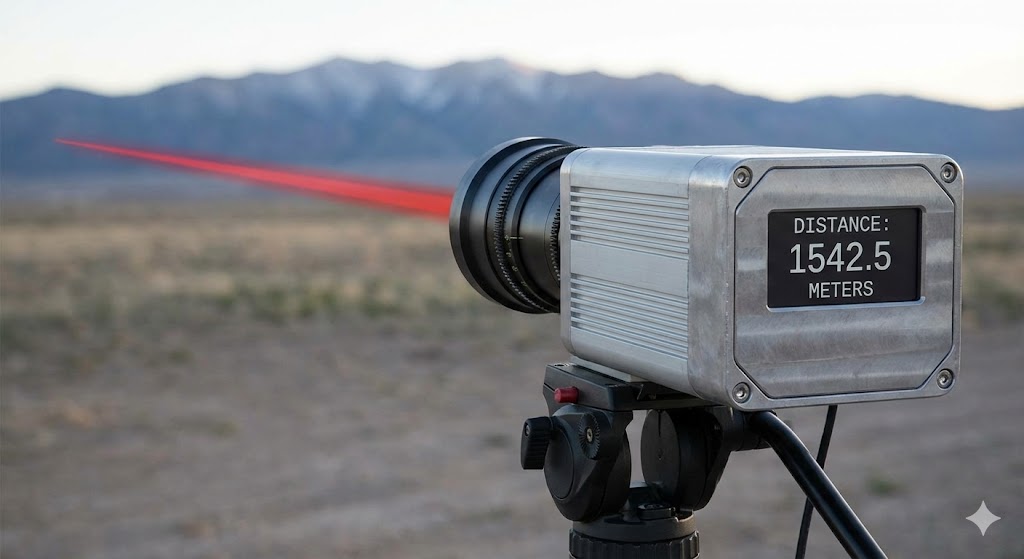
Selecting the right laser sensor requires careful consideration of several key parameters. The measuring range defines the minimum and maximum distances the device can handle. Accuracy and resolution specify the smallest detectable distance change, which can be in the micrometer range for high-end models. The response time, or measurement speed, is crucial for high-speed production lines. Environmental factors like ambient light, dust, steam, or temperature fluctuations must be accounted for, with many industrial sensors boasting robust housings (IP67/IP68 ratings) and specialized filters to ensure stable operation in harsh conditions. Interface options, such as analog outputs (4-20 mA, 0-10 V), digital interfaces (RS-232, RS-485), or industrial Ethernet (Profinet, EtherNet/IP), facilitate seamless integration into existing control systems.
The integration of laser distance sensors with Industry 4.0 frameworks is a significant trend. By connecting these sensors to networked systems and cloud platforms, the data they generate transcends simple measurement. It becomes a stream of actionable intelligence for predictive maintenance, where sensor performance data can forecast potential failures before they cause downtime. The continuous distance data feeds into process optimization algorithms, enabling real-time adjustments that minimize material waste and maximize energy efficiency. This data-driven approach is fundamental to building smarter, more adaptive, and more competitive manufacturing operations.
Looking ahead, advancements in laser diode technology and signal processing algorithms continue to push the boundaries. We can expect sensors with even higher accuracy over longer ranges, faster sampling rates, and smaller form factors. The fusion of laser measurement data with 3D vision systems and artificial intelligence for complex surface inspection and anomaly detection represents the next frontier. As manufacturing demands for flexibility and precision grow, the role of the industrial laser distance sensor will only become more central, solidifying its status as an essential eye for the automated factory, delivering the unwavering precision that modern industry relies upon.