In the realm of modern electronics and automation, the proximity light sensor stands as a pivotal component, enabling devices to perceive and interact with their surroundings without physical contact. Understanding its English terminology is fundamental for engineers, developers, and enthusiasts navigating international datasheets, technical documentation, and global supply chains.
The core term is "proximity sensor." This broad category encompasses various technologies, including inductive, capacitive, ultrasonic, and photoelectric sensors. When specifically referring to optical-based proximity detection, the terms "optical proximity sensor" or "photoelectric proximity sensor" are most accurate. These sensors typically consist of an infrared light-emitting diode (IR LED) and a photodetector, such as a phototransistor or photodiode. The principle involves emitting an infrared light beam; when an object enters the detection field, it reflects the light back to the receiver, triggering a signal change.
A crucial subset is the "ambient light sensor" (ALS). While often discussed alongside proximity sensing, its primary function is distinct: it measures the intensity of visible light in the environment to adjust screen brightness. However, in integrated modules, especially in smartphones and tablets, a combined "proximity and ambient light sensor" is commonplace. This single chip manages both functions—detecting objects near the screen to turn it off during calls and adjusting display luminance based on ambient conditions.
Key operational parameters described in English include "sensing distance" or "detection range," usually specified in millimeters or centimeters. "Response time" indicates how quickly the sensor reacts to a change. "Output type" is vital, often listed as digital (e.g., push-pull, open-drain) or analog. The "emitter wavelength," typically around 850nm or 940nm for infrared, is another critical specification, with 940nm being less visible to the human eye and thus preferred for many applications.
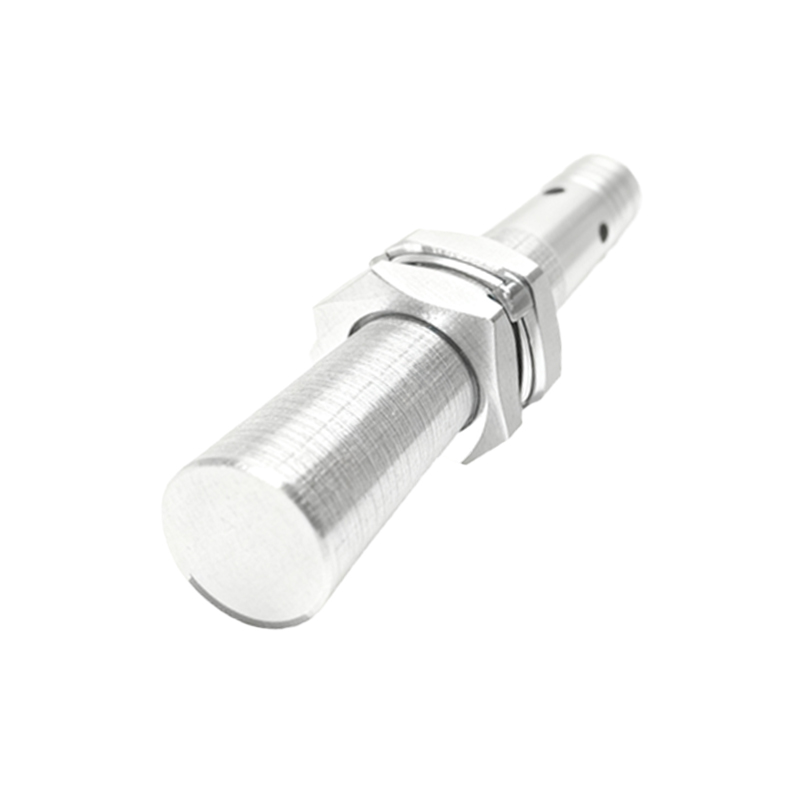
The applications of these sensors are vast and integral to daily technology. In consumer electronics, they are ubiquitous. The proximity sensor in a smartphone prevents accidental screen touches during calls, conserving battery and avoiding unintended inputs. Laptops use them to detect when a user is present, waking from sleep mode automatically. In automotive interiors, they enable touchless control of infotainment systems or detect occupant presence for advanced safety features.
Industrial automation heavily relies on robust optical proximity sensors for object detection, counting, and position verification on assembly lines. They ensure precise non-contact measurement in environments where durability and reliability are paramount. In the realm of the Internet of Things (IoT) and smart home devices, these sensors enable touchless faucets, automatic soap dispensers, and presence-aware lighting systems, promoting both hygiene and energy efficiency.
When selecting a sensor, engineers must consult datasheets for parameters like "operating voltage," "current consumption," "package size," and "interface" (e.g., I²C, digital I/O). Environmental considerations such as "operating temperature range" and resistance to ambient light interference are also frequently detailed under headings like "immunity to ambient light" or "sunlight cancellation."
The evolution of this technology continues. Advanced sensors now incorporate "gesture recognition," interpreting specific hand movements over the sensor array. Integration with machine learning algorithms is paving the way for more contextual and predictive behaviors in devices. As the demand for seamless human-machine interaction grows, the precision and intelligence of optical proximity sensing will only become more sophisticated.
Mastering this specific lexicon is not merely an academic exercise. It facilitates effective communication in multinational design teams, ensures accurate component sourcing, and enables developers to fully leverage sensor capabilities for innovative product design. From the basic IR-based detector to complex multi-function modules, the language of proximity light sensors is the gateway to a world of interactive, responsive, and intelligent electronic systems.