In the world of industrial automation, robotics, and smart devices, proximity sensors play a crucial, yet often unseen, role. These remarkable electronic components detect the presence or absence of an object within a specific range without any physical contact. This demonstration guide aims to illuminate the principles, types, and practical applications of proximity sensors, providing a clear understanding of their operation and value.
The fundamental principle behind a proximity sensor is simple: it emits a field or beam of electromagnetic radiation, such as infrared light, ultrasonic sound waves, or an electromagnetic field. When a target object enters this field, it causes a change in the signal. The sensor's circuitry detects this change—be it a reflection, a capacitance shift, or an eddy current induction—and converts it into an electrical output signal. This signal typically operates a switch, sending a simple "on" or "off" command to a controller like a PLC (Programmable Logic Controller).
To demonstrate this, consider a common inductive proximity sensor. When powered, it generates an oscillating electromagnetic field at its sensing face. In a typical demo setup, you would connect the sensor to a power supply (often 12-24V DC) and a simple indicator, like an LED or a buzzer. As a metallic object, such as a wrench or a steel plate, is brought near the active surface, the electromagnetic field induces small circulating currents (eddy currents) in the metal. This energy loss dampens the oscillator's amplitude. The sensor's detection circuit monitors this damping and triggers a solid-state switch, illuminating the LED or activating the buzzer. The moment the metal object is withdrawn, the field restores, and the switch turns off. This non-contact detection is highly reliable, fast, and immune to environmental factors like dust or oil, making it ideal for harsh manufacturing environments.
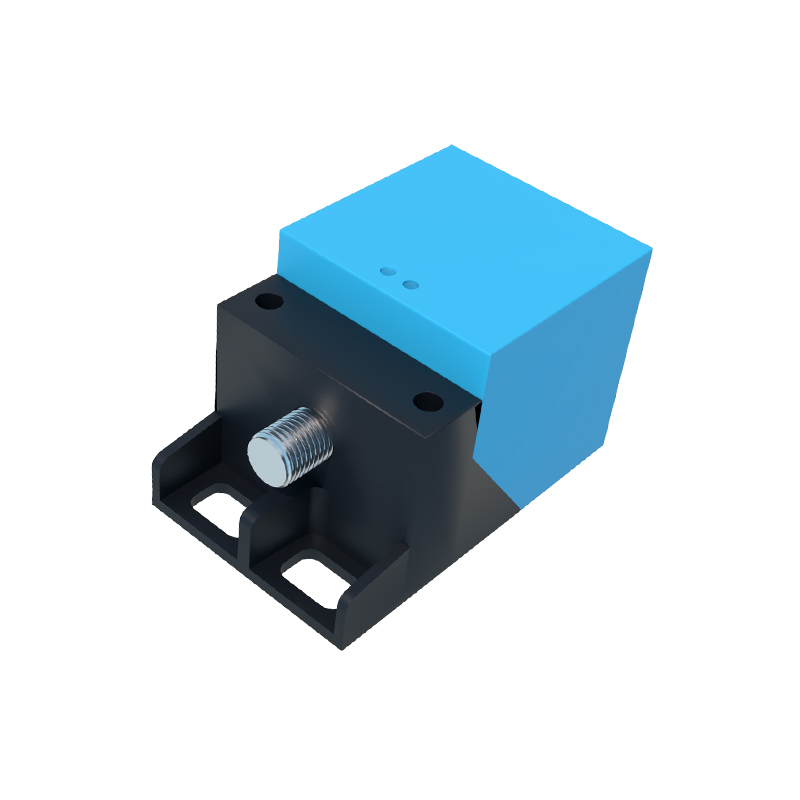
Another popular type is the capacitive proximity sensor. Its demonstration reveals a different capability: detecting non-metallic materials. This sensor creates an electrostatic field. Any object that enters this field alters its capacitance. In a demo, bringing materials like wood, plastic, liquid, or even a human hand close to the sensor will change the capacitance enough to trigger the output. This makes capacitive sensors perfect for level detection in tanks (plastic or glass), packaging lines, or touch-sensitive interfaces.
For longer ranges or precise distance measurement, ultrasonic sensors are frequently demonstrated. These emit high-frequency sound pulses and measure the time taken for the echo to return. A classic demo involves placing an object at varying distances from the sensor, with the output connected to a meter or display showing the calculated distance. This technology is foundational in automotive parking aids, robotics navigation, and material handling.
Photoelectric sensors, which use light beams, offer another vivid demonstration. By aligning a transmitter and receiver, or using a reflective setup, breaking the light beam with any opaque object triggers the output. This is commonly shown in model conveyor systems where the sensor counts objects or detects their position.
The practical applications demonstrated by these sensors are vast. On an assembly line, an inductive sensor verifies a metal component is present before a robotic arm welds it. In a warehouse, a photoelectric sensor counts boxes on a conveyor. A capacitive sensor ensures a bottle is filled to the correct level. In consumer electronics, a proximity sensor turns off a smartphone's screen during a call to save power and prevent accidental touches.
When selecting and applying a proximity sensor, key specifications demonstrated include sensing distance (nominal and effective), repeat accuracy, response frequency, and environmental ratings like IP67 for dust and water resistance. Proper installation is also part of a complete demonstration, emphasizing the importance of avoiding metal-to-metal mounting for inductive sensors and considering the target material's size and composition.
In conclusion, a proximity sensor demonstration powerfully showcases the elegance of non-contact detection. From the robust inductive sensors on factory floors to the sensitive capacitive sensors in consumer devices, these components are the silent sentinels of automation. Understanding their operation through practical demonstration is the first step toward leveraging their potential to create safer, more efficient, and more intelligent systems across countless industries.