In the realm of industrial automation, precision, reliability, and safety are non-negotiable. Among the myriad of components that ensure these principles, cylinder limit proximity sensors stand out as fundamental yet sophisticated devices. These sensors play a critical role in monitoring and controlling the position of pneumatic or hydraulic cylinders, which are the workhorses of countless automated systems, from packaging machinery and automotive assembly lines to robotic arms and material handling equipment.
A cylinder limit proximity sensor is a non-contact sensing device specifically designed to detect the presence or absence of a cylinder's piston at a predetermined point in its stroke. Unlike mechanical limit switches that require physical contact, proximity sensors operate by generating an electromagnetic field or a beam of light. When the piston's integrated magnet or a separate target actuator enters this field, the sensor's state changes, sending a discrete signal to the machine's programmable logic controller (PLC). This signal confirms whether the cylinder is fully extended, fully retracted, or has reached a specific intermediate position.
The core technology behind these sensors varies, with inductive and magnetic sensing being the most prevalent. Inductive proximity sensors detect metallic targets, typically a metal flag or the piston itself, without physical contact. They generate an oscillating electromagnetic field. When a conductive metal object enters this field, it induces eddy currents, causing a change in the oscillation amplitude that is detected by the sensor's circuitry. Magnetic sensors, or reed switches, are another common type. They are actuated by a permanent magnet embedded in the cylinder's piston. When the magnet comes within close range, it causes the sensor's internal reed contacts to close or open, completing or breaking an electrical circuit. Each technology has its advantages: inductive sensors are robust against dirt and offer high switching frequencies, while magnetic sensors are simple, cost-effective, and can detect through non-metallic cylinder barrels.
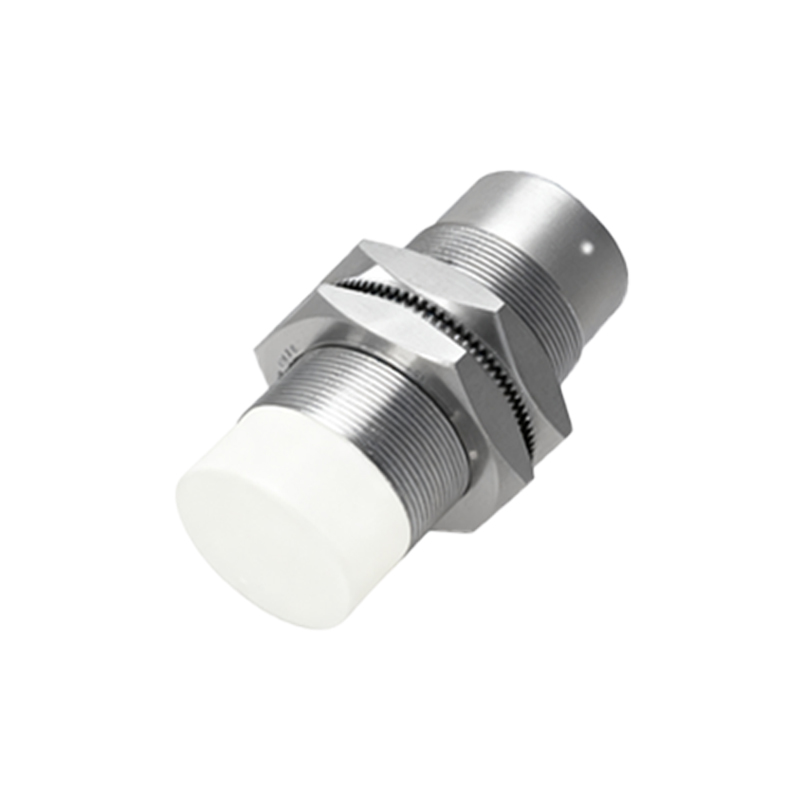
The integration of these sensors into automated systems delivers immense value. Primarily, they provide end-of-stroke verification. This is crucial for process sequencing; the PLC will not initiate the next step in an automated cycle until it receives confirmation that the previous cylinder movement is complete. This prevents collisions, jams, and potential damage to machinery or products. Furthermore, they enable precise positional control. By installing multiple sensors along a cylinder's path, operators can monitor intermediate positions for complex motions or multi-stage processes. This level of control is essential for applications requiring high accuracy, such as in precision pressing or clamping operations.
Safety is another paramount benefit. By reliably confirming cylinder positions, these sensors form part of a machine's safety interlock system. They can ensure that a guard door is securely closed and a clamping cylinder is fully engaged before a potentially dangerous process, like a stamping operation, is allowed to begin. This directly contributes to protecting personnel and equipment.
Selecting the right cylinder limit proximity sensor requires careful consideration of several factors. The operating environment is key. Sensors may be exposed to extreme temperatures, coolants, oils, metallic chips, or heavy vibration. Therefore, ingress protection (IP) ratings, temperature specifications, and housing material (often nickel-plated brass or stainless steel) are critical. The sensing technology must match the application—magnetic for non-metallic barrels or where precise alignment is challenging, and inductive for high-speed or dirty environments. Electrical characteristics, such as the output type (PNP/NPN), voltage rating, and connection method (pre-wired cable or quick-disconnect), must be compatible with the existing control system. Finally, physical form factors, including barrel size, threaded or non-threaded housings, and built-in LEDs for status indication, must suit the mechanical mounting constraints on the cylinder.
Installation and maintenance, while straightforward, demand attention to detail. Sensors must be mounted securely and aligned correctly to ensure consistent detection of the target. For magnetic sensors, the orientation of the magnet's poles relative to the sensor is often important. Regular maintenance involves checking for physical damage, ensuring connections are tight and free from corrosion, and verifying signal integrity. Modern sensors are designed for longevity, but environmental factors can degrade performance over time.
In conclusion, cylinder limit proximity sensors are indispensable elements in modern industrial automation. They are the silent sentinels that provide the essential feedback for deterministic machine control. By translating mechanical position into reliable electrical signals, they enable efficient, safe, and precise operation of automated systems. Their continued evolution, with trends toward miniaturization, increased intelligence with IO-Link communication, and enhanced durability, ensures they will remain at the heart of smart manufacturing and industrial innovation for the foreseeable future.