In the world of photography and smartphone technology, autofocus (AF) is a critical feature that separates amateur snapshots from professional-grade images. Among the various autofocus technologies, laser autofocus sensors have gained significant attention for their speed and accuracy, particularly in low-light conditions. A common question that arises among consumers and tech enthusiasts is: "Are laser autofocus sensors expensive?" The answer, like many things in technology, is nuanced and depends on several factors.
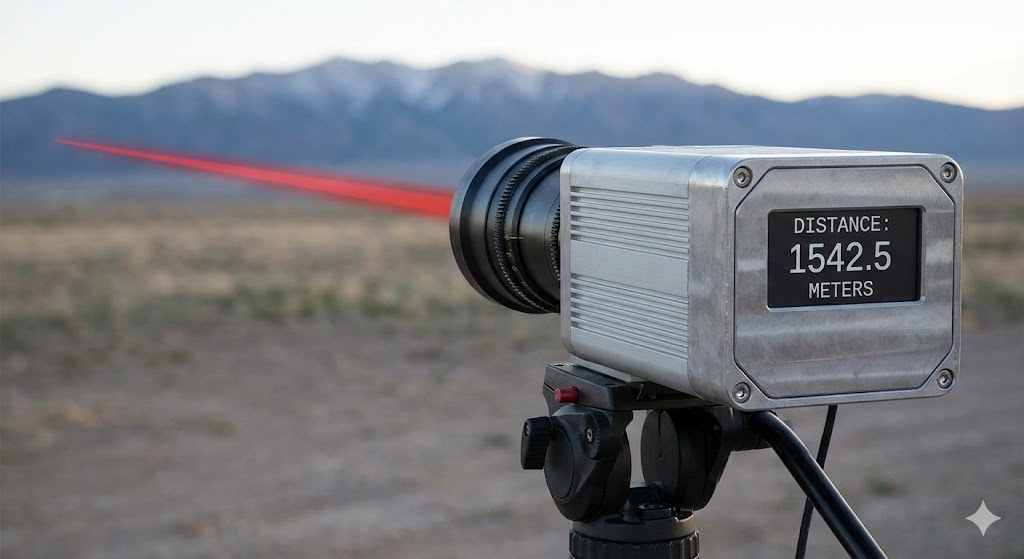
Firstly, it's essential to understand what a laser autofocus sensor is and how it works. Unlike traditional contrast-detection AF or phase-detection AF, laser AF uses an invisible infrared laser beam to measure the distance to the subject. A sensor calculates the time it takes for the laser to bounce back, providing an extremely precise measurement almost instantly. This technology is renowned for its performance in challenging lighting, where other systems might hunt for focus. You'll find this technology implemented in high-end smartphones from brands like LG (which pioneered it in phones), Google, and some models from Huawei and others, as well as in certain dedicated camera systems and industrial applications.
When discussing cost, we must consider the context. Are we talking about the component cost for manufacturers, the repair cost for consumers, or the premium it adds to the final product price?
From a manufacturing perspective, the incremental cost of adding a laser autofocus module to a device is relatively modest, especially at scale. The core components—a low-power laser diode, a time-of-flight sensor, and associated circuitry—are not exorbitantly expensive in the bulk quantities ordered by major OEMs. Industry analyses suggest that while it adds to the Bill of Materials (BOM), it is often a small fraction of the total cost, especially when compared to the display, processor, or main camera sensor. Therefore, for smartphone makers, incorporating laser AF is more a decision about feature differentiation and engineering design than a massive cost hurdle.

However, this doesn't mean the technology is cheap to develop or universally affordable. The research, development, and patent licensing associated with laser AF technology represent significant upfront investments. Companies like LG invested heavily in its development, and these costs are factored into the pricing of their flagship devices. When you purchase a smartphone featuring laser autofocus, you are not just paying for the few dollars of physical components; you are paying for the years of R&D, the sophisticated software algorithms that process the data, and the integration into a cohesive camera system.
For the end consumer, the "expensiveness" is reflected in the product tier. You will almost never find a genuine laser autofocus sensor on a budget or even most mid-range smartphones. It is a premium feature reserved for flagship models. For instance, a phone costing $300 is unlikely to have it, while a $1000 flagship likely will. In this sense, yes, devices equipped with laser AF are generally more expensive, but the sensor itself is just one of many premium features (like a superior chipset, better build materials, advanced displays) that contribute to that higher price tag.
What about repair costs? If a laser AF sensor fails on a smartphone, it is typically not a standalone, user-replaceable part. It is integrated into the rear camera module or the phone's internal assembly. Replacing it usually requires swapping the entire camera module or, in some cases, necessitates a full device repair, which can be costly, especially out of warranty. This repair cost can feel "expensive" to a user, but it's more a function of modern device design than the sensor's inherent cost.
Comparing it to other autofocus technologies further clarifies its position. Phase Detection Autofocus (PDAF), now common even in mid-range phones, is cheaper to implement as it often uses pixels on the main image sensor itself. Traditional contrast-detection AF is the least expensive but also the slowest. Laser AF sits at the higher end of the cost and performance spectrum. However, it's crucial to note that modern camera systems rarely rely on one method alone. High-end phones often use hybrid systems combining laser AF, PDAF, and contrast detection for the best results. This integration adds complexity and cost.
In the broader market of standalone cameras, laser autofocus is less common. Most high-end DSLRs and mirrorless cameras use highly advanced phase-detection systems built into the sensor or via a dedicated AF module. Laser AF is found more in specialized equipment, like certain sports or wildlife photography setups where extreme speed is needed, and these systems can indeed be very expensive.
So, is laser autofocus sensor technology inherently expensive? Not in raw component cost at scale. But does it contribute to making the devices that contain it more expensive? Absolutely. It is a marker of a high-end product. For the average consumer wondering if they should pay extra for it, consider your usage. If you frequently take photos in dimly lit environments or need the fastest possible focus for action shots, it can be a valuable addition. For general daylight photography, the difference may be less noticeable compared to a good PDAF system.
The landscape is also evolving. Newer technologies like Time-of-Flight (ToF) sensors, used for depth mapping and AR applications, can also assist with autofocus. As these and other sensor technologies mature and become more mass-produced, the cost premium for advanced focusing features like laser AF may decrease, potentially trickling down to more affordable devices in the future.
In conclusion, labeling laser autofocus sensors as simply "expensive" is an oversimplification. They are a premium component that adds value and cost to flagship devices. Their cost is justified by their performance benefits in specific scenarios and the engineering behind them. For manufacturers, it's a strategic choice; for consumers, it's a feature worth paying for if it aligns with their photographic needs, understanding that it comes as part of a larger, high-performance package.