Laser distance sensors, also known as laser rangefinders or LiDAR (Light Detection and Ranging) sensors in specific configurations, have revolutionized the way we measure and interact with the physical world. These devices operate on a fundamental principle: they emit a focused beam of light, typically from a laser diode, towards a target. The sensor then detects the reflection of this light. By calculating the time it takes for the light pulse to travel to the target and back, or by analyzing the phase shift of a modulated beam, the sensor can determine the distance with remarkable accuracy. This time-of-flight or phase-shift measurement is the core technology behind most modern laser distance sensors.
The advantages of using laser technology for distance measurement are numerous. First and foremost is precision. High-end sensors can achieve sub-millimeter accuracy over significant ranges, far surpassing ultrasonic or infrared alternatives. They offer excellent resolution, allowing for the detection of minute changes in position. Speed is another critical factor; measurements can be taken thousands of times per second, enabling real-time monitoring and control in dynamic environments. Furthermore, the focused, coherent nature of a laser beam minimizes interference from ambient light and allows for precise targeting of small objects or specific points on a surface, even over long distances.
The applications of laser distance sensors span a vast array of industries, demonstrating their versatility. In industrial automation and robotics, they are indispensable for tasks such as positioning, contour profiling, and collision avoidance. Robots use them to navigate spaces and manipulate objects with precision. On production lines, they measure dimensions, check fill levels in containers, and control the height of materials. The construction and surveying sectors rely heavily on laser distance meters for quickly and accurately measuring rooms, land plots, and structural elements. They have largely replaced traditional tape measures for many professional applications due to their speed and ability to measure hard-to-reach places.
In the automotive industry, laser sensors are a key component of advanced driver-assistance systems (ADAS). They are used in adaptive cruise control to maintain a safe distance from the vehicle ahead and are integral to some autonomous vehicle navigation systems, often as part of a LiDAR suite that creates a detailed 3D map of the surroundings. The logistics and warehousing industry utilizes them for volume measurement of packages, palletizing, and automated guided vehicle (AGV) navigation. Even in consumer electronics, miniaturized laser sensors enable features like autofocus in smartphones and cameras.
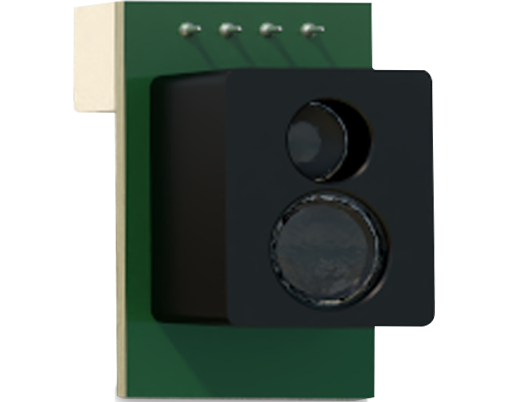
When selecting a laser distance sensor, several key specifications must be considered. The measuring range defines the minimum and maximum distances the device can handle. Accuracy and repeatability specify how close the measurement is to the true value and how consistent repeated measurements are, respectively. The laser class (usually Class 1 or Class 2 for eye-safe operation) is crucial for user safety. Environmental factors like operating temperature, resistance to dust and water (IP rating), and robustness against vibrations are vital for industrial settings. The output interface (analog, digital, IO-Link, Ethernet) determines how the sensor integrates with control systems like PLCs.
Looking ahead, the evolution of laser distance sensing technology continues. Trends include further miniaturization, reducing both the size and cost of sensors, which opens up new applications. The integration of smarter onboard processing allows sensors to perform edge computing, sending only processed data rather than raw signals. Multi-function sensors that combine distance measurement with other capabilities like color detection or thermal imaging are emerging. Furthermore, the development of solid-state LiDAR for automotive applications promises more reliable and affordable 3D sensing solutions. As these technologies mature, laser distance sensors will become even more pervasive, driving efficiency, safety, and innovation across every sector they touch, from factory floors to smart cities and beyond.
